
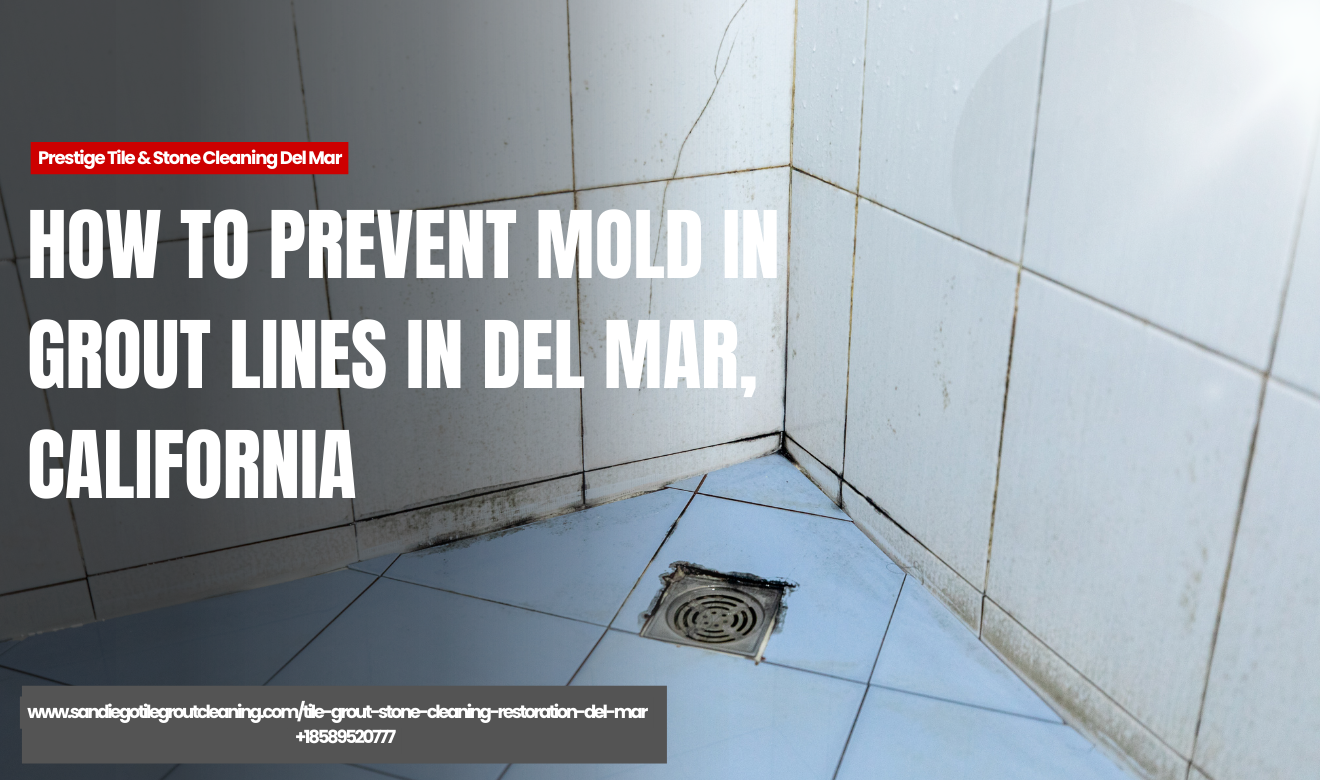
Mold in grout lines in Del Mar is usually prevented by controlling moisture: dry the shower after use, keep ventilation running, and seal grout so water can’t soak in. If you’ve been wondering how mold forms in grout lines Del Mar homes often have, it’s typically a mix of trapped humidity, lingering soap residue, and porous grout that stays damp long after the water is off.
For example, if you take a hot shower and close the bathroom door, steam settles into the grout and corners, especially along the tub edge and floor seams. If you also leave shampoo and body wash residue on the tile, it becomes a food source, and dark spots can show up between tiles within days. Even coastal air can add extra humidity, so small habits like squeegeeing the walls, wiping the grout line at the base of the shower, and running the fan for 20–30 minutes make a noticeable difference.
What Causes Mold to Grow Between Tiles in Coastal Bathrooms?
If you’re trying to understand how mold forms in grout lines Del Mar homeowners deal with, it helps to think of grout as a sponge sitting in a warm, damp room. Mold spores are already present in most indoor air—what makes them “move in” is the right environment.
The most common triggers for how mold forms in grout lines Del Mar showers and tub surrounds have are:
- Persistent moisture trapped in porous grout and tiny pinholes
- Warm temperatures (hot showers raise surface humidity quickly)
- Food sources like soap scum, shampoo residue, body oils, and mineral buildup
- Low airflow (fans off, doors closed, no cross-ventilation)
- Coastal humidity that slows drying time, especially in older bathrooms
How Mold Forms in Grout Lines Del Mar Homes Commonly Have (Step-by-Step)
Here’s the simplest breakdown of how mold forms in grout lines Del Mar residents often see near shower pans, tub edges, and floor seams:
- Steam saturates the room: A hot shower raises humidity and warms tile and grout.
- Condensation settles into pores: Grout is porous by nature, so it absorbs moisture.
- Residue feeds microbes: Soap film and product buildup stick to grout texture.
- Slow drying creates a “growth window”: When grout stays damp for hours, spores can colonize.
- Staining and biofilm appear: Dark spotting is often the visible stage of a larger colony.
Understanding how mold forms in grout lines Del Mar bathrooms have is key because it shows why “just bleaching it” sometimes doesn’t last—if moisture and residue remain, regrowth is likely.
Grout Basics: Why Grout Is Vulnerable in the First Place
Grout is the material used to fill joints between tiles, and most traditional cement-based grout has microscopic pores that absorb water. Even if tile looks dry, the joints can still be holding moisture beneath the surface—one of the biggest reasons how mold forms in grout lines Del Mar properties can feel like a recurring problem.
For a deeper background on what grout is and how it behaves, see grout.
Where Mold Shows Up First (And Why Those Spots Matter)
When people search how mold forms in grout lines Del Mar, they’re often noticing it in the same repeat locations. These areas stay wet longer or collect more residue:
- Bottom row of wall tile (water runoff pools and dries slowly)
- Inside corners (less airflow, more condensation)
- Along the tub or shower pan seam (constant wetting and product buildup)
- Grout lines under shelves and niches (shaded zones dry slower)
- Bathroom floor perimeter near shower entry (splashes + poor ventilation)
These patterns help confirm how mold forms in grout lines Del Mar bathrooms have: it’s less about one “dirty spot” and more about repeat moisture exposure.
Is It Mold or Just Grout Discoloration?
Not every dark grout line is active mold. Mineral deposits, dirt, and mildew staining can look similar. Still, the same moisture conditions that explain how mold forms in grout lines Del Mar showers have can also cause staining that traps grime.
Quick Visual Clues (Not a Lab Test)
- Speckled black/green dots that spread outward: often microbial growth
- Orange/pink film: commonly bacteria in damp areas
- Gray/brown uniform dulling: often soil + soap scum embedded in grout
If you have respiratory sensitivity, recurring odor, or widespread spotting, consider professional evaluation—especially if you’re repeatedly seeing signs of how mold forms in grout lines Del Mar homes struggle with in coastal humidity.
Del Mar-Specific Factors That Make Grout Mold More Likely
Coastal communities can have higher ambient humidity and salt air, which can slow evaporation and keep bathrooms damp longer. That matters because how mold forms in grout lines Del Mar houses deal with is often driven by drying time more than how often you clean.
Common local contributors include:
- Marine layer mornings that keep indoor humidity elevated
- Older fans that vent poorly or aren’t ducted correctly
- Bathrooms without windows or with windows that stay closed
- Tile installed over substrates that hold moisture (especially if waterproofing is outdated)
A Practical Prevention Routine That Actually Works
Because how mold forms in grout lines Del Mar bathrooms have is rooted in moisture + residue, prevention should focus on two habits: speed up drying and reduce buildup.
Daily (2–3 minutes)
- Squeegee tile walls after showering (less runoff into grout)
- Wipe the bottom grout line where water pools
- Leave the door open to release steam (when possible)
Weekly (10–15 minutes)
- Use a pH-neutral cleaner to remove soap film before it hardens
- Rinse well—leftover cleaner film can attract soil
- Dry the walls quickly with a towel to shorten the damp window
Monthly / Quarterly
- Inspect caulk and corners for separation (water intrusion risk)
- Reapply grout sealer as needed based on product life and wear
These steps directly interrupt how mold forms in grout lines Del Mar properties commonly experience: moisture stays shorter, and residue doesn’t have time to become a food source.
Ventilation: The Fastest Way to Change the Outcome
Ventilation is often the difference between a shower that dries in 30–60 minutes and one that stays damp half the day. Since how mold forms in grout lines Del Mar bathrooms have depends heavily on drying time, airflow is non-negotiable.
Fan Timing That Helps
- Run the fan during the shower and for 20–30 minutes after
- If the room still feels humid, extend to 45 minutes
Helpful Targets (Rule of Thumb)
- Fan should move enough air for bathroom size (often measured in CFM)
- Grout and corners should feel dry to the touch within a reasonable window
Which Cleaning Products Help—And Which Can Make Things Worse?
When dealing with how mold forms in grout lines Del Mar showers have, harsh products can sometimes backfire by damaging grout or surrounding stone/tile finishes, increasing porosity or leaving residue behind.
| Product Type | Best Use | Caution |
|---|---|---|
| pH-neutral tile cleaner | Routine cleaning to remove soap film | Rinse thoroughly to avoid buildup |
| Hydrogen peroxide (spot use) | Occasional brightening of stained grout | Test first; avoid mixing with other chemicals |
| Bleach-based cleaners | Surface disinfection on some non-porous areas | May not penetrate grout deeply; can irritate lungs/skin |
| Acidic cleaners (vinegar, strong descalers) | Mineral deposits on certain surfaces (carefully) | Can damage grout and many natural stones; spot test |
If you’re repeatedly fighting the same spots, it usually means the conditions that explain how mold forms in grout lines Del Mar homes deal with are still present—often trapped moisture under residue.
Sealing Grout: When It Helps (And When It Doesn’t)
Sealing can reduce absorption and slow down staining, but it’s not a “set it and forget it” solution. In fact, misunderstanding sealers is a major reason people still experience how mold forms in grout lines Del Mar bathrooms have even after sealing.
Sealer Helps When:
- Grout is fully cured and clean before application
- You maintain regular cleaning to remove soap scum
- You keep up drying and ventilation
Sealer Won’t Fix:
- Water intrusion behind tile (failed caulk, gaps, or substrate issues)
- Existing deep contamination in grout pores
- Bathrooms that stay humid for hours daily
Mini Case Example: A Common Del Mar Shower Pattern
A common scenario behind how mold forms in grout lines Del Mar shower stalls have looks like this: a family uses the shower back-to-back in the morning, closes the door to keep steam in, and the fan runs only during the shower. Water sits along the base grout line, and product residue builds up over time. Within a week or two, the lower corners darken first.
When the routine changes—fan runs 30 minutes after, the base grout line is wiped, and walls are squeegeed—spotting often slows dramatically because the growth window is cut down.
When DIY Isn’t Enough: Signs You Need a Deep Clean
Sometimes, the issue isn’t your effort—it’s that the grout has absorbed enough residue and moisture that surface cleaning can’t reach it. That’s a typical escalation in how mold forms in grout lines Del Mar properties near the coast, where drying can be slower year-round.
Consider a professional deep clean if:
- Dark grout discoloration returns within days of cleaning
- You see staining that looks “inside” the grout, not on top
- There’s a persistent musty odor after the bathroom looks clean
- Grout lines look rough, pitted, or consistently damp
If you want a results-focused reset (especially for showers), professional Bath & Shower Tile Cleaning can remove embedded soap scum and buildup that contributes to how mold forms in grout lines Del Mar bathrooms often struggle with.
How to Keep Grout Cleaner Longer After You Remove Mold
Once you’ve addressed the visible issue, your main goal is preventing the same cycle of how mold forms in grout lines Del Mar showers can fall into.
High-Impact “Stick With It” Habits
- Switch to a daily shower spray that reduces soap film (and rinse periodically)
- Reduce product buildup (fewer oily body washes can mean less residue)
- Fix drips fast (leaky showerheads keep grout wet constantly)
- Replace failing caulk to stop water from migrating behind tile
Related Cleaning Guidance for Better Long-Term Results
Since residue is a big part of how mold forms in grout lines Del Mar bathrooms face, improving your overall grout maintenance makes a real difference. This guide on San Diego grout cleaning is a helpful next step if you’re refining your routine and trying to keep grout looking consistent across the home.
From Stains to Fresh Lines: Your Next Best Move
At the end of the day, how mold forms in grout lines Del Mar homes often have comes down to a simple equation: moisture that lingers + residue that feeds growth + time. If you shorten drying time, keep grout free of soap scum, and maintain sealer and caulk, you can prevent most recurring problems.
And when the staining or growth keeps returning, it’s usually a sign the grout needs a deeper extraction-style cleaning to remove what’s embedded below the surface—so your daily habits can finally “hold” and keep the lines looking clean.
Industry best practices for tile and grout care consistently emphasize moisture control, residue removal, and surface protection (sealers) as the most reliable way to stop recurring grout discoloration and growth—exactly the factors behind how mold forms in grout lines Del Mar bathrooms experience.
Frequently Asked Questions
Stop Grout Mold at the Source—Get a Pro-Level Reset in Del Mar
If you’re done chasing the same dark grout spots over and over, it might be time for a deeper clean that actually removes what’s embedded below the surface. Prestige Tile & Stone Cleaning Del Mar helps homeowners break the cycle behind how mold forms in grout lines in Del Mar with results-focused tile and grout cleaning that targets trapped residue, moisture-prone areas, and the buildup that makes regrowth so common in coastal bathrooms.


