Prestige Tile & Stone Cleaning
Serving San Diego County
Residential & Commercial
Mon–Fri 8am–5pm · Sat 10am–2pm

Quick answer
How Is Granite Cleaned and Protected?
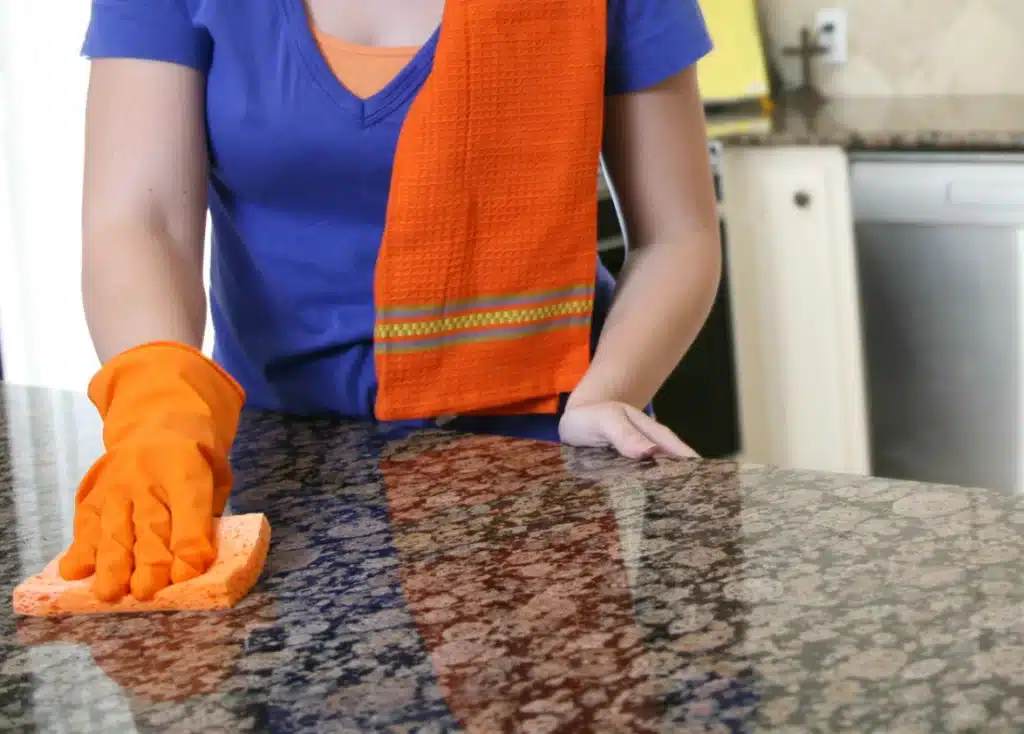
Granite is hard and quartz-based, so acidic foods and cleaners do not etch it the way they etch marble. Clean it with warm water or a stone cleaner and dry it after use, have stains and water marks treated professionally, and keep it sealed with a penetrating, food-safe sealer. Dull granite needs professional polishing; never use wax or surface enhancers.
Why it matters
Why Granite Still Needs Care
Granite adds value wherever it is installed, thanks to its strength and good looks. It is hard to scratch and resists acids, so it is easy to maintain day to day.
Professional help is worth it for stains, water marks or a sealer that was poorly applied in the past, because the wrong product can damage the stone. We provide stone care services and advice on the steps you can take yourself.

About the material
What Makes Granite Different From Marble?
Granite is a hard, quartz-based stone rather than a calcium-based one. That is why it shrugs off the acidic spills that etch marble, and why its care is mostly about stains, water marks and keeping the sealer working.
Quartz-based
Made of quartz rather than calcium, so acidic foods and cleaners do not etch it the way they etch marble.
Very hard
One of the hardest stones used in homes, so it is difficult to scratch.
Still porous
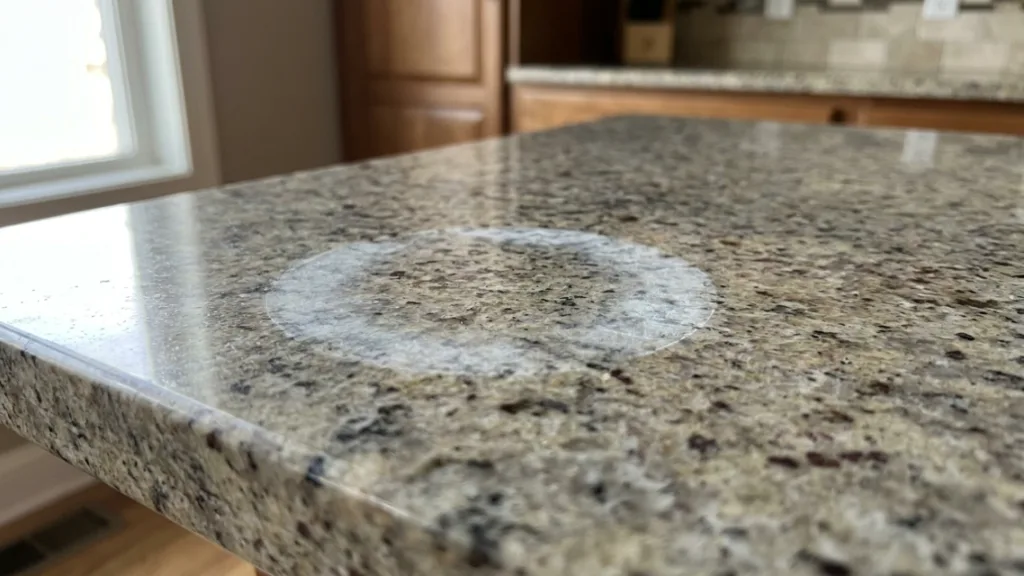
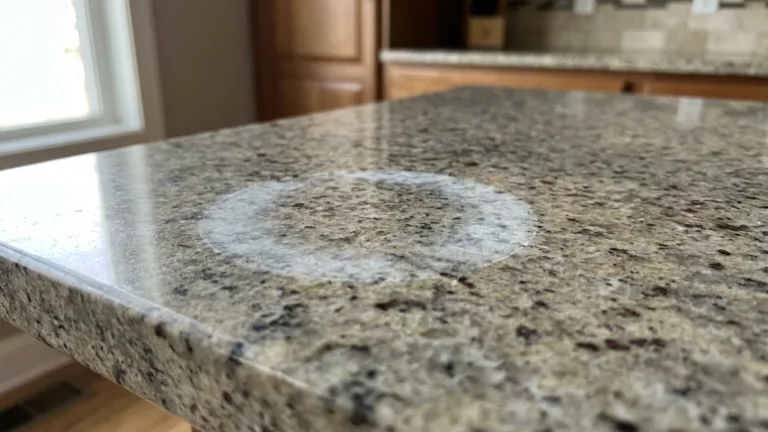
Its pores can absorb wine or oil and trap stains; even resin-impregnated granite can stain.
Polished finish
A dull finish is restored by professional polishing, never by wax or surface enhancers.
Services
Granite Care Services
Cleaning
The right products for stains, water marks and poor past sealing.
Polishing & restoration
The exact level of polishing needed to bring back a dull finish; no waxes or enhancers.
Disinfection
Included with cleaning, using the right pressure, temperature and sanitizers.
Sealing
Quality penetrating sealers; anti-slip options for granite floors.
Maintenance
Advice and a routine plan for deep cleaning and resealing.
Our process
How We Clean, Polish and Seal Granite
Granite is simple to keep up day to day. Professional work is for the jobs where the wrong product could damage it.
01
Assess
We look for stains, water marks, dullness and signs of a poor sealer applied in the past.
02
Clean & disinfect
The right pressure, temperature and sanitizing agents clean the stone and keep it hygienic.
03
Treat stains
Products are matched to each stain and water mark so the stone is not harmed.
04
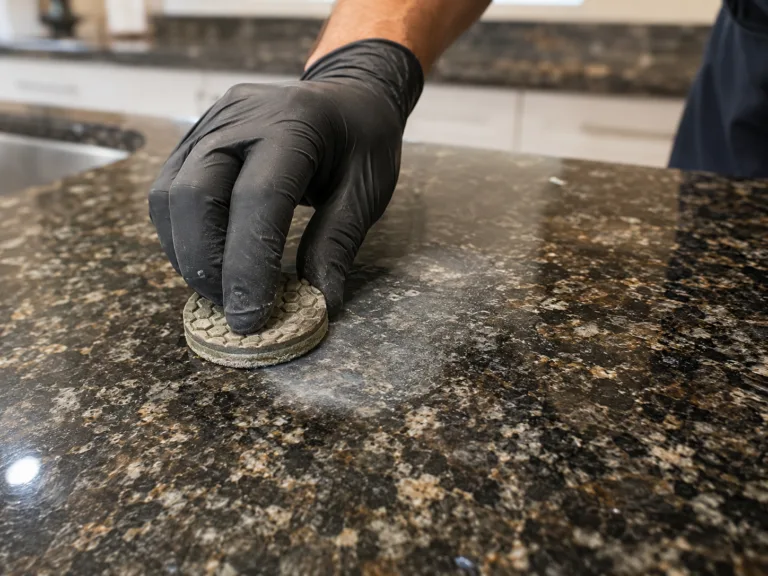
Polish
Only the level of polishing the stone needs to bring back its finish.
05
Seal
A penetrating sealer, food-safe on countertops; anti-slip sealers are available for floors.
Before & After
Granite Restoration Results
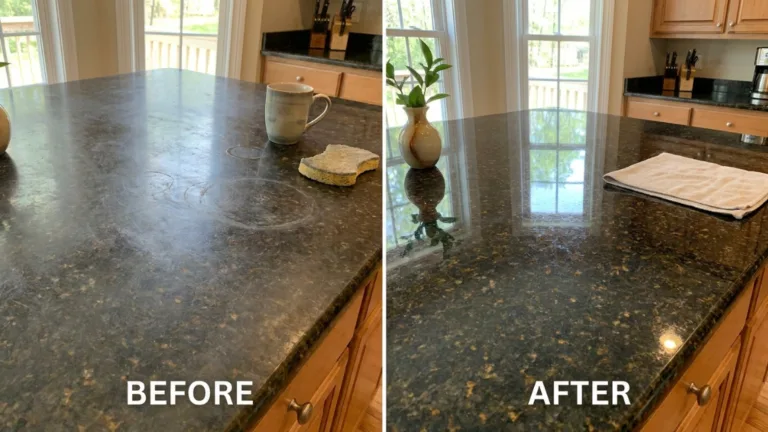
Granite that looks tired can usually be restored rather than replaced. Results depend on the stone and the damage.

Sealing granite
Does Granite Need Sealing?
Yes. Like all natural stone, granite has pores that can absorb spills such as wine or oil and trap stains. Even resin-impregnated granite can still stain, so a good sealer is recommended.
Choose a penetrating sealer rather than a topical one. Penetrating sealers protect inside the pores; topical products sit on the surface, can be damaged by acids and chemicals and may leave a cloudy look. On countertops, use a non-toxic, food-safe sealer.
The water test: most granite needs resealing every one to two years, but rather than going by the calendar, sprinkle some water on the stone. If it beads up, the sealer is still working. If it soaks in quickly, it is time to reseal.
Compare the options
Cleaning, Polishing or Restoration?
Most granite only needs cleaning and a working sealer. Polishing and restoration are for finishes that have gone dull or been damaged.
What to avoid
What to Avoid on Granite
Granite is tough, but a few common products shorten the life of its finish and sealer.
Estimates
What Affects Your Estimate
Every estimate is based on the surface itself, and you receive it in writing before any work is booked. These are the main factors that shape it.
Surfaces
Countertops, floors, showers and how much of each.
Condition
Stains, water marks, dullness or a failed earlier sealer.
Polishing
How much polishing the finish needs.
Sealer
Food-safe sealer for counters, anti-slip for floors.
Service Area
Granite Care in San Diego County
We clean, polish and seal granite countertops, floors and showers for homes and businesses throughout San Diego County, and we can set up a routine plan for deep cleaning and resealing.
Related services
Related Tile & Stone Services
Common questions
Frequently Asked Questions
How should I clean granite day to day?
Clean frequently used granite with warm water and dry it afterward, or use a cleaner made for natural stone about once a week. Avoid harsh cleaners.
Does granite need sealing?
Yes. Granite has pores that can absorb spills and stain. A penetrating sealer is recommended, and a food-safe one on countertops.
How often should granite be resealed?
Usually every one to two years. Test it: if water beads on the surface the sealer is working; if it soaks in quickly, reseal.
How often does granite need polishing?
It depends on use and care. High-traffic areas, or places where grit is not cleaned up quickly, wear faster.
How much does granite care cost?
It depends on what the stone needs. Call (858) 952-0777 for a free quote.
Can acidic foods damage granite?
Granite is quartz-based rather than calcium-based, so acidic foods and cleaners do not etch it the way they etch marble. Acidic cleaners can still break down the sealer over time, so use a stone cleaner.
Can I wax granite to bring back the shine?
No. Wax and surface enhancers should never be used on granite. A dull finish needs professional polishing to the level the stone requires.
Get Started
Ready for Cleaner Tile, Grout & Stone?
Tell us what needs cleaning and we'll help you work out the right next step, with no pressure either way.
Free estimates
Surface-safe methods
Residential & commercial