
Architectural Stone Cleaning San Diego
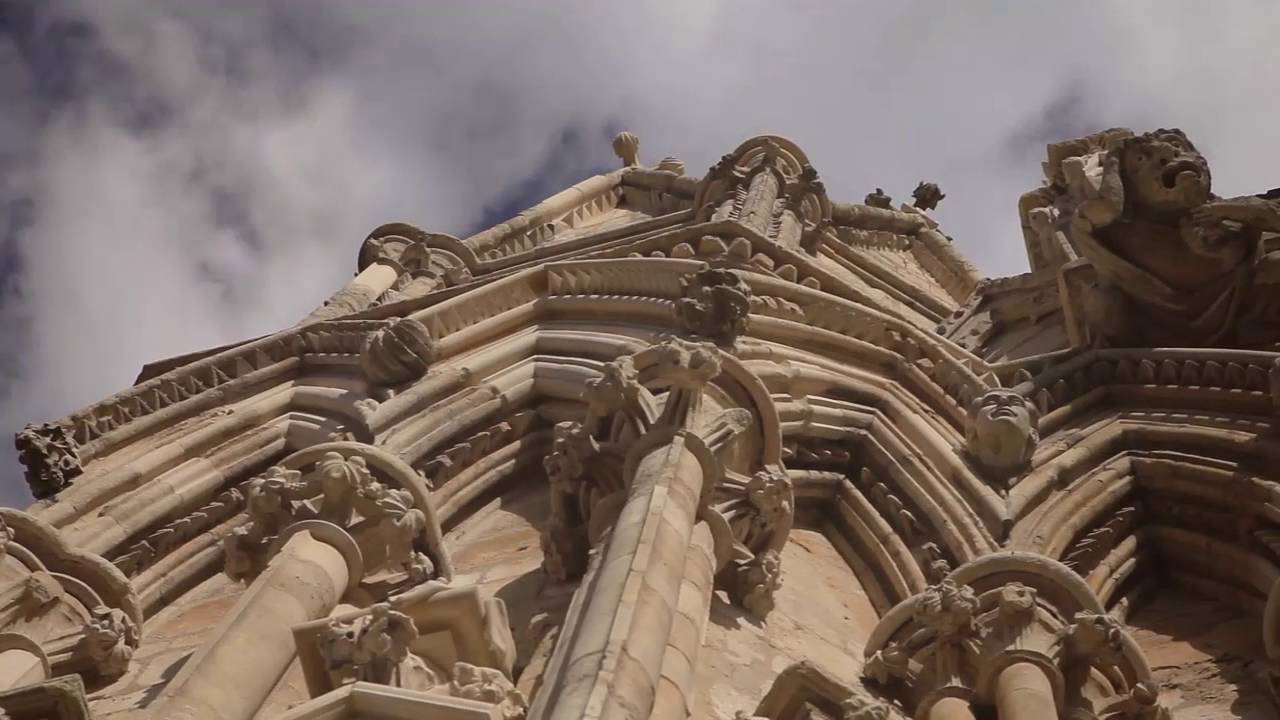 Freshly produced stones are thought to be very delicate. When handling it and cleaning it, experts exercise great prudence. The differences between stones in terms of attributes like hues, aggregates, etc. are substantial. Even during the cleaning process, a manufactured stone might need a more efficient method while a different stone might need more careful techniques. A mere 400 psi might remove its pigment.
Because stones vary in their characteristics, it is not advisable to use a single cleaner to clean all of them. Chemical producers make sure that no one cleaner is recommended or used for cleaning all made stones. The same technique and steps cannot be used to sanitize them.
On the other side, cultured stone is distinct from a brick. It shouldn’t be cleaned in the same manner as a stone. In this situation, many factors should be taken into account. These include understanding the makeup of the stone, observing the timing, and determining the water supply. Also take into account the intensity of the coloring, the cleaning services, and the chosen technique. We provide a variety of cleaning services at San Diego Tile Grout Cleaning. Give us a call right away if you require tile cleaning or floor cleaning.
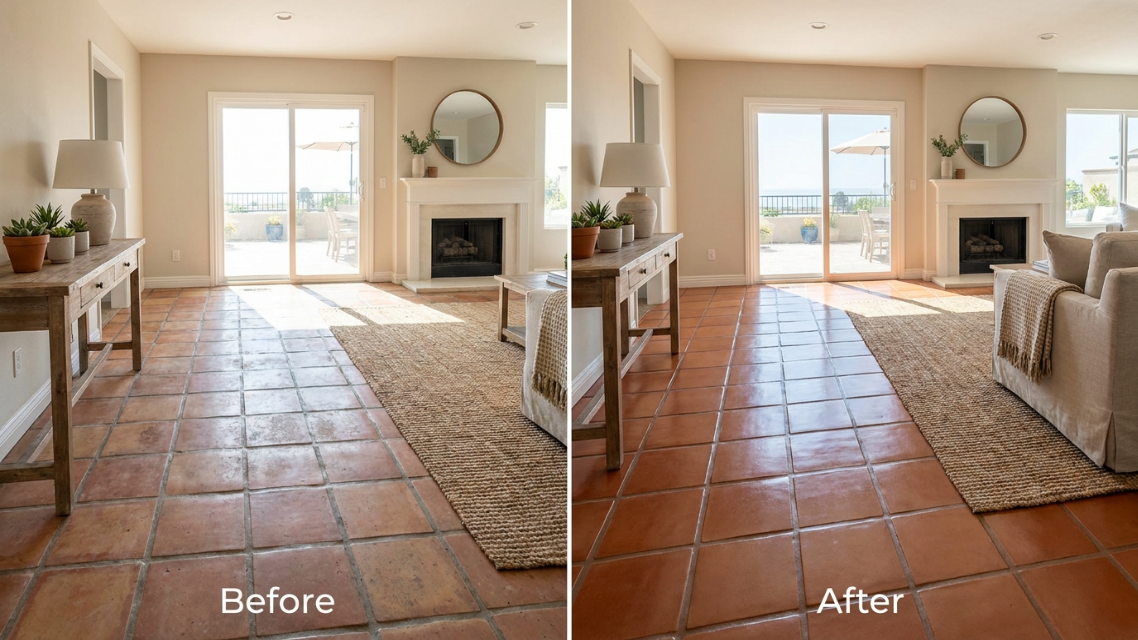 If your Saltillo tile floors have lost their warm, handcrafted glow — faded, chalky, scratched, or blotchy from old sealers breaking down — Saltillo tile restoration San Diego homeowners trust starts here. San Diego Tile and Stone Cleaning specializes in bringing worn Saltillo and Mexican terracotta flooring back to life, from historic Rancho Santa Fe haciendas to modern coastal homes in Del Mar.
Saltillo tile is beautiful, but it’s also one of the more delicate flooring materials found in San Diego County homes. It’s soft, porous, and highly reactive to sun exposure, foot traffic, and the wrong cleaning products. Once the sealer breaks down or the surface gets etched or discolored, DIY cleaners and generic “tile cleaning” services often make the problem worse. Proper Saltillo restoration requires understanding how this specific material behaves — which is exactly what we do, every week, throughout San Diego.
Why Saltillo Tile Restoration Matters
Saltillo tile isn’t manufactured under tight industrial controls the way porcelain or ceramic tile is. It’s handmade from clay, sun-dried or kiln-fired, and naturally porous — which is part of its charm, but also its vulnerability. Left unmaintained, Saltillo tile can develop problems that get worse (and more expensive to fix) the longer they sit:
- Sealer breakdown leaves tile looking dull, patchy, or “cloudy” in high-traffic zones
- Water and salt exposure, especially in coastal homes near Del Mar and the beach communities, accelerates staining and efflorescence (that white, powdery residue on the surface)
- UV fading from large windows and sliding doors common in Southern California homes bleaches the tile’s natural color unevenly
- Foot traffic wear creates worn paths through entryways, kitchens, and patios that no longer match the rest of the floor
- Improper past cleaning with acidic or harsh commercial cleaners can strip sealer and even etch the clay surface itself
Restoring Saltillo tile early — before deep staining or physical damage sets in — is almost always more cost-effective than replacement. Saltillo tile is also increasingly difficult to source in exact matching batches, since color and texture vary by kiln run, so preserving your existing floor often makes more sense than tearing it out.
Common Problems This Service Solves
Homeowners across San Diego typically reach out for Saltillo restoration because of one or more of these issues:
Faded, patchy, or “cloudy” appearance. Old wax or acrylic sealers yellow and break down unevenly over time, leaving some tiles looking dull while others still hold color. This is the single most common reason people search for Saltillo tile restoration.
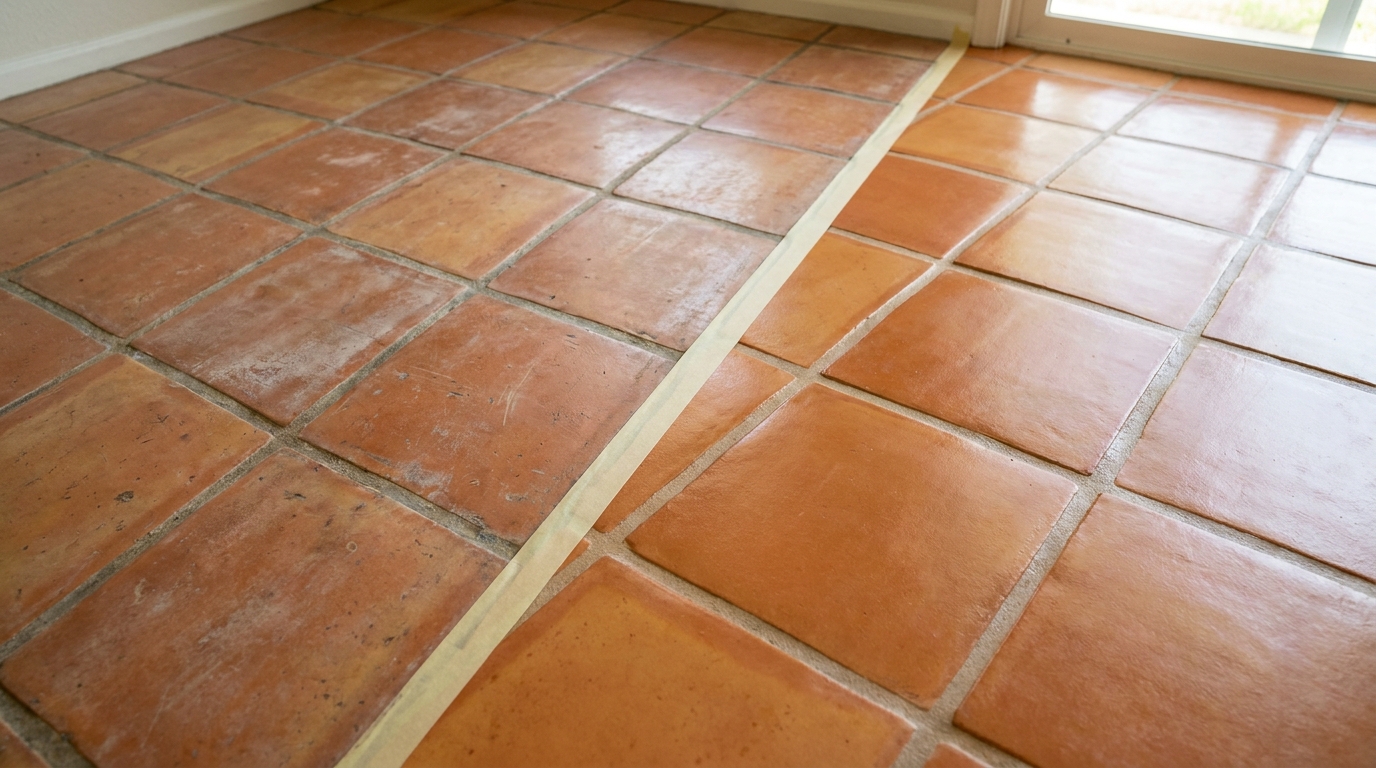 White, powdery residue (efflorescence). Salts trapped beneath the tile migrate to the surface as moisture evaporates, especially in homes with slab foundations or those near the coast. This isn’t dirt — scrubbing with soap won’t remove it, and it often requires a specific extraction and neutralizing process.
Scratches, scuffs, and worn traffic paths. Furniture legs, pet claws, and daily foot traffic wear through the surface sealer and can leave the underlying clay looking rough or discolored compared to less-used areas.
Sticky or dull finish after DIY cleaning. Many general-purpose floor cleaners and waxes leave behind a residue buildup on Saltillo that attracts dirt and looks worse over time, requiring professional stripping before restoration can begin.
Stains from oil, grease, or spills. Because Saltillo is porous, spills that aren’t sealed properly can soak in and darken permanently if not treated correctly and promptly.
Cracked or chipped tiles. Older Saltillo installations, particularly in homes built decades ago, often have individual tiles with hairline cracks or corner chips that need structural repair before refinishing.
Our Saltillo Tile Restoration Process
Every Saltillo floor is different — the clay’s age, prior sealers, and wear pattern all affect the approach — but our process generally follows these steps:
- On-site assessment. We inspect the tile and grout condition, identify the type and condition of any existing sealer, check for cracks or chips, and test for efflorescence or staining before recommending a plan.
- Stripping old sealer and buildup. Using pH-appropriate strippers safe for natural clay tile, we remove old wax, acrylic coatings, and embedded grime that generic cleaning can’t touch.
- Deep cleaning and stain treatment. The tile surface and grout lines are deep-cleaned to lift years of soil, oil, and residue, with targeted stain treatment applied where needed.
- Repairing chips, cracks, or lippage. If individual tiles are cracked, chipped, or sitting unevenly, we address those issues before refinishing so the repaired areas blend in rather than stand out.
- Honing and buffing (if needed). Where the surface is uneven or heavily worn, light honing can smooth out imperfections and prepare the tile for a uniform finish.
- Sealing and finishing. A breathable, appropriate sealer is applied to protect the tile from moisture, staining, and everyday wear, restoring the rich, saturated color Saltillo is known for.
- Final inspection and care guidance. We walk the space with you, confirm the results, and provide simple maintenance guidance so the restoration lasts.
This same core process — strip, clean, repair, seal — applies across most of our tile and grout restoration services, though Saltillo requires extra care due to how soft and absorbent the clay is compared to porcelain or engineered stone.
Why Choose San Diego Tile and Stone Cleaning
Saltillo tile is not a material you want to hand to a generalist. Using the wrong stripper, an acidic cleaner, or an incompatible sealer can permanently damage the clay’s surface or color. San Diego Tile and Stone Cleaning focuses specifically on natural stone and specialty tile — including Saltillo and Mexican tile cleaning, terracotta cleaning, and general tile and grout cleaning — rather than treating every floor the same way.
We evaluate each floor individually rather than applying a one-size-fits-all process, use products and techniques matched to the specific tile material and condition, and walk homeowners through what’s actually happening with their floor before any work begins — no pressure, no upsells for work that isn’t needed.
Saltillo Tile Restoration in Del Mar and Nearby San Diego Communities
Del Mar’s coastal environment presents a specific set of challenges for Saltillo tile. Homes along Camino Del Mar and throughout the Del Mar area deal with salt air, higher humidity, and sun exposure that inland properties don’t face to the same degree — all of which accelerate sealer breakdown and efflorescence on porous clay tile. Many Del Mar properties also feature the classic Spanish and Mediterranean-style architecture where Saltillo flooring was originally installed decades ago, meaning a lot of the tile we restore here is original to the home and worth preserving rather than replacing.
We also regularly work on Saltillo and terracotta restoration in the communities surrounding Del Mar, including Solana Beach, Carmel Valley, Rancho Santa Fe, Cardiff-by-the-Sea, and La Jolla — areas that share similar coastal conditions, older custom-built homes, and a strong concentration of Spanish Colonial and hacienda-style architecture where Saltillo tile is common in entryways, kitchens, and outdoor living spaces.
Whether your home sits a few blocks from the beach or further inland with heavier sun exposure through large windows, the underlying issues tend to be similar: sealer wear, fading, and surface staining that respond well to proper restoration.
Cost, Timeline, and What to Expect
Saltillo tile restoration pricing depends on several factors: the total square footage, the current condition of the sealer and tile, whether repairs to cracked or chipped tiles are needed, and whether efflorescence or deep staining requires additional treatment beyond standard cleaning and resealing. A small entryway in good condition will cost and take far less than a full-home floor that hasn’t been resealed in years.
Timeline follows a similar pattern — smaller areas may be completed in a single visit, while larger floors or those requiring stripping, repair, and multiple sealer coats can take longer, particularly if drying time is needed between steps. We provide a specific quote and timeline after an on-site or photo-based assessment, since Saltillo condition varies significantly from home to home.
Results also depend on the tile’s starting condition. Restoration can dramatically improve faded, dull, or stained Saltillo, but tile with deep structural cracking or long-term water damage may have limits on how fully original color and texture can be recovered. We’ll always be upfront about what’s realistic for your specific floor before starting work.
Related Services Worth Knowing About
If your Saltillo floor also has chipped corners or hairline cracks, our stone tile chip and crack repair and epoxy filling services are often paired with restoration to address structural damage before resealing. For floors with uneven or rough surface texture, diamond honing or stone tile buffing can smooth things out ahead of the final finish. And if the surface shows dulling from acidic spills like wine, citrus, or vinegar, our tile etching removal process addresses that specific type of damage.
For homeowners still researching before booking, our guides on how to clean stone floors, caring for tile flooring, and removing tile etching cover some of the most common questions we hear from Saltillo and natural stone owners in San Diego.
Get Your Saltillo Tile Restored the Right Way
Worn, faded Saltillo tile doesn’t have to mean a costly replacement. With the right restoration process, most Saltillo floors in San Diego and Del Mar can be brought back to their original warmth and character — often at a fraction of the cost of tearing out and reinstalling. San Diego Tile and Stone Cleaning specializes in exactly this kind of work, and we’re happy to take a look at your floor and tell you honestly what it needs.
Call (858) 952-0777 or email info@sandiegotilegroutcleaning.com to schedule your Saltillo tile restoration assessment in San Diego or Del Mar, CA today.
Frequently Asked Questions
1. How much does Saltillo tile restoration cost in San Diego?
1. How much does Saltillo tile restoration cost in San Diego?
Cost depends on square footage, current tile and sealer condition, and whether repairs like crack filling or stain treatment are needed. Floors that haven’t been resealed in years or have efflorescence typically require more work than a floor in generally good condition. We provide an exact quote after assessing your specific floor.
2. Can faded or dull Saltillo tile actually be restored, or does it need to be replaced?
2. Can faded or dull Saltillo tile actually be restored, or does it need to be replaced?
In most cases, faded and dull Saltillo tile can be restored without replacement. The dullness usually comes from worn-out sealer rather than damage to the clay itself. Stripping the old finish, deep cleaning, and resealing typically brings back the tile’s original color and warmth.
3. What is that white, chalky residue on my Saltillo tile floor?
3. What is that white, chalky residue on my Saltillo tile floor?
That’s typically efflorescence — salt deposits that migrate to the surface as moisture evaporates through the porous clay, common in coastal homes near Del Mar. It’s not surface dirt and won’t come off with regular mopping. It requires a specific extraction and sealing process to remove and prevent it from returning.
4. How often does Saltillo tile need to be resealed?
4. How often does Saltillo tile need to be resealed?
This varies based on foot traffic, sun exposure, and the type of sealer used, but many Saltillo floors benefit from resealing every couple of years, and sooner in high-traffic areas or homes with heavy sun exposure. Signs it’s time include dullness, patchiness, or the tile absorbing water instead of beading it.
5. Do you provide Saltillo tile restoration in Del Mar, CA?
5. Do you provide Saltillo tile restoration in Del Mar, CA?
Yes. San Diego Tile and Stone Cleaning provides Saltillo and Mexican tile restoration throughout Del Mar and the surrounding North County communities, including Solana Beach, Carmel Valley, Rancho Santa Fe, Cardiff-by-the-Sea, and La Jolla.
6. Is Saltillo tile restoration messy or disruptive to my home?
6. Is Saltillo tile restoration messy or disruptive to my home?
The process involves stripping and resealing, which does require the area to be clear of furniture and generally off-limits during work and drying time. We’ll walk you through what to expect and how long the space needs to stay clear before your assessment.
7. Can you match the restoration to only part of my Saltillo floor, or does the whole floor need to be done?
7. Can you match the restoration to only part of my Saltillo floor, or does the whole floor need to be done?
Partial restoration is possible, but matching color and sheen between an untouched section and a freshly restored one can be visually noticeable, especially with Saltillo’s natural color variation. We’ll advise honestly on whether a partial restoration will blend well or whether a full-floor approach makes more sense for your space.
8. What causes Saltillo tile to crack or chip?
8. What causes Saltillo tile to crack or chip?
Cracks and chips usually come from age, settling, impact from dropped or heavy objects, or improper installation. In coastal homes, humidity and temperature swings can also contribute over time. We assess and repair cracked or chipped tiles as part of the restoration process when needed.


