Prestige Tile & Stone Cleaning
Serving San Diego County
Residential & Commercial
Mon–Fri 8am–5pm · Sat 10am–2pm

Quick answer
How Should Terrazzo Floors Be Cleaned?
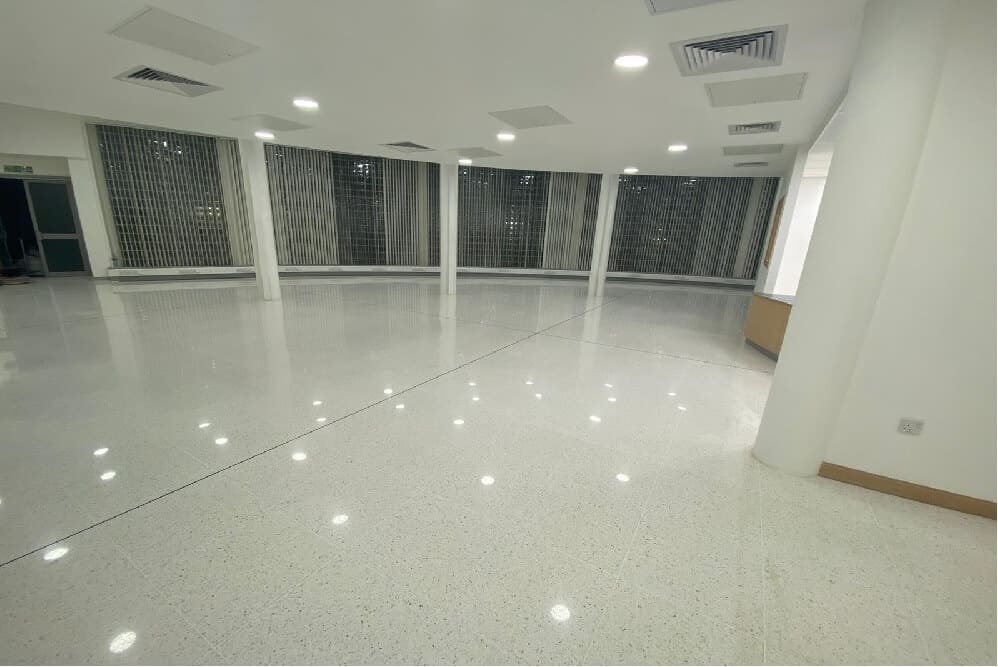
Dust-mop terrazzo daily, then clean with a neutral-pH cleaner mixed as directed and left a few minutes to loosen soil without drying on the floor. Remove the dirty solution with a squeegee, vacuum or mop and rinse with plenty of clean water. Seal with a water-based terrazzo sealer, and avoid waxes, all-purpose cleaners, acids and harsh alkalis.
Why it matters
Know Your Terrazzo System
Terrazzo anchors marble chips or other aggregates in one of three binders: Portland cement (the original and still in use), polyacrylate-modified cement, and epoxy resin, the most common today. Marble chips absorb little, and some aggregates have almost no porosity.
Portland cement binders benefit most from sealing, which also helps hold the aggregate in place. Epoxy binders are essentially non-porous; sealers protect the aggregate and usually improve appearance. Because every system anchors aggregate at the surface, maintenance is similar for all of them.

About the material
What Is Terrazzo Made Of?
Terrazzo is a composite: marble chips or other aggregates set in a binder, then ground, polished and sealed. The binder changes how porous the floor is, but maintenance is similar for every terrazzo system.
Portland cement
The original binder, and the part of the floor that benefits most from sealing.
Polyacrylate cement
An upgraded cement binder that followed Portland cement.
Epoxy resin
The most popular binder today; essentially non-porous.
Aggregates
Marble chips have little porosity; sealers help hold them in place.
Our process
Custodian Maintenance Schedule
Keep mops, pails and water clean, and check with your terrazzo contractor before departing from these directions.
01
Daily
Dust-mop to remove dust and grit. Spot-clean stains and scuffs by hand with warm water and a neutral cleaner.
02
Weekly
Damp-mop lightly soiled floors with a neutral cleaner; scrub heavily soiled areas with a neutral cleaner and a floor machine. Pick up all residue and buff dry.
03
Twice a year
Remove old finish coats and sealer, then reseal the clean surface.
Give a neutral cleaner a few minutes to work, but never let it dry on the floor. Following the minimum maintenance program gives owners one of the lowest maintenance costs of any floor.
Owner guide
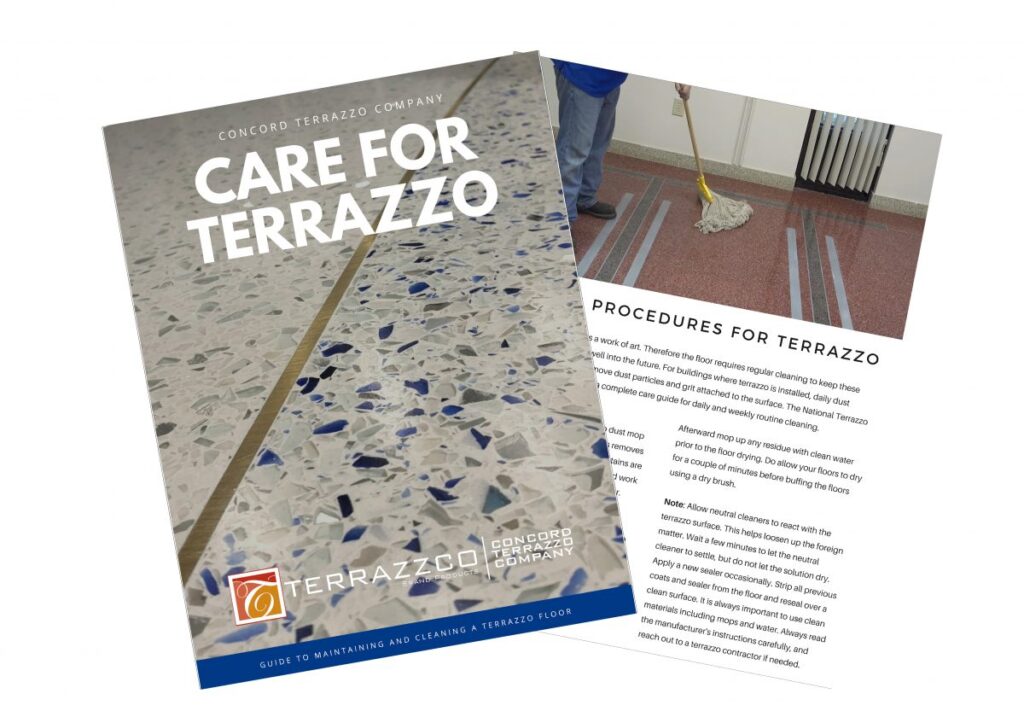
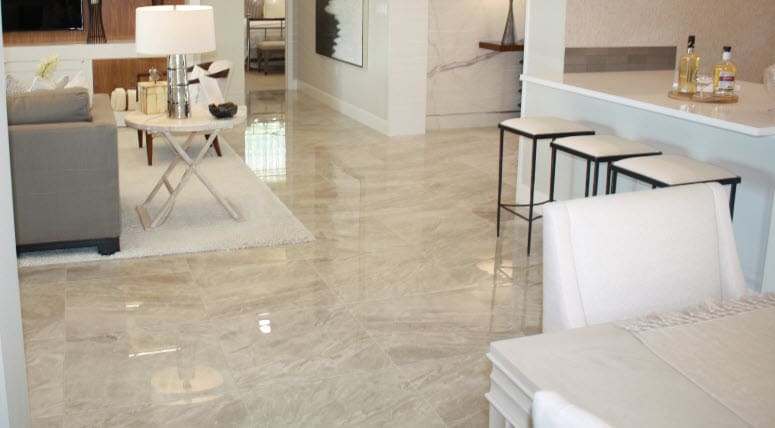
Sealing and Cleaning Procedures
Terrazzo is normally ground, polished and sealed with a terrazzo sealer, which protects against spills but does not replace good housekeeping.
Clean with neutral-pH products only. Water-based sealers are the most common today and help meet code-required slip resistance; mop on one or more coats as the manufacturer directs. For high gloss, a water-based finish can be added and buffed routinely.
Neutral cleaners are mixed with clean water and left on the floor for several minutes to dissolve grime. Keep the floor wet throughout so soil does not redeposit, then remove the solution with a squeegee, vacuum or mop and rinse with plenty of fresh water. How often to clean depends on traffic; most public buildings need frequent dust-mopping.
Do’s and don’ts
Terrazzo Do’s and Don’ts
Grit is abrasive, and the wrong products make terrazzo slippery.
Do:
Don’t:

Compare the options
Routine Care, Deep Scrub or Refinishing?
Terrazzo can last a lifetime. Most of that comes down to routine care, with deeper work when the finish wears.
Estimates
What Affects Your Estimate
Every estimate is based on the surface itself, and you receive it in writing before any work is booked. These are the main factors that shape it.
Area & traffic
Floor size and how much traffic it carries.
Binder
Cement or epoxy terrazzo.
Strip & reseal
Whether old finish has to be removed.
Finish work
Crystallization for a dull, low-gloss surface.
Service Area
Terrazzo Floor Care in San Diego County
We clean, reseal and restore terrazzo floors in homes, public buildings and businesses throughout San Diego County.
Related services
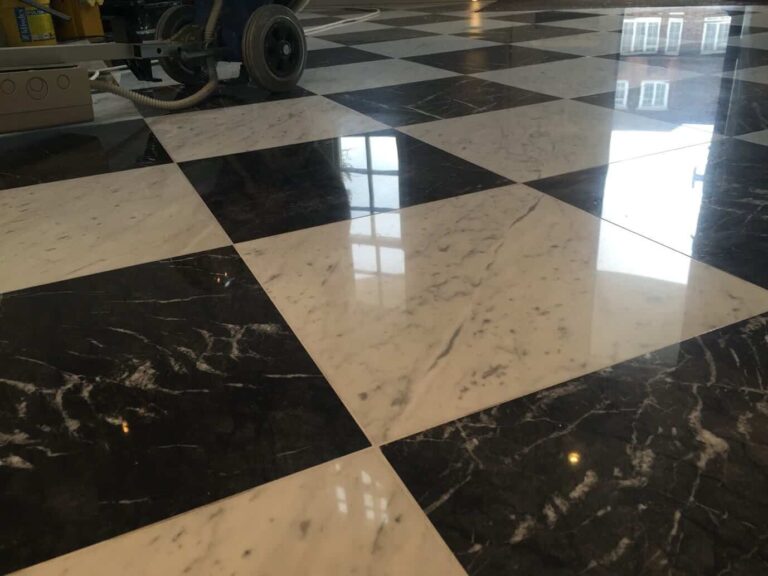
Related Tile & Stone Services
Common questions
Frequently Asked Questions
What cleaner is safe for terrazzo?
A neutral-pH cleaner. Avoid all-purpose cleaners with acids, harsh alkalis or crystallizing salts.
How often should terrazzo be resealed?
The custodian schedule calls for stripping old coats and resealing twice a year.
Can I wax terrazzo?
No. Pure surface waxes and all-purpose sealers can make terrazzo slippery.
Can dull terrazzo be restored?
Often, yes. Terrazzo is ground, polished and sealed when installed, and a worn finish can be stripped and resealed, or given new gloss with crystallization, depending on its condition.
How often should a terrazzo floor be dust mopped?
It depends on traffic, but most public buildings need frequent dust mopping, and daily dust mopping is recommended to remove grit.
Get Started
Ready for Cleaner Tile, Grout & Stone?
Tell us what needs cleaning and we'll help you work out the right next step, with no pressure either way.
Free estimates
Surface-safe methods
Residential & commercial