
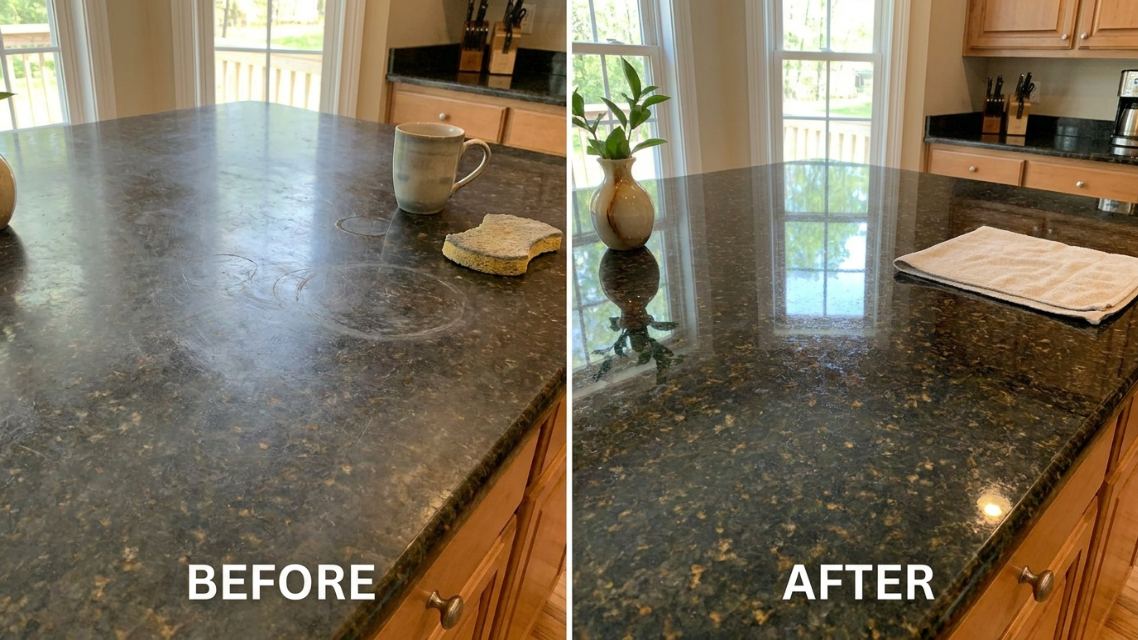
 If your granite countertops have lost their shine, developed dull patches, or picked up scratches and etch marks over the years, professional granite countertop restoration in San Diego can bring them back to a like-new finish without the cost of replacement. San Diego Tile and Stone Cleaning specializes in restoring the natural beauty, strength, and value of granite surfaces throughout San Diego County, using methods that clean, repair, and reseal the stone rather than mask the damage.
Granite is one of the most durable countertop materials available, but it isn’t indestructible. Daily use, acidic spills, hard water, and worn-out sealant all take a toll over time. The good news is that most damage — dullness, light scratching, staining, chipping, and etching — can be corrected through professional restoration, saving homeowners and business owners thousands compared to a full countertop replacement. Our team also handles countertop cleaning and general granite cleaning for surfaces that just need routine maintenance rather than full restoration.
Why Granite Countertop Restoration Matters
Granite countertops are a significant investment, and letting damage go unaddressed tends to make problems worse rather than better. Small etch marks and hairline scratches trap bacteria, food residue, and grime, which is a real concern in kitchens and bathrooms. A worn or missing sealant layer leaves the stone porous, allowing spills to soak in and cause permanent staining. Chips near sink cutouts and countertop edges can spread into larger cracks if left untreated.
Beyond hygiene and structural concerns, dull or damaged granite simply looks tired — and in a kitchen or bathroom, that affects the overall feel of the home. Restoring granite protects the surface for years to come, preserves the resale value of the property, and restores the depth and shine that made the stone attractive in the first place.
Common Problems This Service Solves
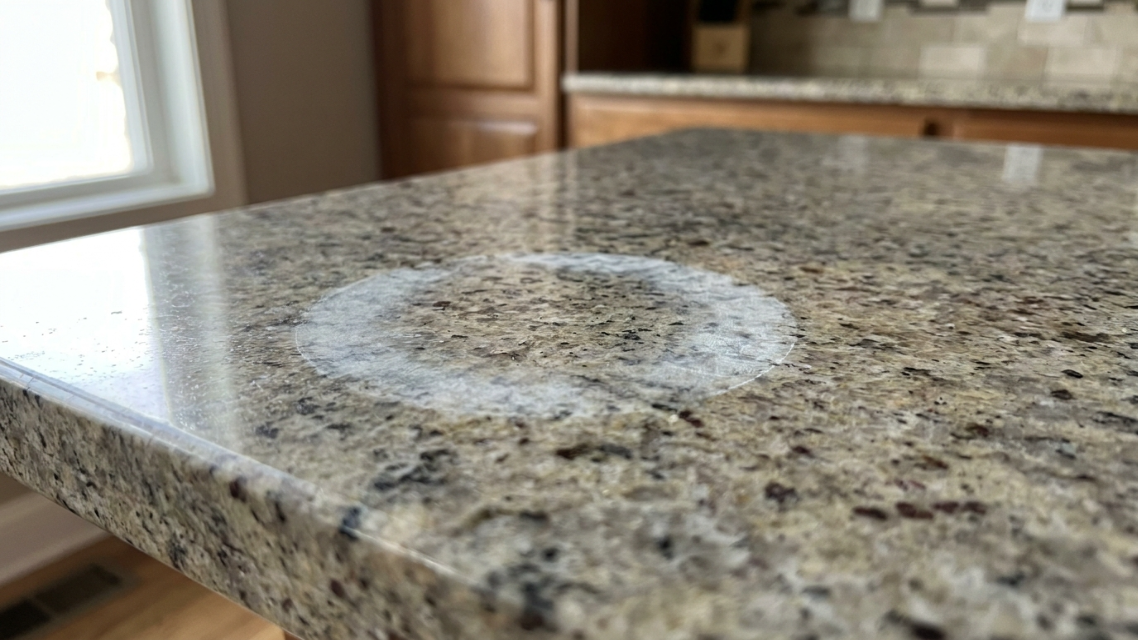 Homeowners typically reach out for granite countertop restoration after noticing one or more of the following:
- Dull, cloudy, or lifeless finish — often caused by years of wear, harsh cleaning products, or a breakdown in the original polish.
- Etch marks and water rings — light, often circular dull spots left behind by acidic substances like lemon juice, wine, vinegar, or certain cleaning chemicals.
- Scratches from knives, pots, and pans — visible surface scratches that catch light differently than the surrounding stone.
- Stains from oil, wine, coffee, or hard water — discoloration that has soaked into the pores of unsealed or under-sealed granite.
- Chips and cracks — commonly found near sink cutouts, countertop edges, and corners where impact is more likely.
- Lippage or uneven seams — noticeable height differences between countertop sections, often around seams and joints.
- Failed or missing sealant — granite that absorbs water quickly (rather than beading it) has lost its protective seal and is vulnerable to staining.
If any of these sound familiar, the surface almost certainly can be restored rather than replaced. For readers dealing specifically with acid-related dulling, our team has also put together a closer look at how to address tile and stone etching between professional visits.
Our Granite Countertop Restoration Process
Every granite restoration project starts with an honest assessment, since the right approach depends on the type of damage present. Our process typically includes:
- Inspection and assessment. We examine the granite to identify etching, staining, scratching, chips, cracks, and the condition of the existing sealant, then explain what’s realistic to correct.
- Deep cleaning. The surface is thoroughly cleaned to remove grease, soap film, and debris so the stone can be accurately evaluated and worked on.
- Repair work. Chips and cracks are addressed through professional chip and crack repair, using color-matched epoxy filling to blend seamlessly with the surrounding stone.
- Honing and grinding. For deeper scratches or uneven areas, we use diamond honing to level the surface and remove imperfections without over-processing the stone.
- Polishing and crystallization. The countertop is polished, and where appropriate, treated with a crystallization treatment to restore depth, shine, and a smooth, reflective finish.
- Sealing. A fresh sealant is applied to protect the granite from future staining and moisture penetration, since sealant naturally wears down over time.
- Final walkthrough. We review the finished surface with the homeowner to confirm the results meet expectations before wrapping up.
Why Choose San Diego Tile and Stone Cleaning
San Diego Tile and Stone Cleaning focuses specifically on natural stone and tile care, which means granite restoration isn’t a side offering — it’s core to what we do every day. A few reasons local homeowners choose our team:
- Stone-specific expertise. We understand how different types of granite react to honing, polishing, and sealing, which helps prevent over-processing or damage during restoration.
- Non-destructive methods. Our process is designed to repair and restore the existing stone rather than sand away more material than necessary.
- Full-service capability. Beyond granite, we also handle related surfaces like vanity top restoration and full countertop restoration, so kitchens and bathrooms can be addressed together in one visit.
- Local, San Diego-based team. We’re familiar with the stone types, home styles, and local water conditions common throughout San Diego County.
- Clear communication. We walk homeowners through what can realistically be improved before any work begins, rather than making promises the process can’t deliver.
Granite Countertop Restoration Across San Diego County
San Diego’s coastal climate creates a few specific challenges for granite countertops. Homes near the coast in areas like La Jolla, Del Mar, and Point Loma are exposed to salt air, which can accelerate wear on sealant over time. Further inland, in communities like Rancho Santa Fe, Carmel Valley, and Poway, hard water is a common culprit behind mineral buildup and water spotting on granite surfaces. Large windows and abundant natural light — a hallmark of many San Diego homes — can also contribute to gradual dulling of exposed countertop sections near sinks and cooking areas.
Kitchen and bathroom granite in San Diego County spans everything from classic slab countertops in older homes to large island surfaces in newer builds throughout Encinitas, Carmel Valley, and Rancho Bernardo. Regardless of the home’s age or style, the same core issues tend to show up: worn sealant, etching from acidic foods or cleaners, and scratching from daily use. Our team serves homeowners and businesses throughout San Diego and the surrounding areas, bringing the same restoration process to condos, single-family homes, and commercial properties alike.
Cost, Timeline, and What to Expect
Granite countertop restoration pricing depends on several factors, including the size of the countertop, the extent of the damage, the type of granite, and whether repairs like chip filling or seam work are needed in addition to polishing and sealing. Lighter restoration work — cleaning, light polishing, and resealing — is generally quicker, while projects involving chip repair, deep honing, or crystallization take more time to complete correctly.
Timeline also depends on scope: a single countertop with minor etching may be completed in one visit, while larger kitchens, multiple bathrooms, or commercial properties may require additional time to ensure each step is done properly. During your consultation, our team will assess the granite in person (or via photos) and provide a clear explanation of what the project will involve before any work begins.
If you’re weighing restoration against other stone care options, it’s worth comparing approaches — our guide on three methods to clean granite countertops in San Diego and our tips on removing granite stains both cover what homeowners can reasonably manage between professional visits versus what calls for a restoration appointment.
Ready to Restore Your Granite Countertops?
Dull, scratched, or stained granite doesn’t mean it’s time to replace your countertops. In most cases, professional granite countertop restoration in San Diego can bring the stone back to a polished, protected finish for a fraction of the cost of replacement. San Diego Tile and Stone Cleaning is ready to assess your granite and walk you through exactly what it will take to get it looking its best again.
Call (858) 952-0777 today to schedule your granite countertop restoration consultation, or email info@sandiegotilegroutcleaning.com to request a quote. We proudly serve San Diego and the surrounding communities.
How much does granite countertop restoration cost in San Diego?
How much does granite countertop restoration cost in San Diego?
Cost depends on the size of the countertop, the extent of the damage, and whether repairs like chip filling or seam work are needed alongside polishing and sealing. Lighter jobs involving cleaning and resealing typically cost less than restoration work that includes honing, crystallization, or crack repair. A technician can provide an accurate estimate after assessing the granite in person.
Can scratched granite countertops really be fixed?
Can scratched granite countertops really be fixed?
Yes. Most surface-level and moderate scratches can be corrected through professional honing and polishing, which levels the stone and restores a smooth, even finish. Deeper gouges may require more intensive grinding. In nearly all cases, restoration is far less costly than full countertop replacement.
What causes dull spots or etch marks on granite?
What causes dull spots or etch marks on granite?
Etch marks are usually caused by acidic substances — lemon juice, wine, vinegar, tomato sauce, and some cleaning products — reacting with the stone’s surface. This creates a dull, often circular mark that sits below the polished layer, which is why wiping it doesn’t remove it and why professional restoration is typically needed.
How often should granite countertops be resealed?
How often should granite countertops be resealed?
Sealant wears down gradually with everyday use, and how often it needs reapplying depends on the type of granite, how the countertop is used, and the quality of the previous seal. A simple way to check is to splash a small amount of water on the surface — if it soaks in quickly instead of beading up, it’s a sign the seal has worn thin.
Is granite restoration better than replacing the countertop?
Is granite restoration better than replacing the countertop?
In most cases, yes. Restoration addresses etching, scratching, staining, dullness, and minor chips or cracks at a much lower cost than removing and replacing the entire countertop, while achieving a comparable finished look. Replacement is generally only necessary when the stone has structural damage beyond what restoration can correct.
Do you offer granite countertop restoration near Del Mar and La Jolla?
Do you offer granite countertop restoration near Del Mar and La Jolla?
Yes, San Diego Tile and Stone Cleaning serves Del Mar, La Jolla, and communities throughout San Diego County. Coastal homes in these areas often deal with sealant wear from salt air, which we factor into the assessment and restoration process.
How long does the restoration process take?
How long does the restoration process take?
Timeline depends on the size of the countertop and the extent of the repair work needed. A single countertop with light etching may be completed in one visit, while larger kitchens or projects involving chip repair and honing take additional time to complete properly.
Will restoration remove stains from oil, wine, or coffee?
Will restoration remove stains from oil, wine, or coffee?
Many stains can be significantly improved or removed through professional stain removal and polishing, particularly when the sealant has failed and allowed liquid to soak into the stone. The likelihood of full stain removal depends on how deep the stain has penetrated and how long it has been present.


