
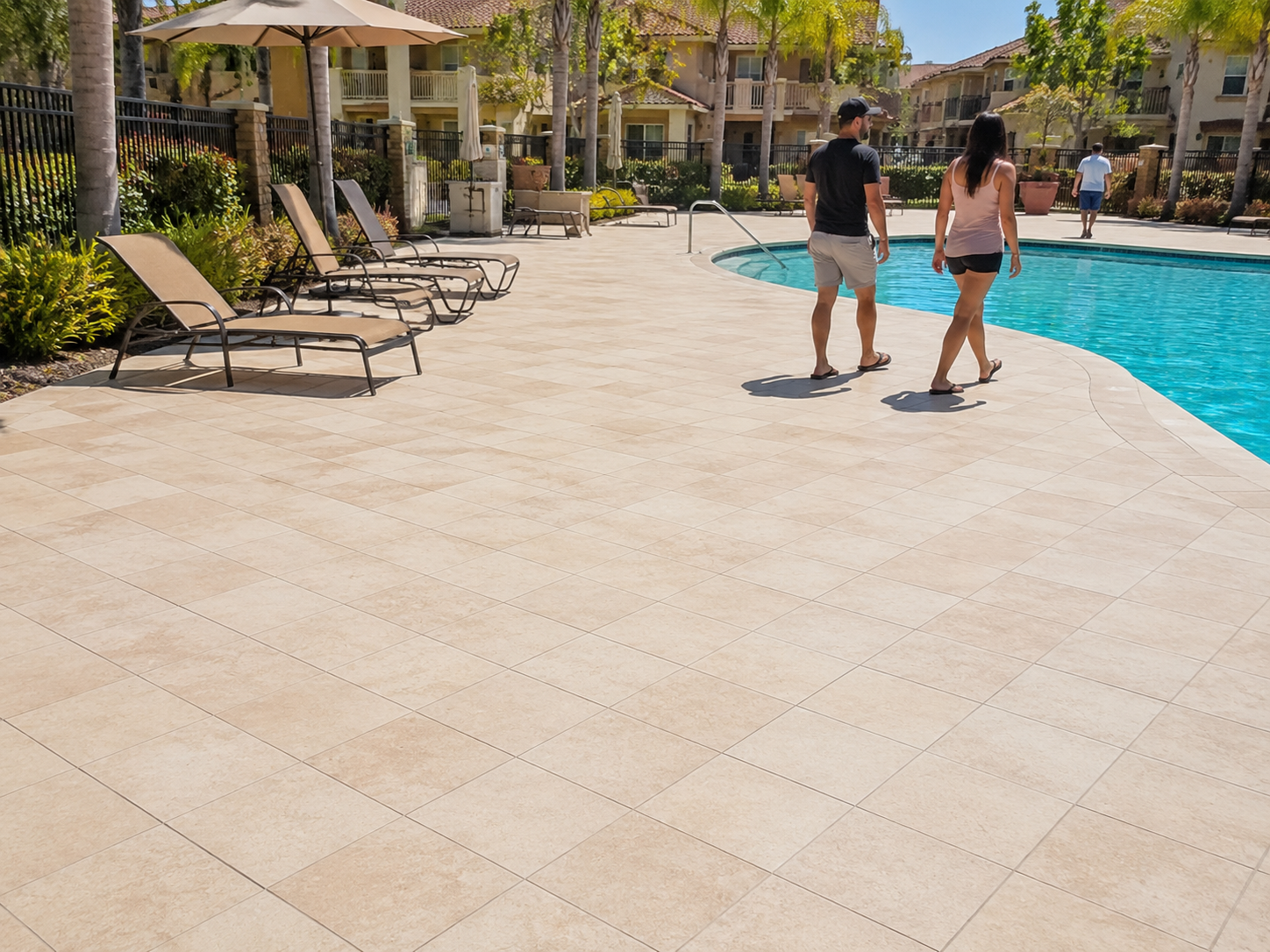
Homeowners associations across San Diego County are responsible for miles of shared walkways, pool decks, lobbies, and clubhouse floors — and tile and stone surfaces take a beating from year-round foot traffic, sun exposure, and coastal moisture. HOA Tile & Stone Maintenance Services from San Diego Tile and Stone Cleaning help community associations and property managers keep those surfaces safe, presentable, and protected without the expense of premature replacement.
Whether you manage a gated community in Rancho Bernardo, a beachfront condo association in Del Mar, or a mixed-use HOA near downtown, worn or neglected tile and stone can quietly become a liability issue, a maintenance headache, and a drag on property values. A structured maintenance program addresses all three — and it’s built around the day-to-day realities HOA boards and management companies actually deal with: budgets, vendor accountability, resident complaints, and reserve study timelines.
Why HOA Tile & Stone Maintenance Matters
Shared tile and stone surfaces are some of the highest-traffic, highest-liability areas an HOA manages. Pool decks, entryways, lobbies, and walkways get exposed to sunscreen, chlorine, sand, salt air, and constant foot traffic — and unlike a private home, an HOA’s flooring is used by dozens or hundreds of residents and guests every week.
When maintenance is deferred, the risks compound quickly:
- Slip-and-fall liability. Etched, worn, or grout-stained stone loses slip resistance over time, especially around pools and spa areas — a common source of HOA insurance claims.
- Accelerated surface damage. Untreated grout allows moisture intrusion, which can lead to cracking, efflorescence, and subsurface damage that’s far more expensive to repair than to prevent.
- Resident complaints and board pressure. Dingy common areas are one of the most frequent sources of resident dissatisfaction and can affect how buyers perceive a community during resale.
- Reserve fund strain. Reactive, emergency-only repairs typically cost significantly more than a planned maintenance cycle, and can throw off long-term reserve study projections.
A proactive maintenance plan addresses these risks before they turn into claims, complaints, or capital expenditures — which is why more San Diego HOA boards are shifting from reactive repairs to scheduled maintenance contracts.
Common Problems This Service Solves
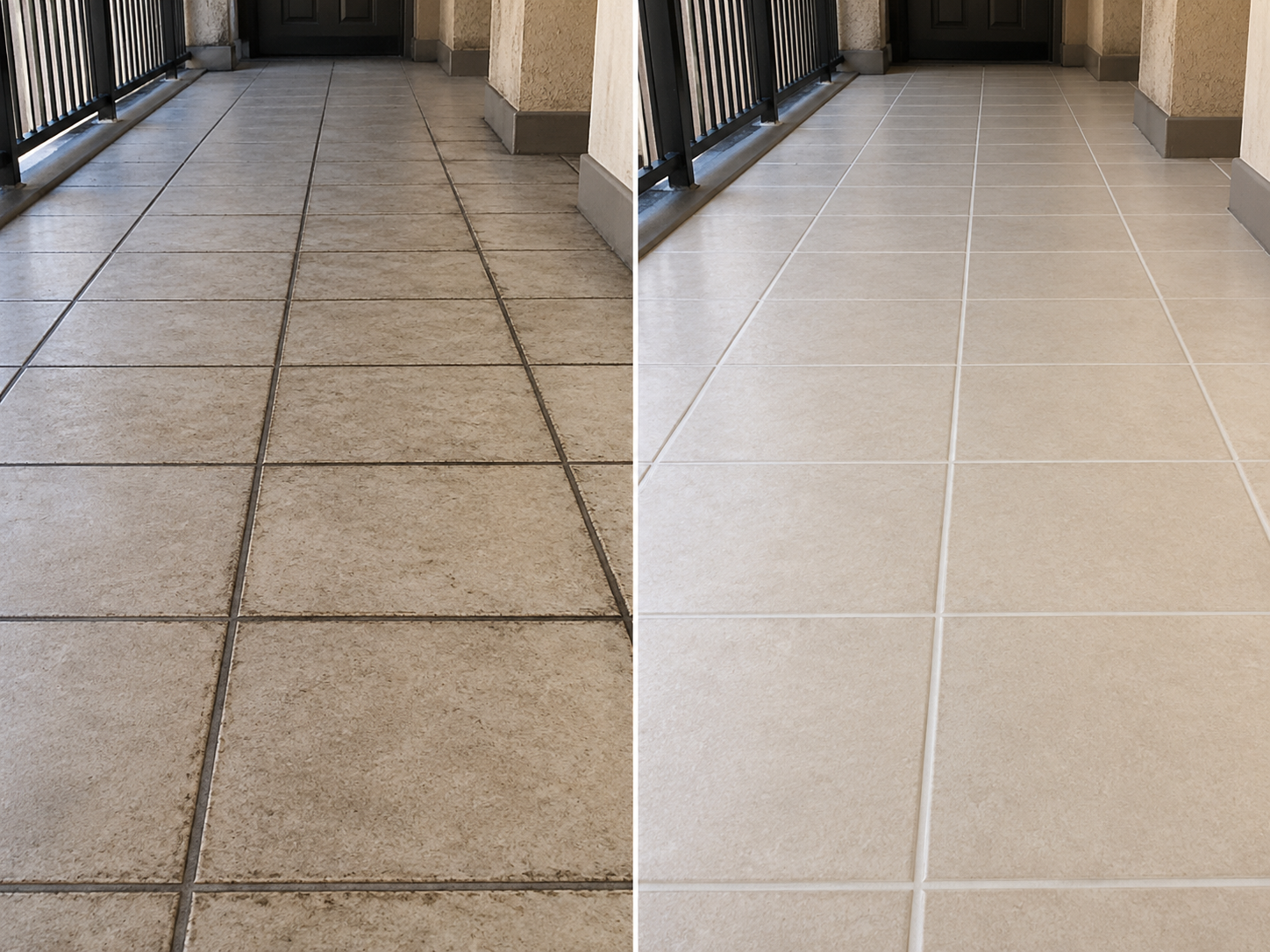 HOA boards and property managers typically call in a maintenance program after noticing one or more of these issues:
- Slippery pool decks and spa surrounds where natural stone or travertine has lost its texture from years of sunscreen buildup and chlorine exposure
- Dark, stained grout lines in lobbies, mailrooms, and clubhouse floors that make common areas look dirty even right after mopping
- Efflorescence — the white, chalky mineral deposits that appear on stone and pavers exposed to irrigation overspray or coastal humidity
- Cracked, chipped, or lippage-prone tile along high-traffic walkways and stairwells that create trip hazards
- Faded or dull stone entries at the community’s main entrance or clubhouse, which is often the first impression for prospective buyers and guests
- Inconsistent vendor work from janitorial crews who mop and sweep but aren’t equipped to deep clean, seal, or restore natural stone and tile properly
If any of these sound familiar, it’s usually a sign that routine janitorial cleaning has reached its limits and the surfaces need professional-grade restoration and protection.
Our HOA Maintenance Process
Community associations need a process that’s predictable, documented, and easy for the board or management company to approve and track. Here’s how a typical engagement works:
- Site walkthrough and assessment. We inspect all tile, stone, and grout surfaces across the property — pool decks, entries, walkways, stairwells, lobbies, and amenity spaces — and note surface type, wear level, and any safety concerns.
- Scope and proposal. Based on the assessment, we put together a written scope covering cleaning, repair, sealing, and slip-resistance treatment, along with a recommended maintenance frequency (often quarterly, semi-annually, or annually depending on traffic and exposure).
- Deep cleaning and grout restoration. We use professional-grade equipment and pH-appropriate cleaning solutions matched to the specific material — natural stone, porcelain, and engineered surfaces each require different care — to lift embedded soil, mineral buildup, and biological staining without damaging the surface.
- Repairs as needed. Chips, cracks, lippage, and worn grout joints are addressed before sealing so the finished surface is both safer and more durable.
- Sealing and slip-resistance treatment. A penetrating or topical sealer appropriate to the stone or tile type is applied to protect against staining and moisture intrusion, and slip-resistant treatments are applied to pool decks and other wet-traffic areas.
- Documentation and reporting. Boards and management companies receive a written summary of work performed, which is useful for HOA records, resident communication, and reserve study documentation.
- Ongoing maintenance scheduling. For associations that enroll in a recurring plan, we set a maintenance calendar so surfaces are serviced before problems reappear, rather than after residents start complaining.
This structure is designed to work within how HOAs actually operate — board approval cycles, management company sign-off, and predictable line-item budgeting.
Why Choose San Diego Tile and Stone Cleaning
San Diego Tile and Stone Cleaning works with a wide range of surface types — including natural stone, ceramic and porcelain tile, travertine, and concrete pavers — which matters for HOAs because a single property often has several different materials across the pool deck, lobby, and walkways, each requiring a different cleaning and sealing approach.
A few things that set a dedicated tile and stone specialist apart from a general janitorial contractor:
- Material-specific expertise. Marble, travertine, and other natural stone need different pH-balanced products and techniques than porcelain or engineered tile — using the wrong approach can permanently damage the surface.
- Direct communication with boards and property managers. Written scopes, clear pricing structures, and documented work history make it easier for boards to approve and track maintenance spending.
- Repair and restoration in-house. Rather than just cleaning around problems, chips, cracks, and lippage can be addressed as part of the same visit.
- Local familiarity with San Diego HOA conditions. Coastal salt air, chlorine exposure, hard water minerals, and heavy pool-season traffic all affect how quickly surfaces need attention — and a company that services San Diego communities regularly understands those patterns.
HOA Communities Across San Diego
San Diego’s HOA-managed properties face a specific mix of conditions that make tile and stone maintenance more demanding than in many other regions. Coastal communities near Del Mar, La Jolla, and Pacific Beach deal with salt air and humidity that accelerate efflorescence and grout staining on outdoor stone and pavers. Inland communities in areas like Rancho Bernardo, Poway, and Scripps Ranch see heavier sun exposure and irrigation overspray, which contributes to hard-water mineral buildup on pool decks and entry stone.
Many San Diego HOAs also feature amenity-heavy layouts — clubhouses, resort-style pool areas, and shared lobbies — with a mix of natural stone, porcelain, and engineered stone surfaces that all need to be maintained on different schedules. Whether the property is a high-rise association downtown, a golf course community, or a beachfront condo complex, the underlying goal is the same: reduce liability, extend the life of expensive flooring, and keep common areas looking the way residents expect.
Cost, Timeline & What to Expect
Every HOA property is different, so pricing and timelines depend on several factors:
- Square footage and number of surface types across the property (pool deck, lobby, walkways, stairwells, etc.)
- Current condition of the tile, stone, and grout — heavily stained or damaged surfaces require more preparation than well-maintained ones
- Material type, since natural stone, porcelain, and pavers each call for different products and labor
- Access and scheduling needs, including whether work needs to happen during off-hours to minimize disruption to residents
- Maintenance frequency, since a recurring quarterly or semi-annual contract is typically more cost-effective per visit than one-time emergency service
Because of these variables, the most accurate way to get pricing is a walkthrough assessment, which results in a written proposal the board or management company can review and approve. Most projects can be scheduled within a few weeks of approval, and recurring maintenance plans are set up on a calendar that fits the property’s traffic patterns and budget cycle.
For associations managing multiple surface types on one property, it can help to review specific service pages for each material — including natural stone cleaning, travertine cleaning, and ceramic and porcelain tile cleaning — to understand what’s involved before the site visit.
Related Services for HOA & Common-Area Properties
HOA properties often need more than one type of service across a single site visit. San Diego Tile and Stone Cleaning also provides:
- Concrete pavers cleaning for walkways, driveways, and courtyard areas
- Exterior stone cleaning for building facades, entry columns, and outdoor amenity spaces
- Tile and grout cleaning for interior lobbies, mailrooms, and clubhouse floors
- Diamond honing for restoring shine and smoothness to worn stone surfaces
- Property management tile and grout cleaning and lobby and common-area tile and grout cleaning for management companies overseeing multiple properties
If your board is still deciding whether professional maintenance is worth the investment, this overview of what to consider before hiring a tile and grout cleaning service and this guide to how to clean stone floors properly are useful starting points for board discussions.
HOA Tile & Stone Maintenance Services, Done Right
Deferred maintenance on shared tile and stone surfaces almost always costs an HOA more in the long run — through liability exposure, resident complaints, and premature replacement. A scheduled maintenance program is one of the more straightforward ways a board or management company can protect the community’s investment while keeping common areas safe and presentable.
San Diego Tile and Stone Cleaning provides HOA Tile & Stone Maintenance Services throughout San Diego, CA and the surrounding areas, with a process built around board approval workflows, documented reporting, and material-specific care. Call (858) 952-0777, email info@sandiegotilegroutcleaning.com, or request a free site assessment to get a written proposal for your community.
Frequently Asked Questions
1. What does HOA tile and stone maintenance actually include?
1. What does HOA tile and stone maintenance actually include?
It typically includes deep cleaning, grout restoration, minor repairs like chip or crack filling, sealing, and slip-resistance treatment for common-area surfaces such as pool decks, lobbies, walkways, and clubhouse floors. The exact scope depends on the property’s surface types and condition, and is outlined in a written proposal after a site walkthrough.
2. How often should an HOA schedule tile and stone maintenance?
2. How often should an HOA schedule tile and stone maintenance?
Most communities benefit from service every six to twelve months, though high-traffic areas like pool decks may need more frequent attention. Coastal exposure, irrigation overspray, and resident traffic volume all affect the right schedule for a given property.
3. Can you work with our HOA’s management company or board directly?
3. Can you work with our HOA’s management company or board directly?
Yes. We regularly provide written scopes, proposals, and documentation that management companies and boards can review, approve, and keep on file for reserve study or vendor records.
4. Do you clean and maintain multiple surface types on one property?
4. Do you clean and maintain multiple surface types on one property?
Yes. Most HOA properties have a mix of natural stone, porcelain or ceramic tile, and concrete pavers across different areas, and each requires a different cleaning and sealing approach. We assess all surfaces during the initial walkthrough and scope the work accordingly.
5. Is HOA tile and stone maintenance available in San Diego, CA?
5. Is HOA tile and stone maintenance available in San Diego, CA?
Yes, we provide HOA Tile & Stone Maintenance Services throughout San Diego, CA and surrounding communities, including coastal and inland associations with pool decks, lobbies, and shared walkways.
6. Why does grout on pool decks and walkways need special attention?
6. Why does grout on pool decks and walkways need special attention?
Grout is porous, so it absorbs moisture, chlorine, sunscreen residue, and dirt over time, which leads to staining and can compromise slip resistance. Regular cleaning and resealing keeps grout lines from becoming a safety or appearance problem.
7. Can maintenance help prevent slip-and-fall liability at our community pool?
7. Can maintenance help prevent slip-and-fall liability at our community pool?
A scheduled maintenance program that addresses etching, mineral buildup, and slip resistance on pool deck surfaces can help reduce one of the more common sources of HOA liability exposure, though no maintenance program can guarantee against accidents.
8. Do you offer recurring maintenance contracts for HOAs?
8. Do you offer recurring maintenance contracts for HOAs?
Yes, recurring plans are available on a quarterly, semi-annual, or annual basis depending on the property’s traffic and exposure, and are generally more cost-effective than one-time emergency service.


