
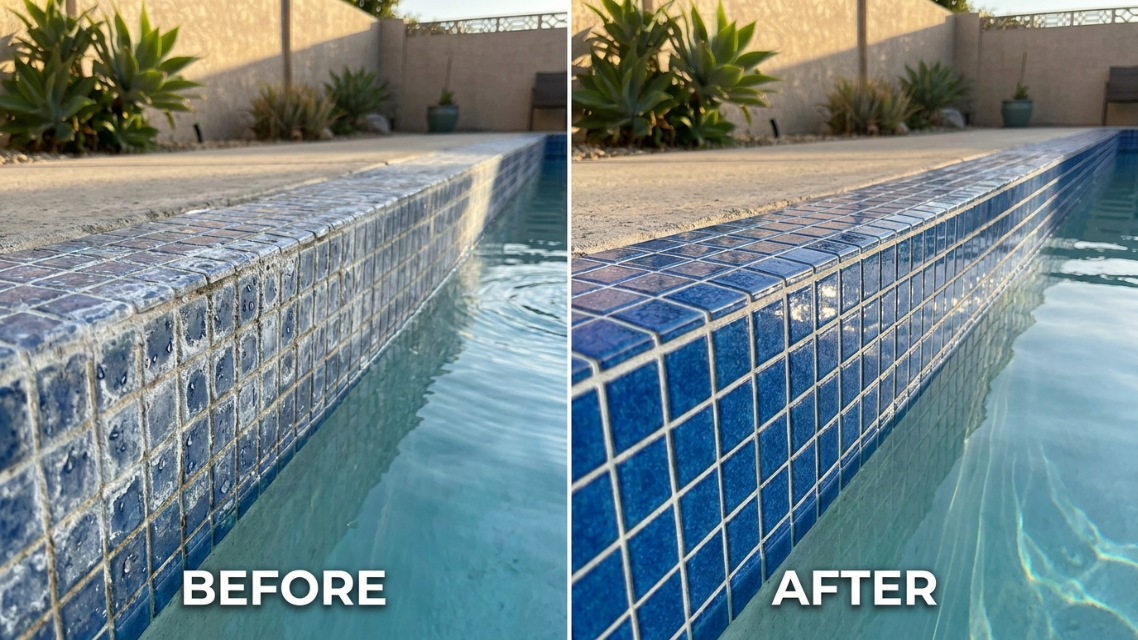
 If your pool’s waterline tiles are covered in a chalky white crust, cloudy film, or stubborn brown staining, you’re dealing with one of the most common — and most misunderstood — pool maintenance problems in the region. San Diego Tile and Stone Cleaning provides a dedicated pool tile cleaning service San Diego homeowners and property managers rely on to strip away calcium deposits, mineral scale, and algae staining without damaging the tile, grout, or surrounding pool finish.
Based in Del Mar and serving communities throughout San Diego County, our team understands why local pools accumulate buildup faster than pools in other parts of the country, and we use methods built specifically for that reality — not generic pressure-washing that can etch glass tile or dull natural stone coping.
Why This Service Matters
Calcium buildup on pool tile isn’t just a cosmetic issue. Left untreated, it becomes a compounding problem:
- It gets harder to remove over time. Calcium carbonate deposits bond more tightly to tile and grout the longer they sit, especially under San Diego’s near-constant sunshine. What starts as a light haze can harden into a rough, chalky crust within a season.
- It can permanently etch or dull certain materials. Glass tile, natural stone, and some ceramic finishes are especially vulnerable to DIY acid washes or abrasive scrubbing. Once a glossy glass tile surface is scratched, it typically cannot be restored — only replaced.
- It affects resale and curb appeal. A stained, crusty waterline is one of the first things buyers or guests notice around a pool, even when the water itself is perfectly balanced.
- It can signal an underlying water chemistry issue. Persistent scale buildup is often a sign of high calcium hardness or an imbalanced pH, which is worth flagging to your pool service provider alongside a professional cleaning.
Addressing buildup early — before it calcifies — makes the job faster, safer for your tile, and more affordable in the long run.
Common Problems This Service Solves
Homeowners typically reach out to us for one of these specific issues:
Calcium scale (white, chalky buildup). This is the most frequent complaint, and it’s caused by calcium carbonate in the pool water bonding to the tile at the waterline, where evaporation concentrates minerals. It’s most visible on darker tile and can eventually feel rough to the touch.
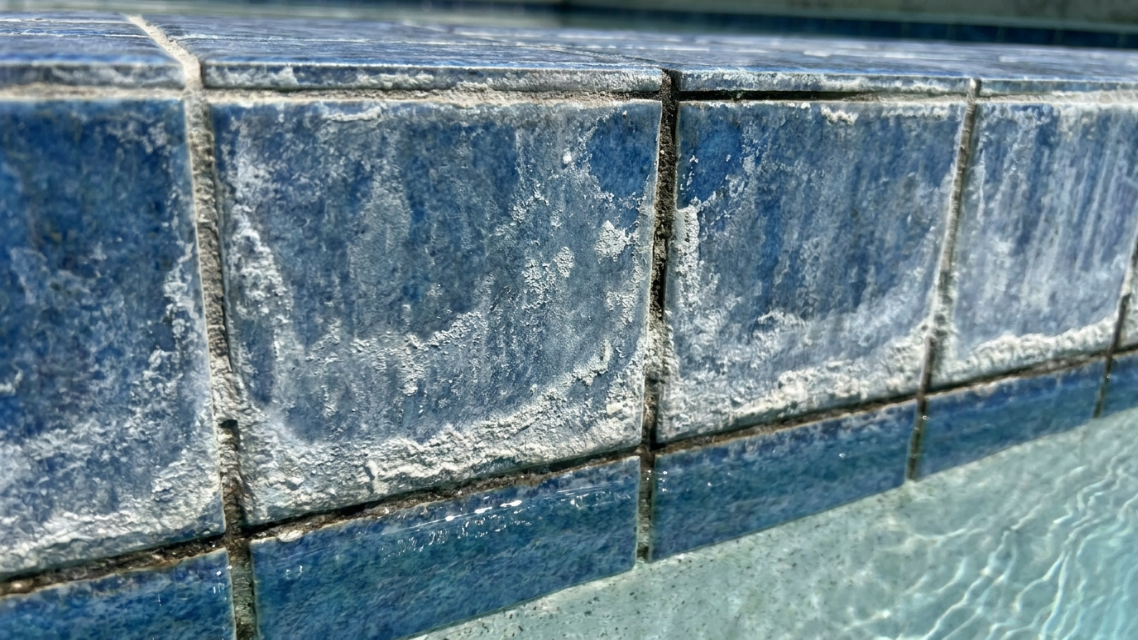 Cloudy or hazy glass and porcelain tile. Even without visible white crust, mineral film can leave tile looking dull instead of glossy, especially on pools that use fill water with higher mineral content.
Brown or rust-colored staining. Often related to metals in the water (iron, copper, or manganese) reacting with pool chemicals, this staining tends to sit stubbornly along the waterline and resists standard pool brushes.
Grout discoloration between pool tiles. Grout lines can darken or grow algae-tinted staining faster than the tile itself, particularly in shaded pool areas or homes near the coast.
Rough, sandpaper-like texture on the tile surface. This usually indicates advanced calcium deposits that have hardened over time and require professional-grade equipment to remove without damaging the tile glaze underneath.
If any of these sound familiar, a professional cleaning — rather than another round of vinegar, pumice stones, or abrasive pads — is usually the safest path to a real fix. Related issues like general natural stone cleaning and stone tile crystallization often come up alongside pool tile work when coping or deck stone is involved.
Our Service Process
Our pool tile cleaning process is built around protecting the tile and grout while fully removing buildup — not just knocking off the top layer of scale.
- Inspection and material assessment. We identify the tile type (glass, ceramic, porcelain, or natural stone), the severity of the buildup, and whether staining is mineral-based, metal-based, or biological, since each requires a different approach.
- Selecting the right cleaning method. Depending on the material and buildup type, we use pumice-free, tile-safe techniques and pool-specific cleaning solutions designed to dissolve calcium without scratching glass or dulling stone.
- Careful removal of scale and staining. We work the waterline in sections, removing buildup methodically so the entire tile band comes out even and consistent, rather than patchy.
- Grout attention. Grout lines between pool tiles are cleaned separately to address discoloration and buildup that standard scrubbing tends to miss.
- Rinse and inspection. Once cleaning is complete, we rinse thoroughly and do a final walk-through to confirm the tile is clean, undamaged, and matches expectations.
- Maintenance guidance. We’ll explain simple steps that help slow future buildup, including notes on water balance that are worth sharing with your pool service company.
This same material-first approach carries over into related services like glass tile cleaning and stone tile stain removal, where using the wrong method can cause permanent damage.
Why Choose San Diego Tile and Stone Cleaning
- Material-specific expertise. We treat glass tile, ceramic, porcelain, and natural stone differently because they require different tools and cleaning agents. A one-size-fits-all approach is how pool tile gets permanently scratched.
- Local knowledge of San Diego water and climate conditions. We work on pools throughout the county and see the same calcium and mineral patterns repeatedly, so we know what typically works for this region’s water profile.
- A broader stone and tile background. Because pool tile cleaning is part of a larger specialty in tile and grout cleaning and exterior stone cleaning, we bring the same care to pool tile that we apply to countertops, floors, and stone coping.
- Straightforward communication. We assess the tile, explain what we find, and walk you through the plan before we start — no upsells for work that isn’t needed.
Pool Tile Cleaning in Del Mar and Nearby San Diego Areas
Del Mar’s coastal environment creates a particular set of challenges for pool tile. Salt air, higher mineral content in some local water supplies, and intense year-round sun exposure all accelerate the formation of calcium scale and mineral film compared to inland climates. Homes along the coastal bluffs and near the Del Mar racetrack area, along with properties throughout the surrounding hillside and canyon neighborhoods, tend to see buildup form fastest on south- and west-facing pool walls that get the most direct sun.
We regularly serve pools throughout areas near San Diego, working with the same tile materials and mineral conditions common to Southern California backyards — from classic glass and ceramic waterline tile to natural stone coping and decking that surrounds many local pools. Because many of these homes also feature natural stone patios, travertine decking, or concrete paver surrounds, we’re often able to address the pool tile and the surrounding hardscape in the same visit.
What Affects Cost, Timeline, and Results
Every pool is different, so pricing and timeline depend on a few factors:
- The severity and age of the buildup. Light mineral film is quicker and less involved than deep, hardened calcium scale that has built up over multiple seasons.
- Tile material. Natural stone and glass tile often require more careful, slower techniques than standard ceramic or porcelain.
- Total waterline length and pool shape. Larger pools, spas, and pools with water features naturally take longer than a standard rectangular pool.
- Grout condition. Heavily discolored or damaged grout may need additional attention beyond the standard cleaning pass.
- Accessibility. Pools with limited access points, elevated decking, or surrounding landscaping can affect how quickly the job moves.
Because these variables differ from property to property, the most accurate way to get a timeline and cost estimate is a quick assessment — either through photos or an on-site look — rather than a flat quote sight unseen.
Get Your Pool Tile Looking Like New
If calcium buildup, cloudy glass tile, or stubborn staining has taken over your waterline, don’t reach for another abrasive pad or risky DIY acid wash. A professional pool tile cleaning service San Diego CA homeowners trust can restore your tile’s original shine without the risk of permanent scratching or etching.
Call San Diego Tile and Stone Cleaning at (858) 952-0777 or email info@sandiegotilegroutcleaning.com to schedule an assessment. We’re based at 1237 Camino Del Mar Unit C, Del Mar, CA 92014, and proudly serve pool owners throughout San Diego County. Request your free quote today and get your pool tile back to looking the way it should.
Frequently Asked Questions
1. How much does pool tile cleaning cost in San Diego?
1. How much does pool tile cleaning cost in San Diego?
Cost depends on the severity of calcium buildup, the tile material, waterline length, and grout condition. Light mineral film is typically less involved than years of hardened scale. The most accurate way to get pricing is a quick photo review or on-site assessment, since every pool’s buildup and tile type differ.
2. Can pool tile cleaning damage glass or natural stone tile?
2. Can pool tile cleaning damage glass or natural stone tile?
It can, if done with the wrong method. Abrasive pads, pumice stones, and harsh acid washes can permanently scratch glass tile or etch natural stone. That’s why material-specific techniques matter — using an approach suited to the actual tile type protects the surface while still fully removing buildup.
3. Why does my pool tile keep getting calcium buildup?
3. Why does my pool tile keep getting calcium buildup?
Calcium scale forms when calcium carbonate in the pool water bonds to tile, most often at the waterline where evaporation concentrates minerals. San Diego’s sun exposure and local water mineral content can accelerate this. Persistent buildup is also worth mentioning to your pool service provider, since it can signal high calcium hardness or pH imbalance.
4. How often should pool waterline tile be professionally cleaned?
4. How often should pool waterline tile be professionally cleaned?
This depends on your water chemistry, sun exposure, and pool usage, so there’s no single fixed schedule. Pools that see heavy scale buildup each season generally benefit from cleaning before deposits harden, while pools with better-balanced water may go longer between services.
5. Do you clean pool tile in Del Mar and surrounding San Diego areas?
5. Do you clean pool tile in Del Mar and surrounding San Diego areas?
Yes. San Diego Tile and Stone Cleaning is based in Del Mar and serves pool owners throughout areas near San Diego, working with the tile materials and mineral conditions typical of Southern California pools, including glass, ceramic, porcelain, and natural stone.
6. Is DIY pool tile cleaning safe, or should I hire a professional?
6. Is DIY pool tile cleaning safe, or should I hire a professional?
Mild film can sometimes be managed with gentle, non-abrasive cleaning, but heavier calcium scale is riskier to tackle yourself — abrasive tools and strong acids are a common cause of permanently scratched or dulled tile. Professional cleaning uses tile-safe methods matched to the specific material.
7. What causes brown or rust-colored stains on pool tile?
7. What causes brown or rust-colored stains on pool tile?
Brown or rust staining is usually related to metals such as iron, copper, or manganese in the pool water reacting with pool chemicals. These stains tend to sit stubbornly at the waterline and often don’t respond well to standard pool brushes, which is where professional stain removal helps.
8. Can you clean the grout between pool tiles too?
8. Can you clean the grout between pool tiles too?
Yes. Grout lines between pool tiles are addressed as part of the service, since they often discolor and collect buildup differently than the tile itself, especially in shaded areas of the pool.
9. Do you also clean pool decking and coping, not just the waterline tile?
9. Do you also clean pool decking and coping, not just the waterline tile?
Many pools have natural stone coping, travertine decking, or paver surrounds that can often be addressed in the same visit as the waterline tile cleaning, since they’re frequently affected by the same sun and mineral exposure.
10. How do I get a quote for pool tile cleaning?
10. How do I get a quote for pool tile cleaning?
Call (858) 952-0777 or email info@sandiegotilegroutcleaning.com with details or photos of your pool tile. Because buildup severity and tile material vary by pool, a quick assessment is the fastest way to get an accurate cost and timeline.


