Prestige Tile & Stone Cleaning
Serving San Diego County
Residential & Commercial
Mon–Fri 8am–5pm · Sat 10am–2pm

Quick answer
How Should Marble Be Cleaned?
Marble should be cleaned with pH-appropriate stone cleaners, never vinegar, lemon juice or abrasive products, because the calcium in marble reacts with acids and etches. Over time dirt fills the pores of marble floors, and routine mopping cannot remove it, so a professional clean followed by a penetrating sealer is the best way to keep marble looking its best.
Why it matters
Why Marble Needs Specialist Care
Marble is used in homes and businesses for floors, bathroom vanities and kitchen countertops, and it can last a lifetime with proper care.
Although it is a hard stone, marble scratches and dulls in high-traffic areas, and acidic spills etch it. Honed marble has a satin look and polished marble a high shine; honed marble keeps more open surface pores, which makes it more sensitive to dirt.
Marble services
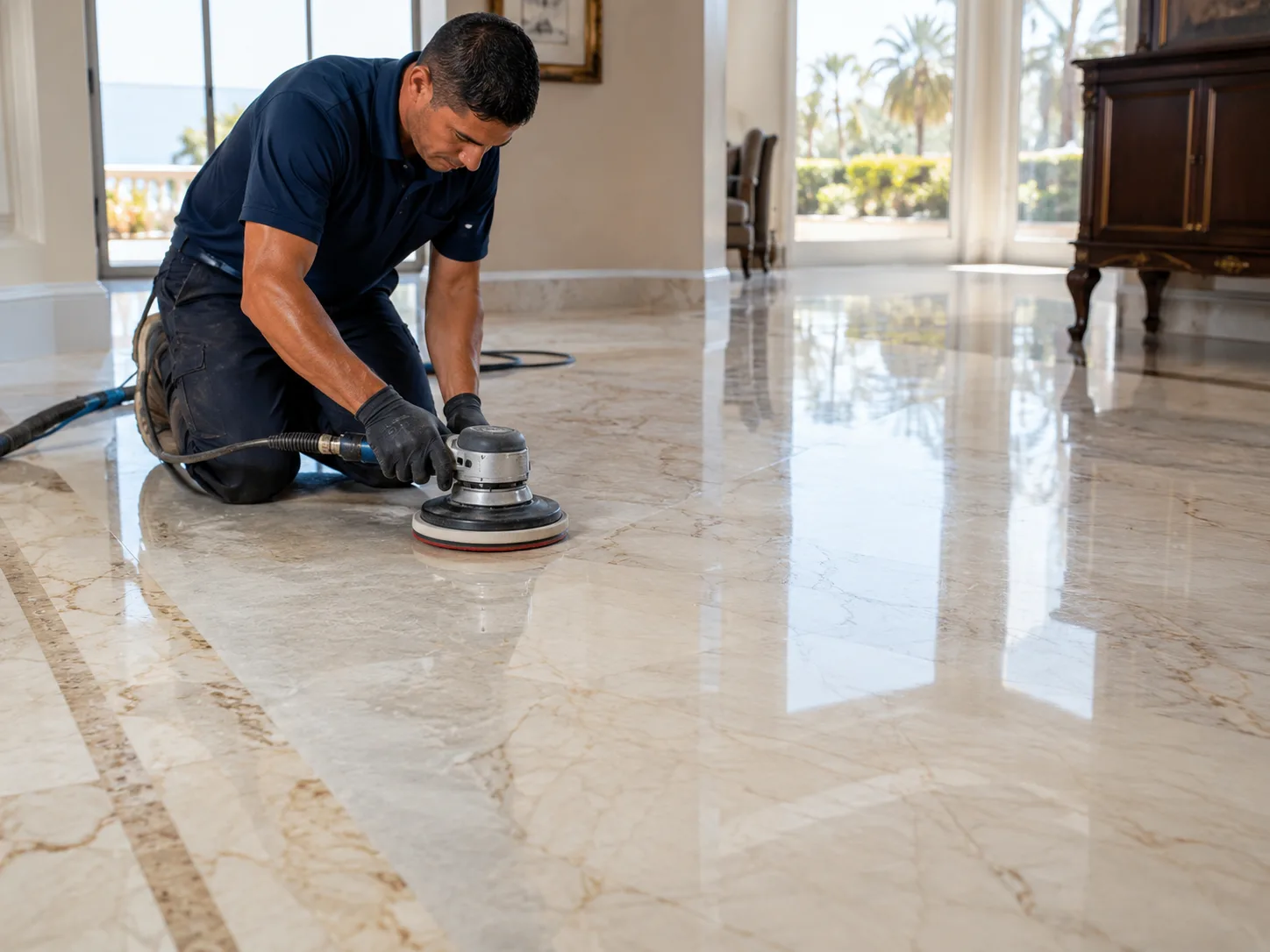
Professional Marble Care Services
Everything marble needs, from routine cleaning to restoring stone that was not cared for properly.
Cleaning
Dirt that has filled the pores of marble is removed, along with many other stone stains.
Polishing
Scratches, dull spots and etching polished out with a dustless technique for an even shine.
Restoration
Chip and crack repair, paint removal and restoration for neglected marble.
Sanitizing
Cleaning at the right temperature and pressure, with sanitizers when required.
Sealing
Premium penetrating sealers that protect without hiding the color; anti-slip options.
Maintenance
Help with cleaning, polishing, sealing and more complex upkeep over the years.
Our process
How We Clean, Polish and Protect Marble
Marble is acid-sensitive, so every step uses products and pressures chosen for it.
01
Assess the marble
We check whether it is honed or polished and look for etching, scratches, dull areas and chips.
02
Clean
The ideal temperature and pressure are chosen to lift the dirt that fills marble’s pores.
03
Polish
Scratches, dull spots and etching are polished out with a dustless technique for an even shine.
04
Seal
A premium penetrating sealer protects the stone without hiding its color; slip-resistant options are available.
05
Care advice
Use pH-appropriate stone cleaners, never vinegar, lemon juice or abrasive products.
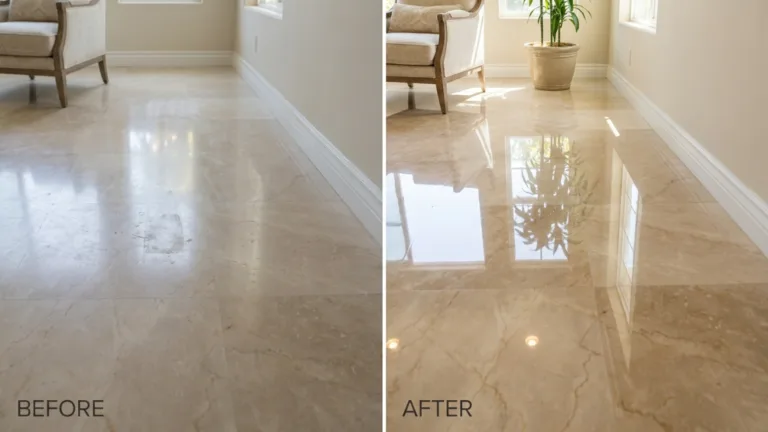
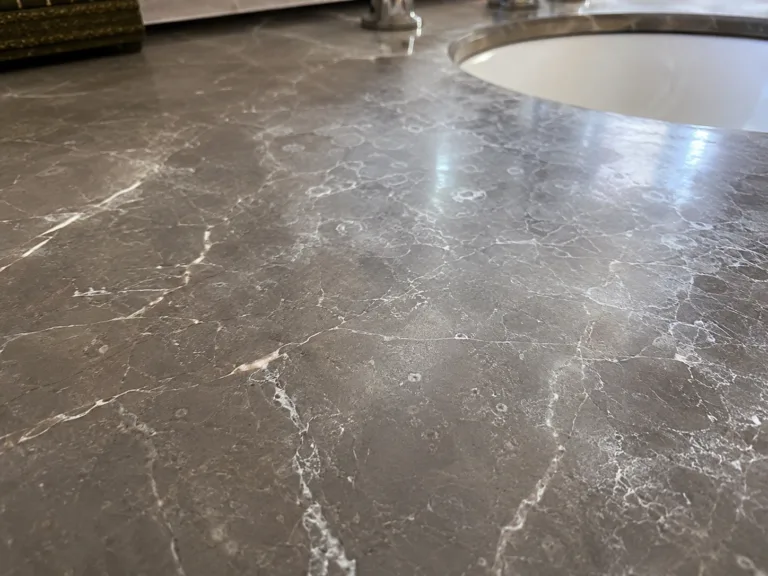
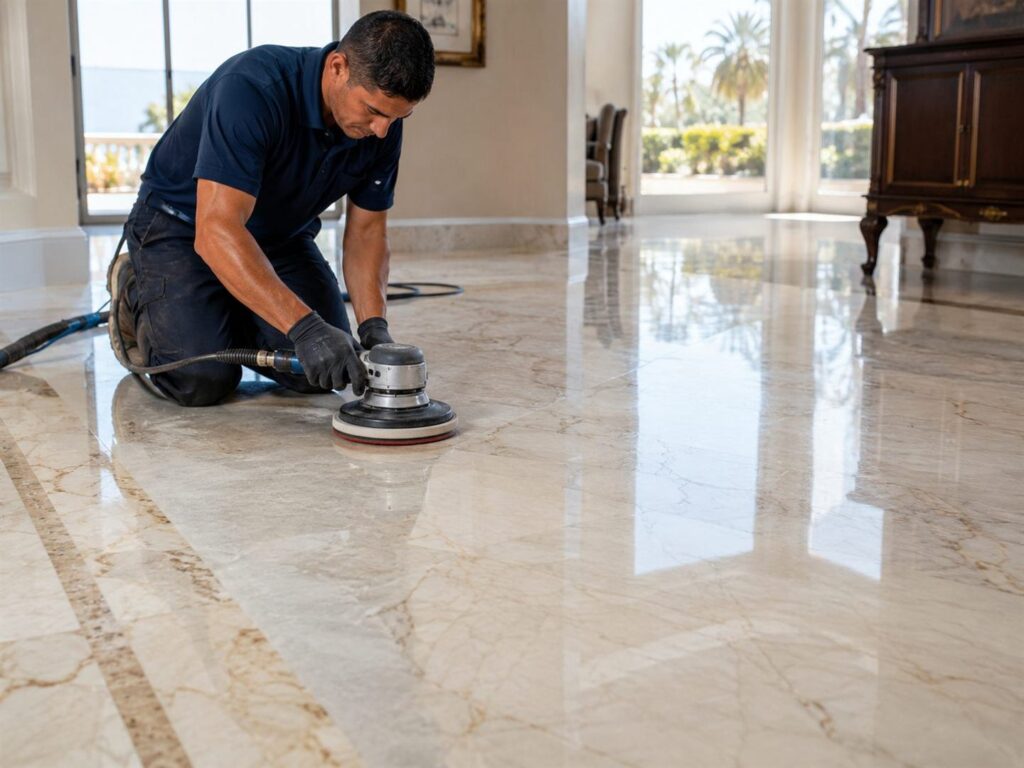
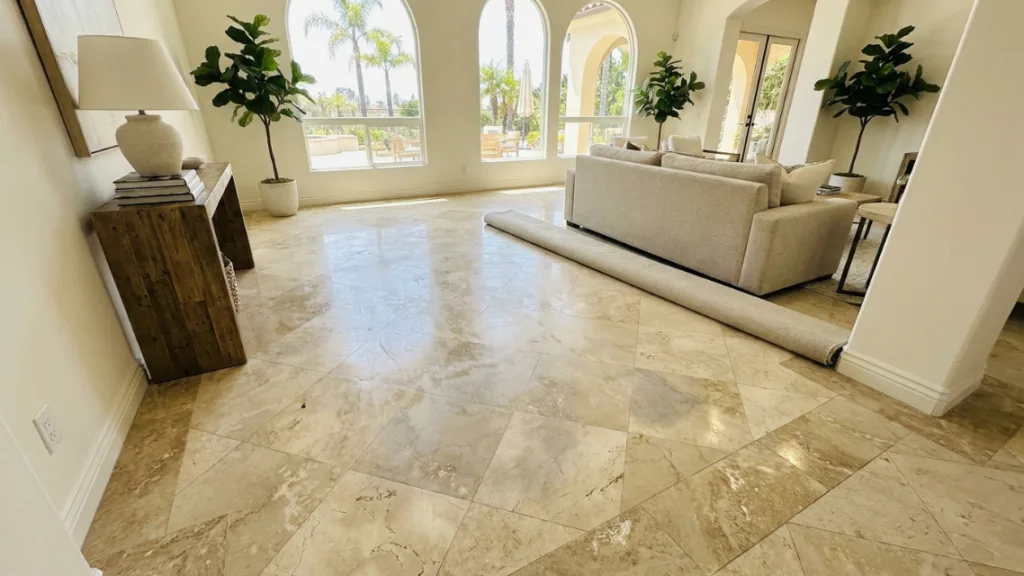
Before & After
Results on Real Surfaces
Results depend on the material, how long buildup has been there and the condition of the surface underneath.
Sealing marble
Should Marble Be Sealed?
Yes. Marble is permeable, so spills are absorbed and can react with its minerals. Acidic spills can create etch marks, and coffee or red wine can stain. A sealer reduces pore size so spills can be wiped up before they cause damage.
Use a penetrating sealer, not a topical one. A penetrating sealer goes into the pores for protection while letting the stone breathe; a topical sealer sits on the surface and can look dull and hazy. Oil-based and water-based penetrating sealers perform similarly, but water-based sealers are more environmentally friendly and faster to apply. We usually suggest a slip-resistant marble sealer.
Sealing does not make marble stain-proof. It slows absorption so you have time to clean up spills. How often to polish and reseal depends on use: high-traffic areas, or places where grit is not cleaned up quickly, wear faster.
Compare the options
Honed vs. Polished Marble
Both are attractive finishes, but they behave differently day to day.
Estimates
What Affects Your Estimate
Every estimate is based on the surface itself, and you receive it in writing before any work is booked. These are the main factors that shape it.
Area & location
Floors, vanities, countertops and showers, and how much of each.
Etching & scratches
How much polishing is needed to remove etching, scratches and dullness.
Finish
Whether the marble is honed to a satin look or polished to a high shine.
Sealing
Penetrating sealer, including slip-resistant options for floors.
Service Area
Marble Care for San Diego Homes and Businesses
We clean, polish and seal marble floors, vanities, countertops and showers for homes and businesses throughout San Diego County. Calling for an estimate is the easiest way to find out what kind of marble care you need and what it will cost.
Related services
Related Tile & Stone Services
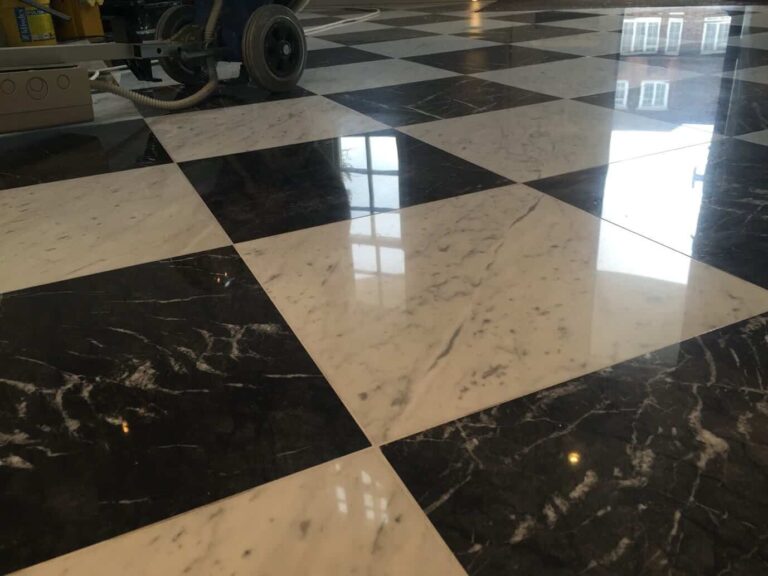
Restoration
Marble Floor Polishing
Dull or etched marble brought back.
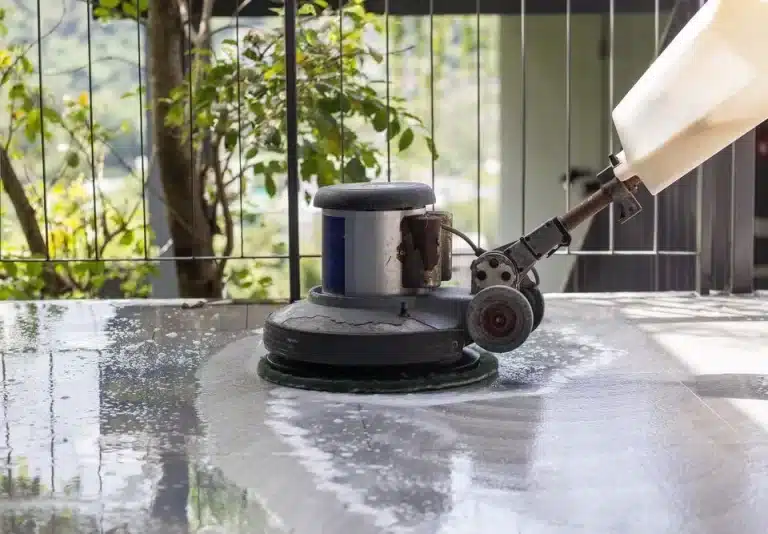
Repair
Etching Removal
Dull acid marks removed from stone.
Cleaning
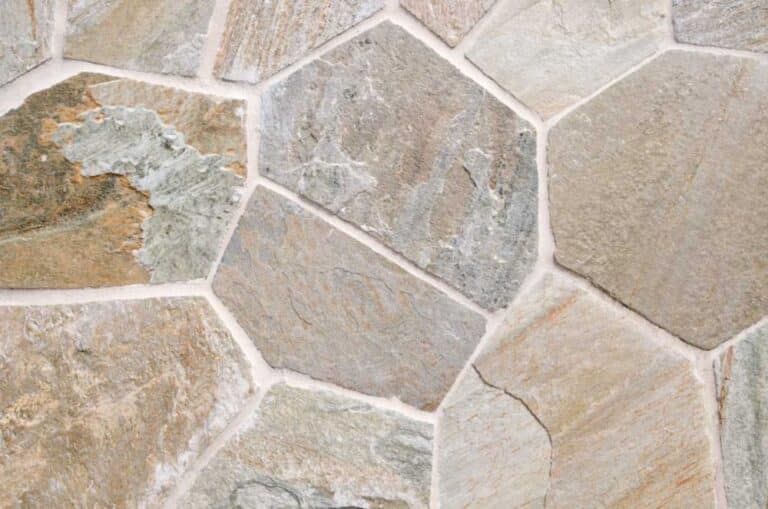
Natural Stone Cleaning
Stone-safe cleaning after pre-testing.
Sealing
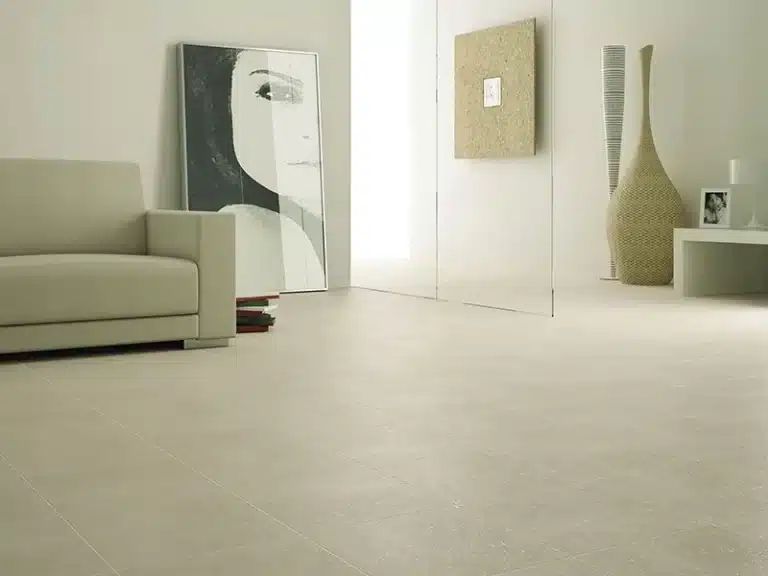
Interior Tile Sealing
Penetrating sealers for tile and grout.
Repair
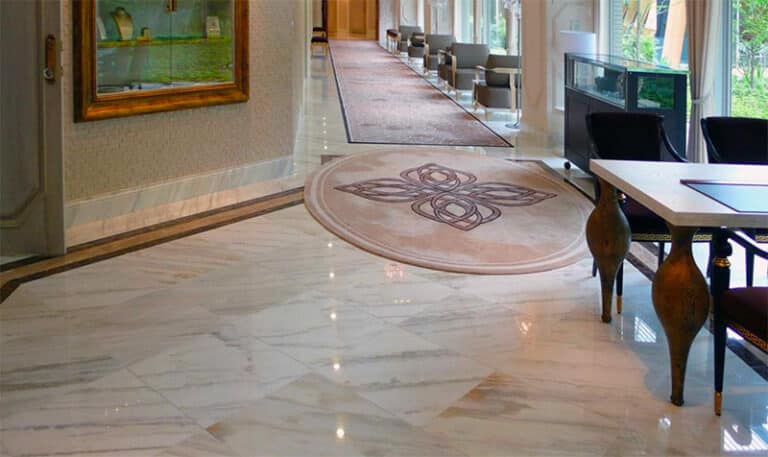
Diamond Honing
Scratches and wear ground away.
Cleaning
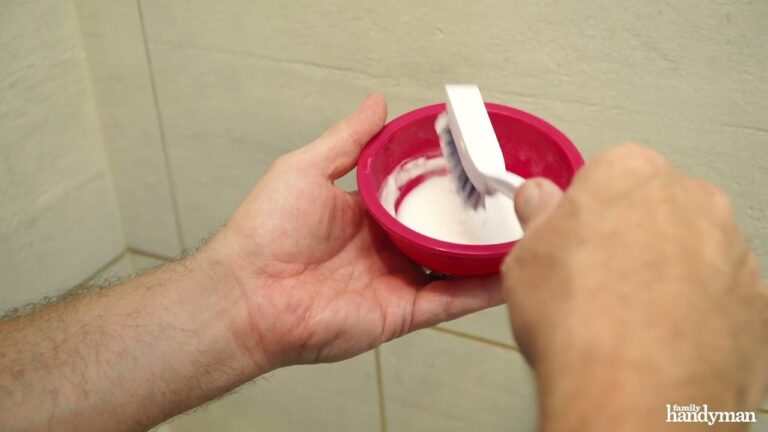
Bath & Shower Tile
Soap film, scale and mildew removed.
Common questions
Marble Cleaning FAQs
Should marble be sealed?
Yes. Marble is permeable, so spills can be absorbed and react with the stone, causing etching or stains. A penetrating sealer slows absorption so spills can be wiped up in time.
What kind of sealer is best for marble?
A penetrating sealer rather than a topical one. It protects inside the pores while letting the stone breathe; topical sealers can look dull and hazy. Water-based penetrating sealers are more environmentally friendly and quicker to apply.
Does sealing stop marble from staining?
No sealer makes marble stain-proof. It slows absorption considerably, giving you time to clean up spills before they cause harm.
How often should marble be polished or resealed?
It depends on how the marble is used and cared for. High-traffic areas, or places where grit is not cleaned up promptly, wear faster and need attention sooner.
How should I clean a marble shower?
Use a cleaner made for natural stone, never abrasive or acidic cleaners such as vinegar or lemon juice. Squeegee or towel-dry the walls after each shower to limit water spots, mold and mildew.
What is the difference between honed and polished marble?
Honed marble has a satin finish and polished marble a high shine. Honed marble keeps more open surface pores, so it is more sensitive to dirt and debris.
Get Started
Ready for Cleaner Tile, Grout & Stone?
Tell us what needs cleaning and we'll help you work out the right next step, with no pressure either way.
Free estimates
Surface-safe methods
Residential & commercial