
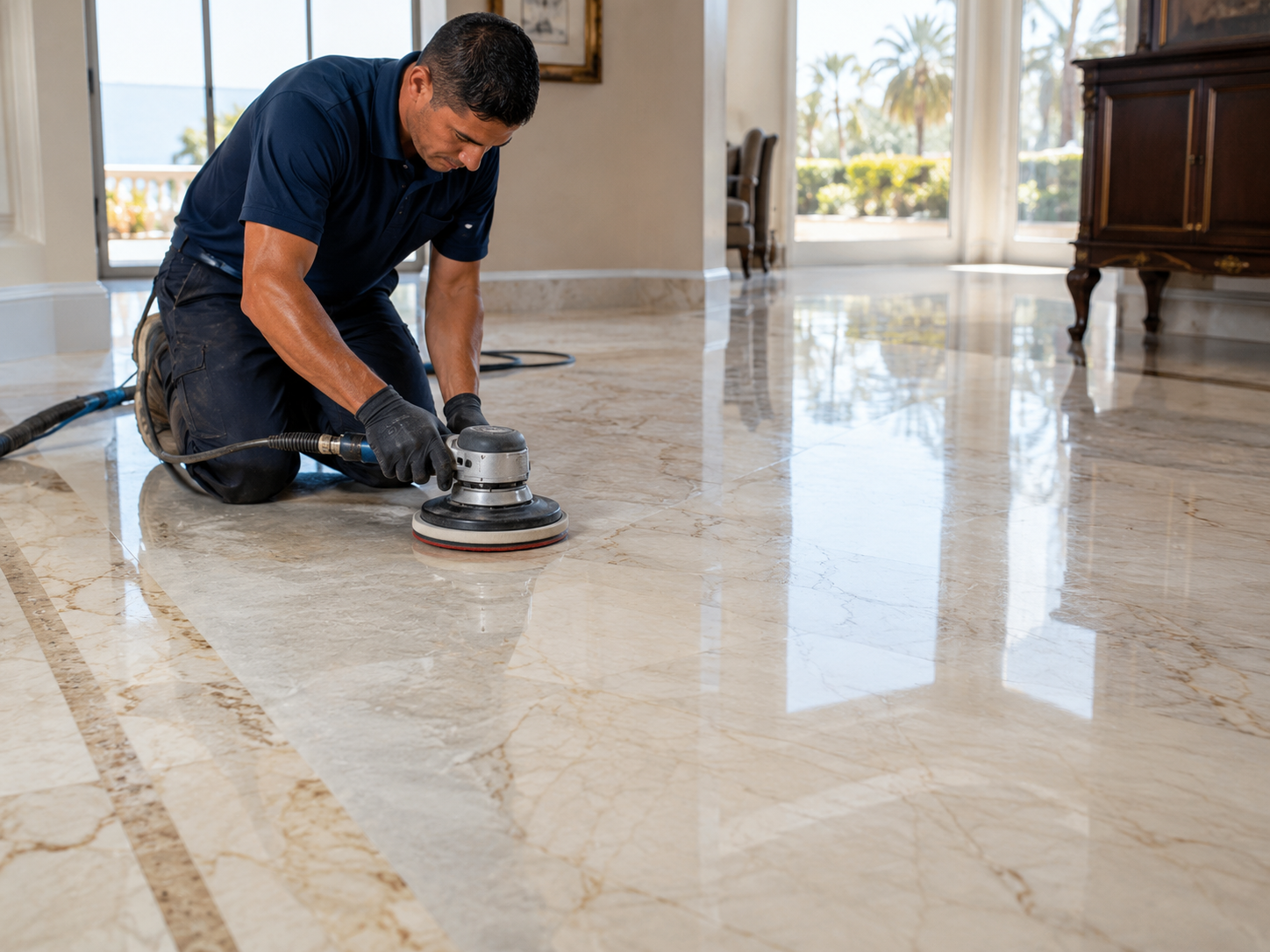
 Marble Polishing vs Marble Restoration comes down to the severity of the damage: polishing is the right choice for light surface dullness, minor etching, and routine shine maintenance, while restoration is necessary when marble has deep scratches, cracks, uneven lippage, or structural wear. If your floors just look tired, polishing will likely bring back the shine. If they look damaged, restoration is what actually solves the problem.
Choosing between the two isn’t just about budget — it’s about matching the right process to the actual condition of your stone. San Diego’s coastal humidity, sandy foot traffic, and hard water deposits all affect how marble ages, which makes this decision even more important for local homeowners. Below, we break down exactly what each service involves, what it costs, and which one is the smarter investment for your specific situation.
Understanding Marble Polishing
Marble polishing is a surface-level refinishing process designed to restore shine, remove light etching, and bring back the reflective clarity marble is known for. Technicians use a series of progressively finer diamond abrasive pads, along with polishing powders or compounds, to smooth out the top layer of the stone and re-open its natural luster. In many cases, a light burnishing or crystallization step follows to lock in the glossy finish.
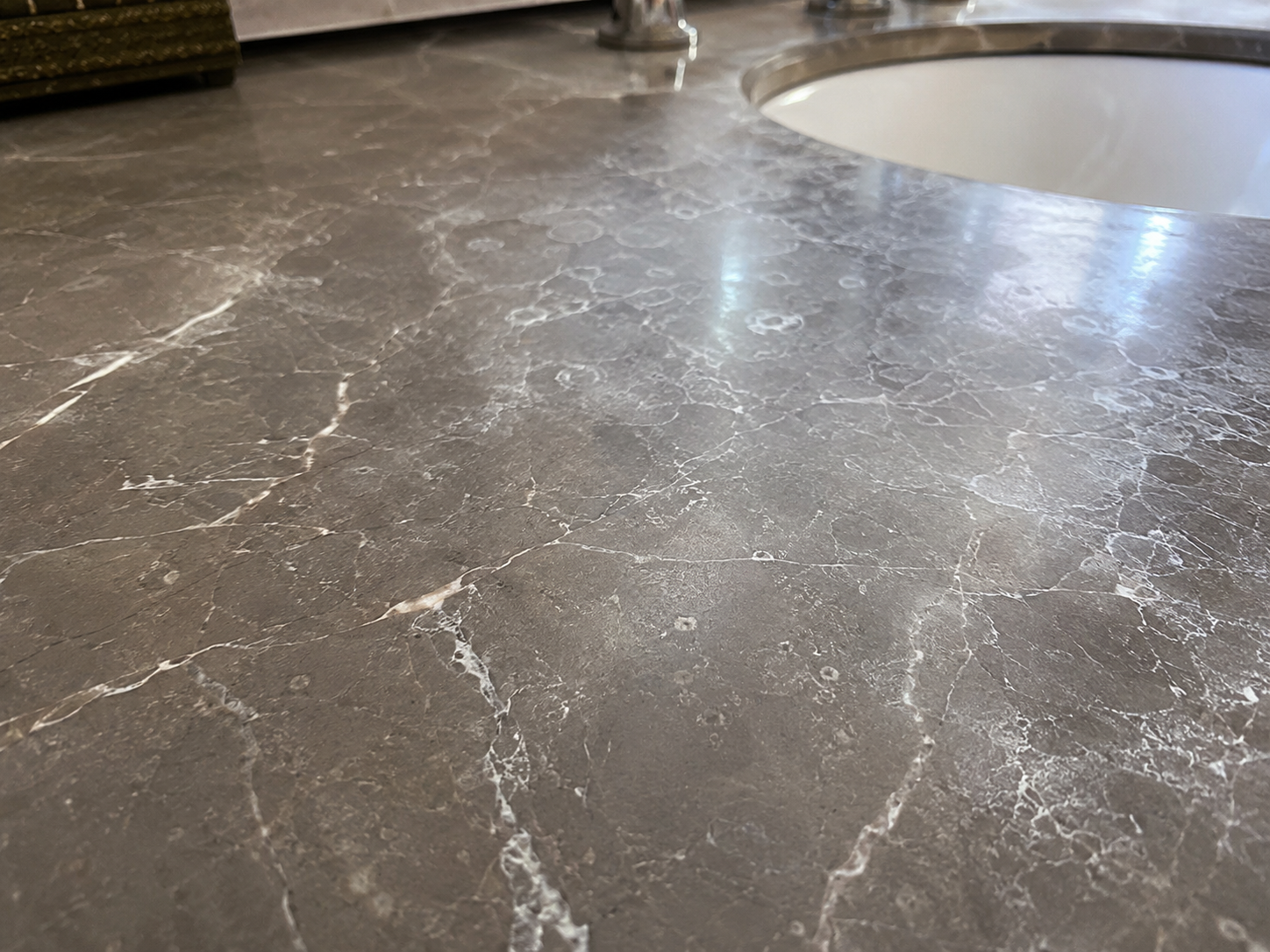 This process is ideal for marble that has simply dulled over time due to foot traffic, cleaning product residue, or minor acidic exposure (think lemon juice, wine, or vinegar-based cleaners — all common culprits in San Diego kitchens and bathrooms). Polishing does not remove deep scratches or repair cracks; it works on the microscopic surface layer only.
Typical cost: Marble polishing in San Diego generally runs between $3 and $8 per square foot, depending on the size of the area, the condition of the stone, and accessibility.
Core benefits:
- Fast turnaround, often completed in a single day
- Restores shine without removing significant material
- More affordable than full restoration
- Ideal for routine maintenance every 12–18 months
Ideal use cases: Countertops, entryways, and floors that look cloudy, foggy, or have lost their reflective shine but show no physical damage.
Understanding Marble Restoration
Marble restoration is a far more comprehensive process that addresses structural and cosmetic damage beyond what polishing can fix. It typically begins with diamond grinding to level uneven surfaces, remove deep scratches, and correct lippage (uneven tile edges). From there, technicians fill chips and cracks with color-matched epoxy, hone the stone to a uniform texture, and finish with a multi-stage polishing and sealing process.
Restoration is the right call when marble has visible pitting, cracking, staining that has penetrated below the surface, or uneven wear patterns — common in older San Diego homes with original marble installed decades ago, or in coastal properties where humidity and salt air have accelerated deterioration.
Typical cost: Marble restoration typically ranges from $8 to $20+ per square foot, depending on the extent of grinding, repair work, and sealing required.
Core benefits:
- Repairs structural damage, not just surface dullness
- Extends the usable lifespan of the stone significantly
- Corrects lippage and safety hazards from uneven tiles
- Often includes sealing, which protects against future damage
Ideal use cases: Marble with visible cracks, deep etching, chronic staining, or floors that haven’t been professionally maintained in 5+ years.
Side-by-Side Comparison
| Attribute | Marble Polishing | Marble Restoration |
|---|---|---|
| Upfront Cost | $3–$8 per sq. ft. | $8–$20+ per sq. ft. |
| Time to Complete | Same-day, typically 2–4 hours | 1–3 days depending on damage |
| Repairs Structural Damage | No — surface-level only | Yes — grinding, filling, and honing |
| Lifespan of Results | 12–18 months before re-polishing | 5–10+ years with proper sealing |
| Best For | Routine maintenance and minor dullness | Cracks, deep etching, and uneven lippage |
| Includes Sealing | Sometimes, as an add-on | Typically included |
Pros and Cons Breakdown
Pros of Marble Polishing
- Budget-friendly for routine upkeep
- Minimal disruption to daily life or business operations
- Instantly improves shine and appearance
- Great preventative step between deeper restorations
Cons of Marble Polishing
- Doesn’t fix cracks, chips, or deep scratches
- Results are shorter-lived than restoration
- Can mask underlying damage that will worsen over time if ignored
Pros of Marble Restoration
- Solves structural and safety issues like lippage
- Dramatically extends the life of the stone
- Long-lasting results with proper sealing
- Increases property value and curb appeal
Cons of Marble Restoration
- Higher upfront investment
- Takes longer to complete
- Overkill for marble that’s only mildly dull
Which Option Is Better? The Ultimate Showdown
The honest answer to the Marble Polishing vs Marble Restoration debate is that it depends entirely on the condition of your stone — not personal preference. Polishing is a maintenance service. Restoration is a repair service. Treating one as a substitute for the other usually leads to disappointment, wasted money, or worsening damage.
Choose marble polishing if:
- Your marble looks dull, cloudy, or lightly etched but is otherwise structurally sound
- You’re doing routine upkeep between deeper restorations
- You need a fast, affordable refresh before hosting guests or listing a property
- Budget is a primary concern and there’s no visible physical damage
Choose marble restoration if:
- You can see or feel cracks, chips, or uneven tile edges
- Staining has penetrated below the surface and won’t lift with cleaning
- Your marble hasn’t been professionally serviced in 5+ years
- You’re preparing an older San Diego home for resale and need the flooring to look flawless in listing photos
From a long-term cost perspective, restoration often wins for homes with visible wear, since it prevents small issues from becoming expensive structural repairs later. But for marble that’s simply lost its shine, polishing delivers excellent results at a fraction of the price. Many San Diego homeowners find the smartest long-term strategy is a one-time restoration followed by polishing maintenance every 12–18 months — this combination keeps stone looking new while minimizing lifetime cost.
A quick inspection is really the only reliable way to know which category your marble falls into, since surface dullness and early-stage cracking can sometimes look similar to the untrained eye.
Get a Free Marble Inspection in San Diego
If you’re unsure whether your marble needs polishing or full restoration, the safest move is a professional inspection rather than guessing. Our team evaluates the condition of your stone and recommends the most cost-effective path forward — no upsell, no guesswork. San Diego’s coastal climate, hard water, and heavy foot-traffic areas like entryways and kitchens all affect marble differently, so a tailored recommendation matters. Explore our full Marble Cleaning services or learn more about our Stone Tile Diamond Honing process to see which approach fits your home. Reach out today for a free, no-obligation consultation.
Conclusion & Recommendation
When it comes to Marble Polishing vs Marble Restoration, the deciding factor is damage severity, not preference. Polishing is the right, affordable choice for marble that’s simply lost its shine through normal wear. Restoration is the necessary choice for marble with cracks, deep etching, staining, or lippage that polishing alone cannot fix. For most San Diego homeowners, the best long-term outcome comes from restoring damaged stone once, then maintaining it with periodic polishing — protecting your investment while keeping floors looking their best year-round.
Frequently Asked Questions
1. How do I know if I need marble polishing or full restoration?
1. How do I know if I need marble polishing or full restoration?
If your marble is simply dull or cloudy with no visible cracks or chips, polishing is usually sufficient. If you can see or feel physical damage — cracks, pitting, or uneven edges — restoration is needed to properly correct the stone.
2. How often should marble floors be polished?
2. How often should marble floors be polished?
Most San Diego homes benefit from re-polishing every 12 to 18 months, depending on foot traffic and how the floors are maintained between professional visits.
3. Can marble restoration remove deep stains?
3. Can marble restoration remove deep stains?
Yes. Because restoration involves grinding down the top layer of stone, it can remove staining that has penetrated below the surface — something polishing alone cannot achieve.
4. Is marble restoration worth the extra cost compared to polishing?
4. Is marble restoration worth the extra cost compared to polishing?
For marble with structural damage, restoration is worth it because it extends the stone’s lifespan by years and prevents small issues from becoming expensive repairs. For dullness alone, polishing offers better value.
5. Does San Diego’s climate affect marble maintenance needs?
5. Does San Diego’s climate affect marble maintenance needs?
Yes. Coastal humidity, hard water minerals, and sandy foot traffic near beach communities can accelerate etching and dulling, often making more frequent polishing or earlier restoration necessary compared to drier inland climates.
6. Can I polish marble myself with store-bought products?
6. Can I polish marble myself with store-bought products?
DIY polishing kits can offer a temporary, superficial shine, but they generally can’t match the leveling and correction achieved with professional-grade diamond abrasives, and improper products can sometimes dull the stone further.
7. How long does a full marble restoration take?
7. How long does a full marble restoration take?
Most residential restoration projects take one to three days depending on the square footage and the extent of grinding, crack repair, and sealing required.
8. Will restoration make my old marble floors look new again?
8. Will restoration make my old marble floors look new again?
In most cases, yes. Restoration removes surface damage down to a fresh layer of stone and finishes with polishing and sealing, often making decades-old marble look close to its original condition.
9. Does marble restoration include sealing?
9. Does marble restoration include sealing?
Most professional restoration packages include a sealing step at the end, which helps protect the stone from future staining and etching. It’s worth confirming this is included when requesting a quote.
10. What’s the average cost difference between the two services?
10. What’s the average cost difference between the two services?
Polishing typically costs $3–$8 per square foot, while restoration typically runs $8–$20+ per square foot, depending on the extent of damage and repair work needed.


