
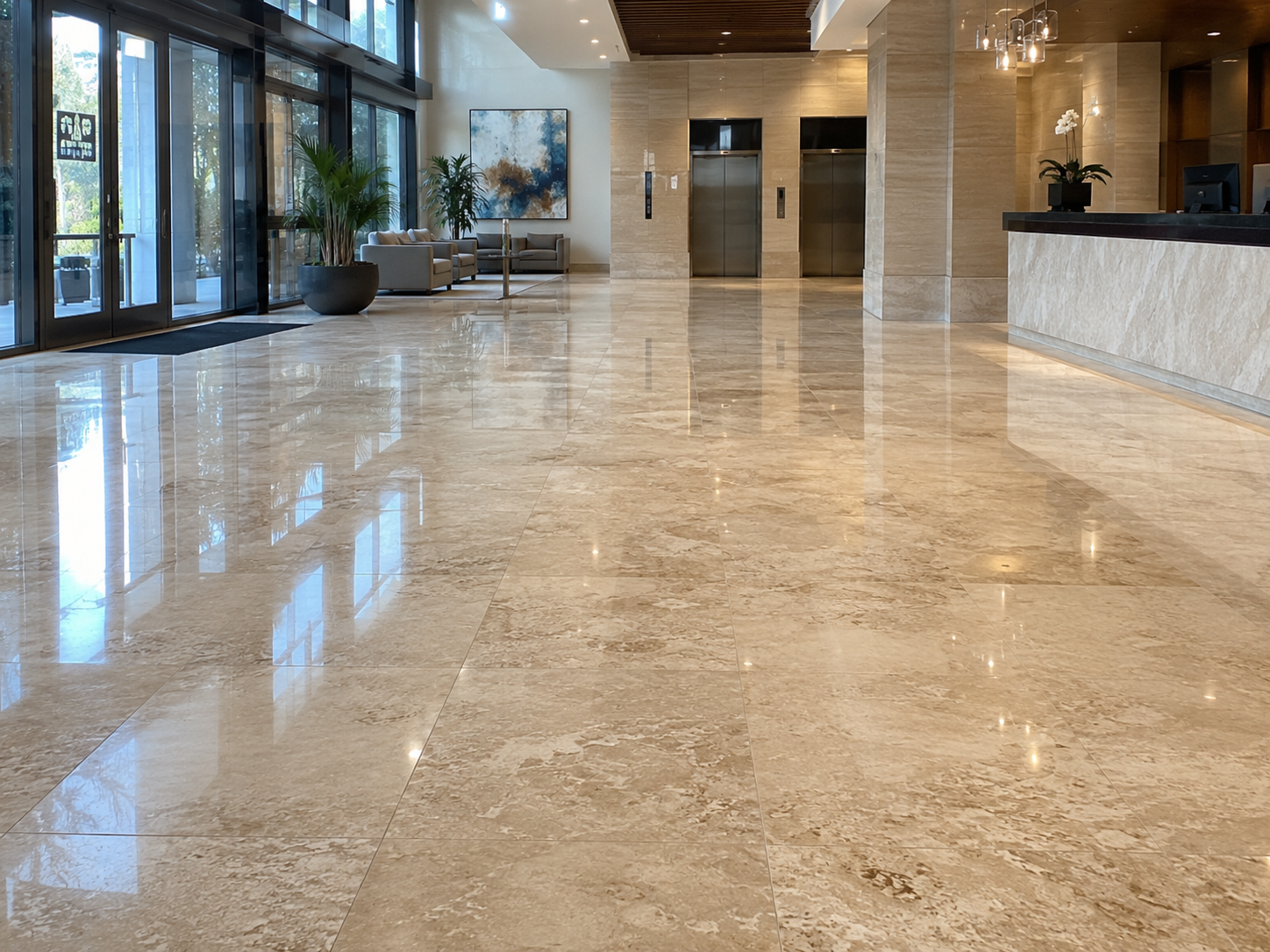
 Managing multiple properties means juggling turnovers, tenant complaints, capital reserve budgets, and vendor reliability all at once — and few things eat into that budget faster than neglected stone and tile surfaces. Stone restoration for property managers is a specialized service built around the realities of managing real estate at scale: tight turnaround windows, unpredictable tenant behavior, and the need for consistent, verifiable results across every unit or common area.
San Diego Tile and Stone Cleaning works with property managers, HOAs, leasing agents, and commercial building operators throughout San Diego County to restore lobbies, courtyards, unit floors, countertops, and exterior stone hardscapes — without the delays, inflated invoices, or inconsistent workmanship that plague so many vendor relationships. If you’re responsible for keeping stone and tile surfaces looking their best across a portfolio of properties, this page walks through exactly what that looks like, what it solves, and what to expect when you bring us in.
Why Stone Restoration Matters for Property Managers
Stone and tile surfaces are some of the most visible — and most expensive to replace — finishes in any property. When they’re neglected, the damage compounds quickly:
- Turnover delays. A unit can’t be shown or leased with etched, stained, or cracked stone flooring, and every day a unit sits vacant is lost income.
- Liability exposure. Cracked tile, lippage (uneven tile edges), and slick, worn stone are slip-and-fall risks — a real concern in common areas, lobbies, and pool decks.
- Depreciating asset value. Natural stone is a premium finish. Once it’s etched by acidic cleaners, ground down by foot traffic, or stained by hard water, that premium look erodes — along with the property’s perceived value.
- Tenant complaints. Dingy grout lines, dull countertops, and grimy shower tile are among the most common maintenance complaints property managers field, and they directly affect renewal decisions and online reviews.
- Reactive, not proactive, maintenance. Without a restoration plan, most property teams only address stone and tile issues after a tenant complains or a unit turns — which is the most expensive and time-pressured way to handle it.
Addressing these issues proactively, rather than reactively, protects both the physical asset and the relationships that keep a property running smoothly — from ownership groups to tenants to leasing staff.
Common Problems This Service Solves
Property managers typically reach out to us for one of the following:
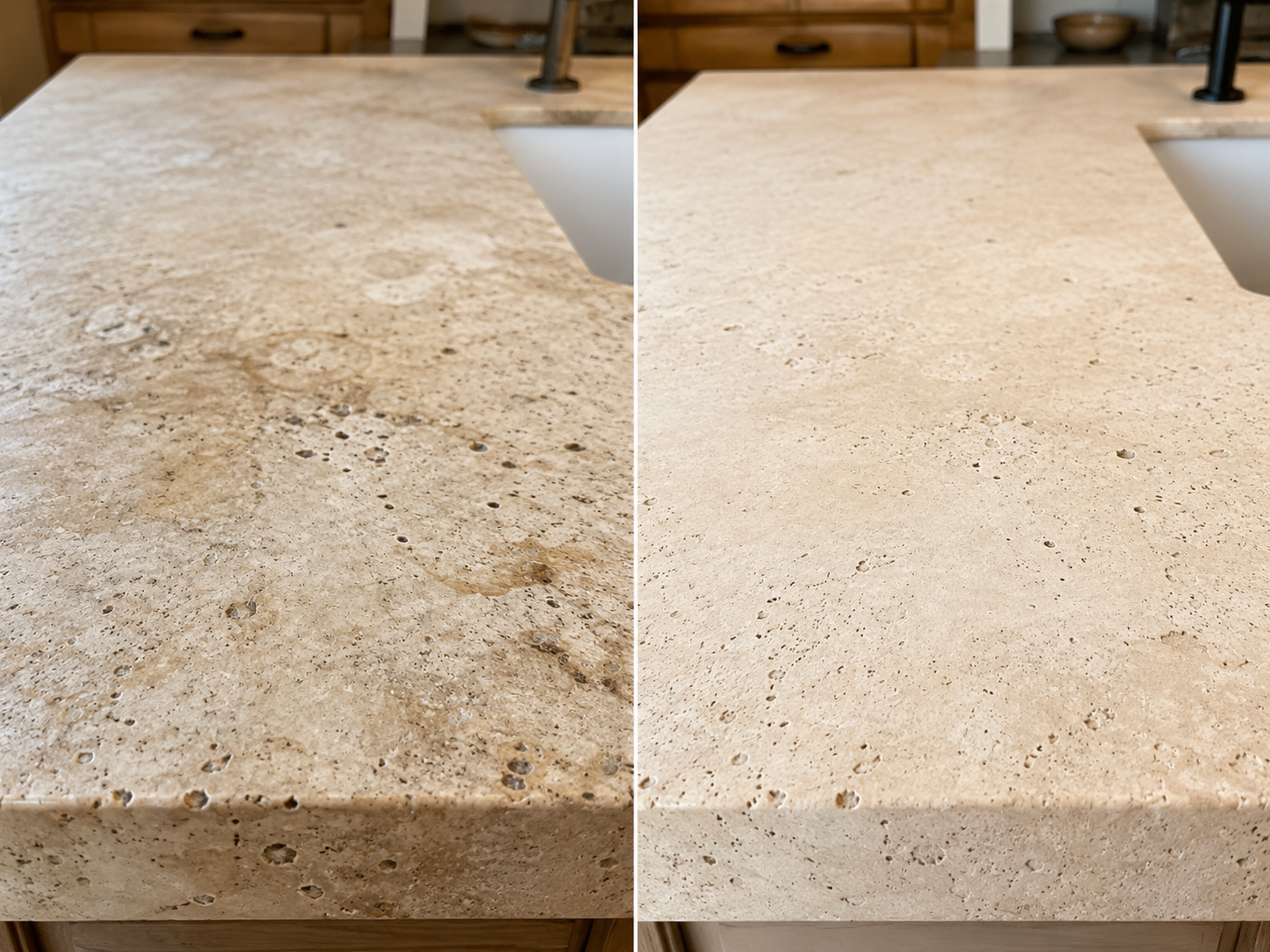 Etched or dull marble and travertine in lobbies and common areas. Acidic spills, harsh cleaning chemicals, and heavy foot traffic dull the natural shine of marble and travertine surfaces over time, leaving a hazy, worn look that doesn’t match a well-maintained property.
Grout that looks dirty no matter how much it’s cleaned. Standard janitorial cleaning can’t remove grout that has absorbed years of soil, oil, or hard water minerals. Deep tile and grout restoration reaches soil that surface cleaning simply can’t touch.
Cracked, chipped, or lippage-prone tile in high-traffic areas. Hallways, stairwells, and building entries take the most abuse. Left alone, chips and cracks widen and become both a safety issue and a bigger repair.
Stained or scratched countertops in unit kitchens and bathrooms. Between tenant turnover cleaning, hard water, and everyday wear, countertops in granite, quartz, and natural stone often need more than a wipe-down before a new tenant moves in.
Shower and bath tile with mold, mildew, or soap scum buildup. This is one of the most common and most visible complaints property managers receive from tenants — and one of the fastest to resolve with the right process for bath and shower tile cleaning.
Exterior stone hardscapes losing their finish. Pool decks, walkways, and courtyards built with exterior stone or concrete pavers face constant sun, chlorine, and foot traffic exposure, which accelerates wear compared to interior surfaces.
Our Stone Restoration Process
We built our process specifically around the way property managers actually work — fast turnarounds, clear communication, and no surprises on the invoice.
- Initial assessment and scoping. We personally inspect the affected stone or tile — whether that’s a single vacant unit, a lobby, or an entire portfolio — to identify the stone type, the extent of damage, and the right restoration method. This is also where we verify the quote so the final bill matches what was estimated.
- Protection of surrounding areas. Before any work begins, we protect adjacent surfaces, fixtures, and finishes to prevent overspray or accidental damage during the restoration process.
- Deep cleaning and soil extraction. We use professional-grade equipment to lift embedded soil, hard water deposits, and grime from grout lines and porous stone — the kind of buildup that standard mopping and janitorial service can’t remove.
- Repair work as needed. Depending on the surface, this can include chip and crack repair, epoxy filling, lippage removal, or seam and joint repair on stone countertops.
- Honing, polishing, or crystallization. Once the surface is clean and repaired, we restore the finish through honing, polishing, or crystallization, depending on the stone type and the level of shine or slip resistance the space needs.
- Sealing and protection. A quality sealer helps protect the restored surface from future staining, etching, and soil absorption — extending the time between restoration cycles and reducing long-term maintenance costs.
- Final walkthrough and sign-off. We complete a final inspection with you or your team to confirm the work meets expectations before we consider the job done — no vague “that’s just how it looks now” excuses.
Why Choose San Diego Tile and Stone Cleaning
Property managers work with us specifically because we understand the pressures unique to managing real estate portfolios:
- Fast, prioritized scheduling. We know that a vacant unit or a common-area complaint doesn’t wait for a convenient time. We prioritize property management work because delays cost you money and reputation.
- Accurate quotes, no surprise invoices. Every job is personally assessed before we quote it, so the number you agree to is the number you pay.
- In-house crews, not subcontractors. Our technicians work directly for us, using our own equipment — which means consistent quality and accountability across every job, whether it’s one unit or an entire building.
- Process built around your standards. We adjust our restoration approach to match the finish and outcome you require, rather than applying a one-size-fits-all method.
- Full range of stone and tile expertise. From natural stone to ceramic and porcelain tile, we handle the full spectrum of surfaces found across residential and commercial portfolios.
Stone Restoration Across San Diego County
San Diego’s mix of coastal humidity, hard water, and heavy seasonal foot traffic creates specific challenges for property stone and tile. Coastal properties near Del Mar, La Jolla, and Point Loma often deal with salt air and moisture that accelerate grout staining and efflorescence on exterior stone. Inland communities like Poway, Escondido, and El Cajon see more mineral buildup from hard water, along with UV exposure that dulls exterior stone finishes faster than in shaded, coastal micro-climates.
Multi-family and mixed-use properties are common throughout San Diego, and each type of building brings its own restoration needs — high-traffic lobby stone in downtown high-rises, pool-deck pavers in suburban apartment complexes, and unit-by-unit turnover cleaning in garden-style communities. We work with property managers across San Diego and the surrounding areas to keep stone and tile surfaces consistent with the standards ownership groups and tenants expect, regardless of building type or neighborhood.
Cost, Timeline & What to Expect
Every property is different, so pricing and timelines for stone restoration depend on several factors:
- Square footage and scope — a single unit turnover looks very different from a full lobby or portfolio-wide restoration.
- Stone type and condition — heavily etched marble or deeply stained travertine typically requires more restoration steps than routine maintenance cleaning.
- Repair needs — chips, cracks, lippage, or seam damage add time and cost beyond standard cleaning and polishing.
- Access and scheduling constraints — occupied units, business hours in commercial spaces, and tenant coordination can affect how a job is scheduled.
- Finish level requested — a honed matte finish, a high-gloss polish, or crystallization each involve different processes and timeframes.
Because of these variables, we don’t publish flat pricing — every property management quote is based on an on-site or detailed remote assessment so the number you receive reflects the actual scope of work, not a generic estimate. Most single-unit jobs can be scheduled and completed quickly to minimize vacancy time, while larger common-area or portfolio-wide projects are scoped with your leasing and maintenance calendar in mind.
If you’re weighing whether to restore existing stone or plan around a future project, our team can also walk you through related options like tile and grout cleaning for lower-cost maintenance between full restorations, or point you to further reading like our guide on what to consider before hiring a tile and grout cleaning service and our tips on maintaining stone floors between professional visits.
Get a Fast, Accurate Quote for Your Property
Stone and tile surfaces are one of the fastest things to fall behind on across a busy property portfolio — and one of the most noticeable when they do. San Diego Tile and Stone Cleaning gives property managers a reliable partner for stone restoration for property managers in San Diego, CA: fast scheduling, accurate quotes, and consistent results across every unit, lobby, or common area you’re responsible for.
Call (858) 952-0777 or email info@sandiegotilegroutcleaning.com to schedule an assessment or request a quote. Whether you need a single unit turned around before a move-in date or a portfolio-wide restoration plan, our team is ready to help you protect your properties and keep tenants satisfied.
Frequently Asked Questions
1. What is stone restoration for property managers?
1. What is stone restoration for property managers?
Stone restoration for property managers is a specialized cleaning, repair, and finishing service designed for the fast turnaround times, budget accuracy, and consistency that managing multiple properties requires. It covers everything from deep grout cleaning to stone polishing, crack repair, and sealing across units, lobbies, and common areas.
2. How much does stone restoration cost for a property management company?
2. How much does stone restoration cost for a property management company?
Cost depends on square footage, stone type, the extent of damage or staining, and whether repairs like chip filling or lippage removal are needed. Because every property differs, we provide quotes after an assessment rather than a flat rate, so you receive an accurate number for the actual scope of work.
3. How long does stone restoration take for a rental unit turnover?
3. How long does stone restoration take for a rental unit turnover?
Timelines vary by scope, but most single-unit restorations are scheduled and completed quickly specifically to minimize vacancy time between tenants. Larger common-area or portfolio-wide projects are scoped around your leasing and maintenance calendar.
4. Can you restore stone and tile in occupied units or common areas?
4. Can you restore stone and tile in occupied units or common areas?
Yes. We coordinate scheduling around tenant access, business hours, and building operations so restoration work causes minimal disruption, whether it’s an occupied unit, a lobby, or a shared amenity space.
5. Do you work with property management companies and HOAs throughout San Diego County?
5. Do you work with property management companies and HOAs throughout San Diego County?
Yes, we serve property managers, HOAs, and commercial building operators throughout San Diego and nearby areas, handling everything from single-unit turnovers to portfolio-wide stone and tile restoration programs.
6. What types of stone and tile do you restore?
6. What types of stone and tile do you restore?
We restore natural stone including marble, travertine, granite, and limestone, as well as engineered stone, quartz, ceramic and porcelain tile, terrazzo, and exterior stone and paver surfaces commonly found across residential and commercial properties.
7. How do I know if my property needs restoration versus routine cleaning?
7. How do I know if my property needs restoration versus routine cleaning?
If grout looks dirty despite regular cleaning, stone has visible etching or dullness, tile is chipped or uneven, or countertops show staining that won’t come out, that typically signals a need for restoration rather than standard maintenance cleaning. An on-site assessment can confirm the right approach.
8. Will restored stone need to be maintained differently afterward?
8. Will restored stone need to be maintained differently afterward?
After restoration and sealing, stone generally holds up better against staining and etching, but routine cleaning and periodic maintenance still help extend the results and delay the need for another full restoration cycle.


