
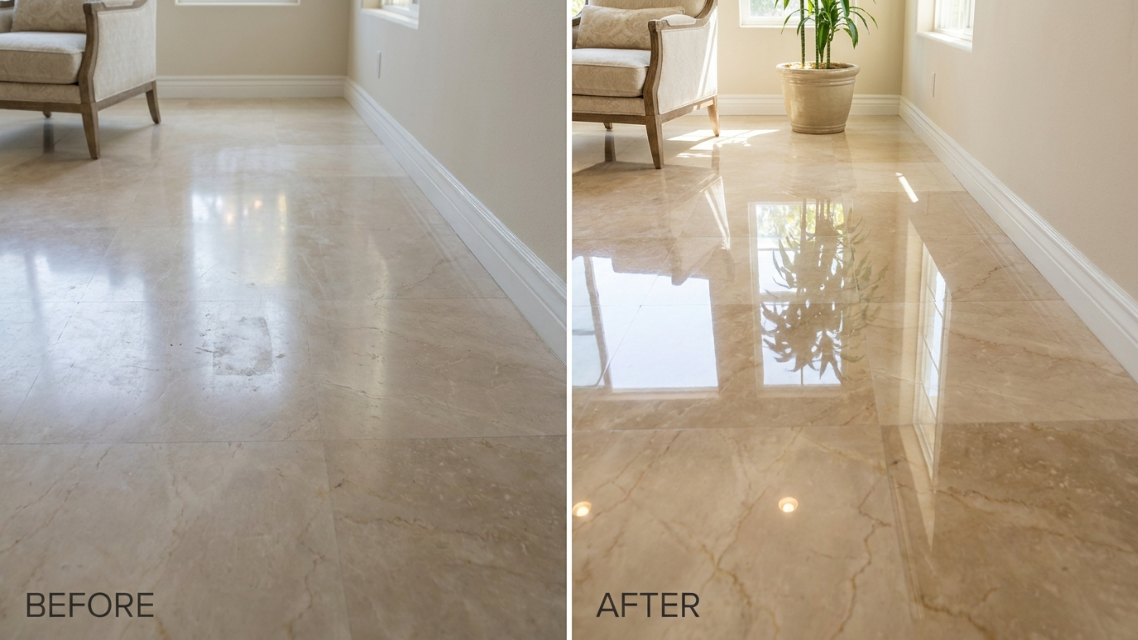
 If your marble floors have lost their luster, developed dull patches, or started showing scratches and etch marks, professional marble floor polishing in San Diego is the most reliable way to bring back their original beauty without replacing the stone. Marble is a soft, porous natural stone, which means everyday foot traffic, sand tracked in from the beach, acidic spills, and even standard mopping can gradually wear down its protective surface — leaving once-glossy floors looking cloudy, scratched, or uneven.
San Diego Tile and Stone Cleaning specializes in restoring marble floors throughout San Diego County, using stone-safe polishing techniques designed to bring back depth, clarity, and shine — not mask damage with a temporary coating. This service builds on the same care and expertise behind the company’s broader marble cleaning work. Whether you’re dealing with light surface dulling in an entryway or deeper etching and lippage across a large living space, professional marble floor polishing addresses the actual condition of the stone rather than just cleaning the surface.
Why Marble Floor Polishing Matters
Marble is prized for its elegance, but that same quality — a soft, calcium-based mineral structure — is exactly what makes it vulnerable. Left unaddressed, dull or damaged marble tends to get worse, not better, over time:
- Etching spreads. Acidic substances (citrus juice, vinegar, some cleaning products, even certain wines) eat into the stone’s surface on contact. Etch marks don’t buff out with regular mopping — they need mechanical polishing to correct, as covered in more detail in our guide on removing tile etching.
- Foot traffic patterns become permanent. High-traffic zones like entryways, hallways, and kitchen walkways develop visible wear paths where the polish has worn thinner than the surrounding floor, creating an uneven, patchy appearance.
- Sand and grit act like sandpaper. In coastal San Diego homes, fine sand tracked in from the beach or yard is one of the most common causes of micro-scratching on marble floors, since it grinds into the surface with every step.
- Neglected floors are harder — and more expensive — to restore. Deep scratching, heavy etching, or lippage (uneven tile edges) generally requires more aggressive honing and diamond polishing than a floor that’s been kept up with regular maintenance.
Addressing dull or damaged marble early typically means a faster, less invasive service. Waiting usually means more material needs to be removed to reach a level, polished surface underneath.
Common Problems This Service Solves
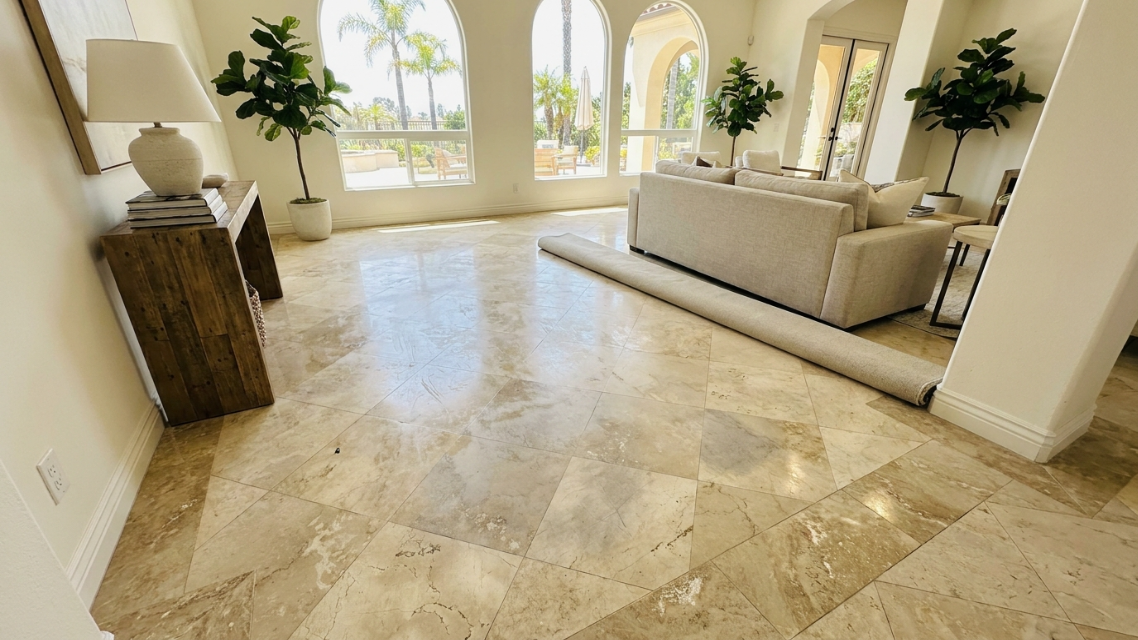 Homeowners and property managers typically reach out for marble floor polishing because of one or more of the following:
- Dull, cloudy, or hazy marble that no longer reflects light the way it did when installed
- Visible etch marks from spills, cleaning chemicals, or acidic foods that leave dull spots or rings on the surface
- Scratches and scuff marks from furniture, foot traffic, sand, or pet claws
- Uneven sheen where some areas are glossy and others look worn or matte
- Lippage — tile edges that sit slightly higher or lower than neighboring tiles, creating a rough, uneven feel underfoot
- Yellowing or discoloration on light-colored marble, often from residue buildup or improper cleaning products over time
- Pre-sale or move-in preparation, where real estate agents or homeowners want floors looking their best before listing or occupancy
If any of these sound familiar, the underlying stone is very likely still in restorable condition — most marble floor problems are surface-level and correctable through professional polishing and honing rather than replacement. For a closer look at how different polishing methods address these issues, see our overview of ways to polish marble floor tiles.
Our Marble Floor Polishing Process
Marble floor polishing is a multi-step process that depends on the current condition of the stone. Generally, it includes:
- Inspection and assessment. The technician evaluates the marble’s condition, identifying etching, scratching, lippage, or wear patterns, and determines which grit sequence and technique the floor needs.
- Surface preparation and honing. If the marble has deeper scratches, etching, or lippage, a honing step is used first — this involves a sequence of progressively finer diamond abrasives to level the surface and remove imperfections before polishing begins. Floors with more significant damage may also need dedicated stone tile diamond honing or lippage removal as part of this stage.
- Crystallization or polishing compound application. A polishing compound is worked into the surface to bring out clarity and shine. Some floors benefit from a stone tile crystallization treatment, which chemically hardens and shines the marble’s surface for extra durability.
- Buffing. The floor is buffed to a smooth, even, high-gloss (or honed matte, depending on preference) finish. This is where stone tile buffing brings out the final depth and reflectivity of the stone.
- Detail work on chips, cracks, or stains. Any chips or cracks are addressed separately — often through chip and crack repair or epoxy filling — and stubborn stains are treated with targeted stone tile stain removal before the final polish is applied.
- Final inspection and sealing recommendation. Once polished, the floor is inspected for consistency across the whole space, and a sealing recommendation is provided based on the marble’s porosity and how the space is used.
The exact sequence and number of passes depends on how worn or damaged the marble is — a lightly dulled floor may only need a polish and buff, while heavily etched or scratched marble typically needs a full honing sequence first.
Why Choose San Diego Tile and Stone Cleaning
Marble is unforgiving of the wrong technique — using the wrong polishing compound, pad grit, or pressure can etch or scratch the stone further instead of correcting the problem. San Diego Tile and Stone Cleaning approaches every marble floor as a natural stone restoration project, not a generic floor cleaning job:
- Stone-specific technique. Marble is treated differently than porcelain, granite, or engineered stone, using methods matched to marble’s particular hardness and sensitivity to acid and abrasion.
- Local, hands-on service. As a San Diego–based company working throughout the county, the team is familiar with the specific wear patterns local homes see — from sand and moisture near the coast to sun exposure in inland properties.
- Full-service stone care. Beyond polishing, the team also handles related issues on the same visit when needed, including etching removal and stone grinding for more heavily damaged surfaces.
- Care with your whole space, not just the floor. The company also services related marble and stone surfaces — countertop cleaning, vanity top restoration, and table top restoration — so an entire home’s marble can be addressed consistently.
Marble Floor Polishing in San Diego, CA
San Diego’s climate and coastal geography create a specific set of challenges for marble flooring. Homes in beach-adjacent neighborhoods regularly deal with sand and salt air being tracked indoors, which accelerates surface scratching on marble entryways, kitchens, and patios that transition into indoor living spaces. Further inland, stronger and more direct sun exposure through large windows common in San Diego architecture can contribute to gradual discoloration on lighter marble over time.
Marble floor polishing is a common need across San Diego’s neighborhoods and surrounding areas — from coastal properties dealing with sand and humidity to older homes where original marble entryways, staircases, and formal living areas have simply worn down after years of use. Whether it’s a single entryway, a full first floor, or a marble staircase, the same core process of honing, polishing, and buffing applies — scaled to the size and condition of the space.
For properties with mixed flooring materials, it’s also common to address marble alongside travertine, natural stone, or granite surfaces in the same visit, since many San Diego homes combine several stone types across kitchens, bathrooms, and outdoor living areas.
Cost, Timeline, and What to Expect
The cost and timeline for marble floor polishing depends on several factors:
- Square footage. Larger areas naturally take more time and materials to complete than a single room or entryway.
- Current condition of the marble. Floors with heavy etching, deep scratches, or significant lippage require more prep work (honing) before polishing can begin, which affects both timeline and cost compared to a floor that only needs a maintenance-level polish.
- Finish preference. A high-gloss polished finish and a honed matte finish involve different processes and pad sequences.
- Furniture and access. Whether furniture needs to be moved, and how accessible the space is, can affect scheduling.
- Sealing needs. If the marble hasn’t been sealed recently, adding a sealing step protects the new polish and can extend the timeline slightly.
Because every floor’s condition is different, the most accurate estimate comes from an in-person or photo-based assessment. This is especially true on properties where marble sits alongside other flooring types, since a broader interior floor cleaning visit can sometimes be scheduled at the same time. San Diego Tile and Stone Cleaning can provide a clearer timeline and cost estimate once the size and condition of the floor are known — reach out for a free, no-obligation quote.
Dull, scratched, or etched marble floors don’t have to be replaced — in most cases, they can be restored to a polished, like-new finish. San Diego Tile and Stone Cleaning has the stone-specific expertise to bring your marble floors back to life, without risking further damage from the wrong technique or products.
Call (858) 952-0777 or email info@sandiegotilegroutcleaning.com to schedule a free marble floor assessment and get a clear, no-obligation quote for your space.
Frequently Asked Questions
How much does marble floor polishing cost in San Diego?
How much does marble floor polishing cost in San Diego?
Cost depends on the size of the area, the marble’s current condition, and whether honing is needed before polishing. Lightly dulled floors typically cost less to restore than floors with heavy etching or scratching. The most accurate number comes from an in-person or photo assessment — request a free quote for pricing specific to your floor.
Can marble floor polishing remove etch marks and water stains?
Can marble floor polishing remove etch marks and water stains?
Yes, in most cases. Etch marks and many water stains sit on the surface layer of the marble and can be corrected through honing and polishing, which removes a microscopic layer of the stone to reveal an undamaged surface underneath. Deep or long-set stains may need targeted stain removal treatment first.
How long does marble floor polishing take?
How long does marble floor polishing take?
Timeline depends on square footage and the marble’s condition. A single entryway or small room may take a matter of hours, while larger areas or floors needing significant honing before polishing take longer. An assessment of the specific space provides the most accurate timeline.
Is marble floor polishing different from regular cleaning?
Is marble floor polishing different from regular cleaning?
Yes. Regular cleaning removes surface dirt and residue but doesn’t correct etching, scratching, or dulled polish. Marble floor polishing uses diamond abrasives and polishing compounds to actually restore the stone’s surface, addressing damage that cleaning alone can’t fix.
How often should marble floors be polished?
How often should marble floors be polished?
This depends heavily on foot traffic, how the floor is maintained day to day, and exposure to sand, moisture, or acidic substances. High-traffic entryways in coastal San Diego homes may need attention more often than a formal living room that sees light use.
Will polishing make my marble floor slippery?
Will polishing make my marble floor slippery?
A professionally polished marble floor shouldn’t be any more slippery than it was when originally installed, since polishing restores the stone’s natural surface rather than adding a coating. If slip resistance is a specific concern, a honed (matte) finish can be requested instead of a high-gloss polish.
Do you polish marble floors throughout all of San Diego County, or just certain neighborhoods?
Do you polish marble floors throughout all of San Diego County, or just certain neighborhoods?
San Diego Tile and Stone Cleaning services homes and properties throughout San Diego and the surrounding areas, addressing the range of conditions local marble floors face — from coastal sand exposure to sun-related wear further inland.
Can you polish marble countertops and other surfaces, not just floors?
Can you polish marble countertops and other surfaces, not just floors?
Yes. The same honing, polishing, and buffing techniques used on marble floors apply to countertop restoration, vanity tops, table tops, and fireplace surrounds, so an entire home’s marble can be restored consistently in one visit.


