Prestige Tile & Stone Cleaning
Serving San Diego County
Residential & Commercial
Mon–Fri 8am–5pm · Sat 10am–2pm


Home › Services › Tile & Stone Repair › Diamond Honing
Diamond Honing
Stone Tile Diamond Honing in San Diego
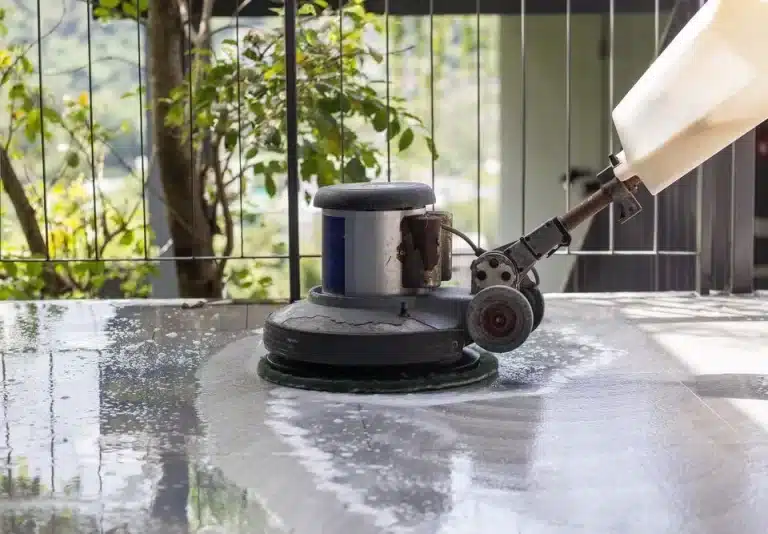
Diamond abrasives and water resurface marble, limestone, travertine and granite to an even honed (matte) finish, remove scratches and etches, and prepare stone for polishing.
Quick answer
What Is Diamond Honing?
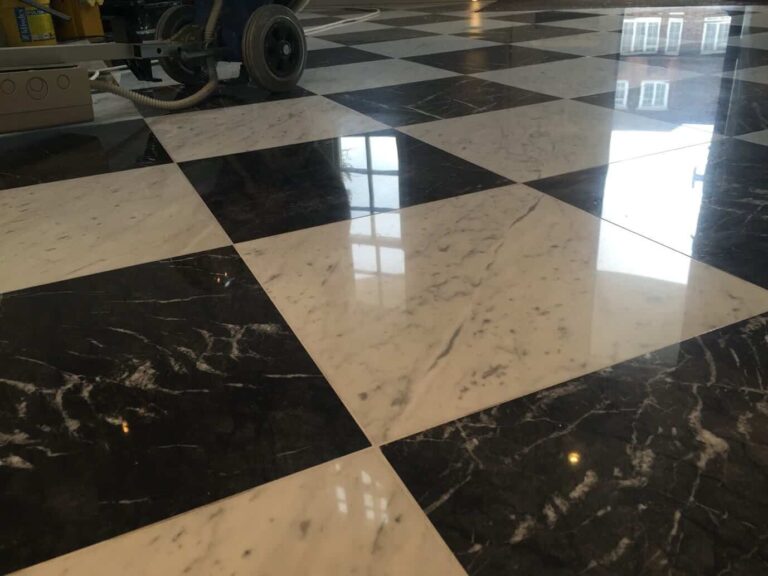
Diamond honing methodically resurfaces stone with diamond abrasives and water to produce an even, low-sheen matte finish. It removes minor scratches and water etches, evens out travertine filler that looks muddy or blotchy, and can remove an old polish from marble, granite, travertine or limestone. For a gloss finish, stone is honed first, then polished and buffed.
Why it matters
Honed or Polished?
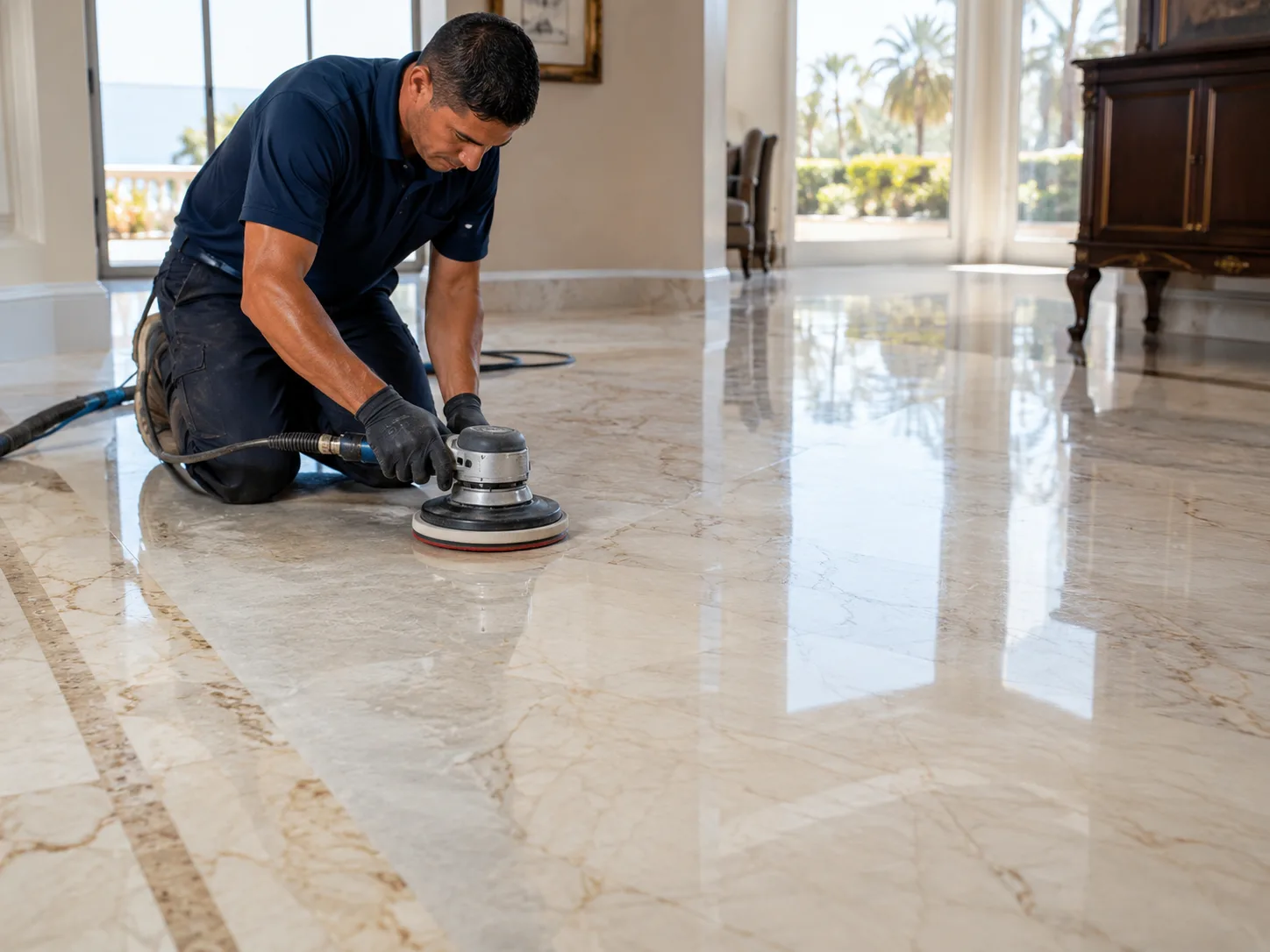
Honing turns a high-shine polished floor, tabletop or bathroom surface into a low-sheen, matte finish that is smooth to the touch. It has become popular with builders and designers, and we can apply a honed finish to any surface, damaged or not, with honing powders or diamond pads.
Every stone responds differently. Limestone, for example, comes in so many compositions that it reacts to honing and polishing in different ways, so experience with the specific stone saves time and money.
Where it is used
Which Stones Can Be Diamond Honed?
Honing works on most natural stone, damaged or not, with diamond pads or honing powder.
Marble
Removes minor scratches and water etches.
Travertine
Evens out filler that looks muddy or blotchy.
Limestone
Reacts differently by composition, so experience matters.
Granite
Can be honed to remove an old polish.
Our process
How Diamond Honing Works
Honing is where most stone restoration starts.
01
Inspect
We check the stone, its current finish and its scratches, etches and stains.
02
Hone
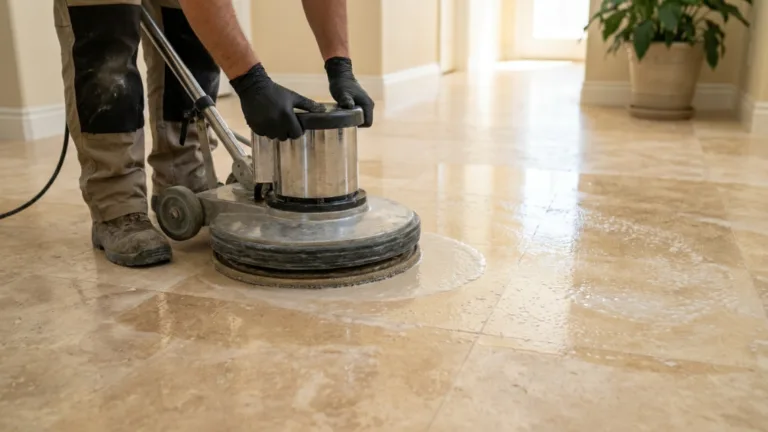
Diamond abrasives and water resurface the stone to an even, low-sheen finish.
03
Repair
Cracks and fissures in travertine are filled with color-matched epoxy.
04
Polish if wanted
For gloss, honing is followed by polishing and buffing.
05
Seal
An impregnating sealer; high-traffic stone is cleaned and sealed at least yearly.
Before & After
Honing Results
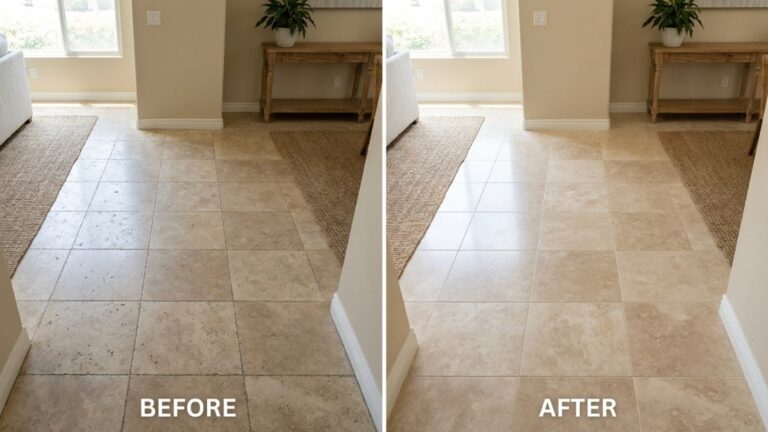
Honing removes wear and evens out the surface. Results depend on the stone and the depth of damage.


Restoration
Honing Marble, Limestone and Travertine
Honing is where most stone restoration starts.
Marble with stains, watermarks, scratches and other surface flaws should be honed first, then polished and buffed to a gloss. Honing removes minute scratches and water etches from lightly used marble.
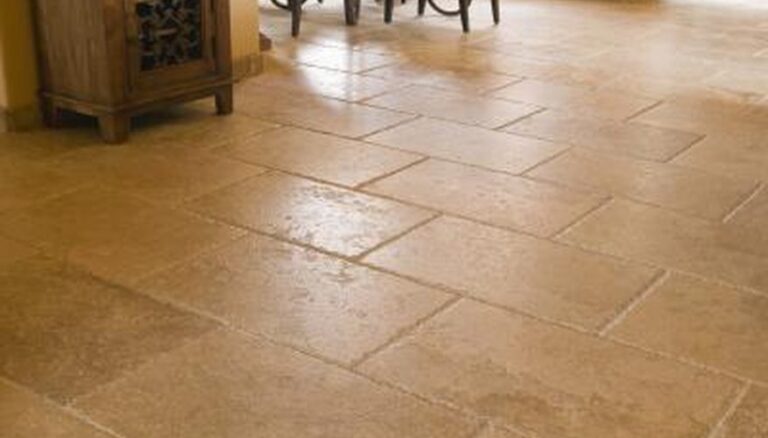
Travertine has many pores that fill with dirt, so it needs sealing. Cracks and fissures in travertine are repaired with color-matched epoxy that blends with the stone’s natural character. Maintaining travertine costs less than resurfacing it, and restoration can cost more still, depending on the damage.
We recommend a clean-and-seal on high-traffic stone at least once a year. Delaying maintenance only increases the work, and the cost, of restoring a floor or countertop to its original finish.
Finish choice
Honed vs. Polished Marble
When it is not the right option
When Is Honing Not Enough on Its Own?
Honing is often one step of several.
Estimates
What Affects Your Estimate
Every estimate is based on the surface itself, and you receive it in writing before any work is booked. These are the main factors that shape it.
Area
Floors, tabletops or bathroom surfaces.
Stone
Marble, travertine, limestone or granite.
Damage
Scratches, etches, blotchy filler or an old polish.
Finish & sealing
Honed only, or polished too, then sealed.
Service Area
Serving San Diego County
We hone and polish marble, travertine, limestone and granite for homes and businesses throughout San Diego County, from the coast to inland communities.

Common questions
Frequently Asked Questions
Does honing remove scratches?
Yes. Honing removes minor scratches and water etches; deeper damage may need grinding first.
Is a honed finish easier to maintain?
It shows etches and watermarks less than a polished finish, but its slightly more open surface picks up dirt and stains more readily, so sealing matters.
How often should high-traffic stone be cleaned and sealed?
We recommend at least once a year.
Get Started
Ready for Cleaner Tile, Grout & Stone?
Tell us what needs cleaning and we'll help you work out the right next step, with no pressure either way.
Free estimates
Surface-safe methods
Residential & commercial