
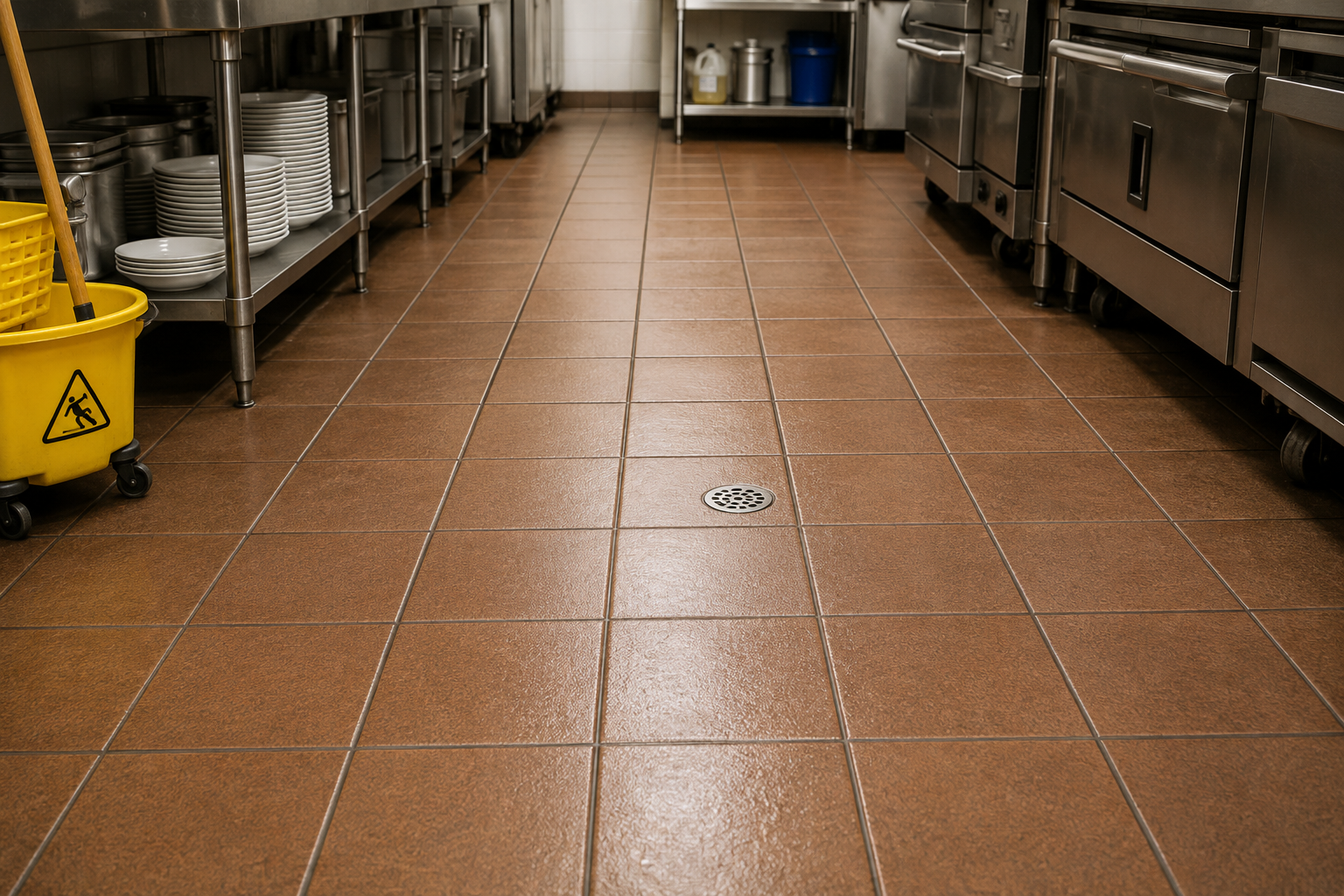
 Commercial kitchens take a beating every single day. Grease splatters on the floor, food debris settles into grout lines, and constant foot traffic from staff grinds dirt deep into tile pores. If you manage a restaurant, hotel kitchen, cafeteria, or food-service facility anywhere in San Diego, you already know that regular mopping isn’t enough to keep tile floors truly clean, safe, or compliant.
That’s where professional commercial kitchen tile cleaning in San Diego comes in. San Diego Tile and Stone Cleaning specializes in deep-cleaning ceramic, porcelain, quarry tile, and grout surfaces in high-traffic commercial kitchens throughout San Diego County. Our process removes embedded grease, sanitizes grout lines, and restores slip resistance — helping kitchens stay safer, cleaner, and more presentable for health inspections and daily operations alike.
Whether you run a single restaurant kitchen in Del Mar or manage tile flooring across multiple commercial properties, this page explains exactly what our service involves, when to schedule it, and why proper cleaning matters more than most kitchen managers realize.
Why This Service Matters
Kitchen tile isn’t just a surface — it’s part of your food-safety infrastructure. Grease and grime don’t just sit on top of tile; they work their way into grout joints and microscopic pores in the tile surface, creating conditions where bacteria can thrive. Over time, this buildup leads to a few predictable problems:
- Slip hazards. Grease film on quarry tile or ceramic flooring is one of the leading causes of slip-and-fall incidents in commercial kitchens, creating liability risk for owners and injury risk for staff.
- Odor buildup. Grout that absorbs grease and food residue can hold onto odors that no amount of surface mopping will resolve.
- Failed inspections. San Diego County health inspectors look closely at floor and grout condition in food-service kitchens. Dark, stained, or greasy grout lines are a common citation point.
- Accelerated wear. Grease breaks down grout sealant faster than normal foot traffic alone, which shortens the lifespan of your flooring and increases long-term maintenance costs.
Addressing these issues proactively — rather than waiting for a failed inspection or an injury — is almost always more cost-effective than emergency remediation or flooring replacement.
Common Problems This Service Solves
Kitchen managers and facility owners typically reach out to us because of one or more of the following issues:
Grease-Saturated Grout Lines
Standard mopping moves grease around the tile surface but rarely removes it from grout. Over months or years, grout becomes visibly darker, sticky, and difficult to clean with normal janitorial products.
 Slippery Tile Near Cooking Stations
Fryers, flat-top grills, and prep stations generate airborne grease that settles on nearby flooring. This is one of the most common “problem zones” we’re called in to treat.
Recurring Odor Complaints
If a kitchen smells unpleasant even after cleaning, the source is often grease and bacteria trapped below the tile surface, not the visible surface itself.
Pre-Inspection Cleanups
Many of our commercial clients schedule service ahead of scheduled or surprise health inspections to ensure floors meet cleanliness expectations.
Discolored or Stained Tile
Certain tile types, especially unglazed quarry tile common in older kitchens, stain more easily and require specialized cleaning agents to restore their original appearance without damaging the surface.
Post-Construction or Post-Renovation Buildup
Newly installed or renovated kitchen tile often has grout haze, sealant residue, or construction debris that needs professional removal before regular use.
Our Service Process
We approach every commercial kitchen cleaning project methodically, since food-service environments require both thoroughness and minimal disruption to daily operations.
- On-site assessment. We evaluate your tile type, grout condition, grease buildup, and any problem areas near cooking equipment, walk-in coolers, or high-traffic zones.
- Pre-treatment. Commercial-grade degreasing agents are applied to break down embedded grease and food residue before mechanical cleaning begins.
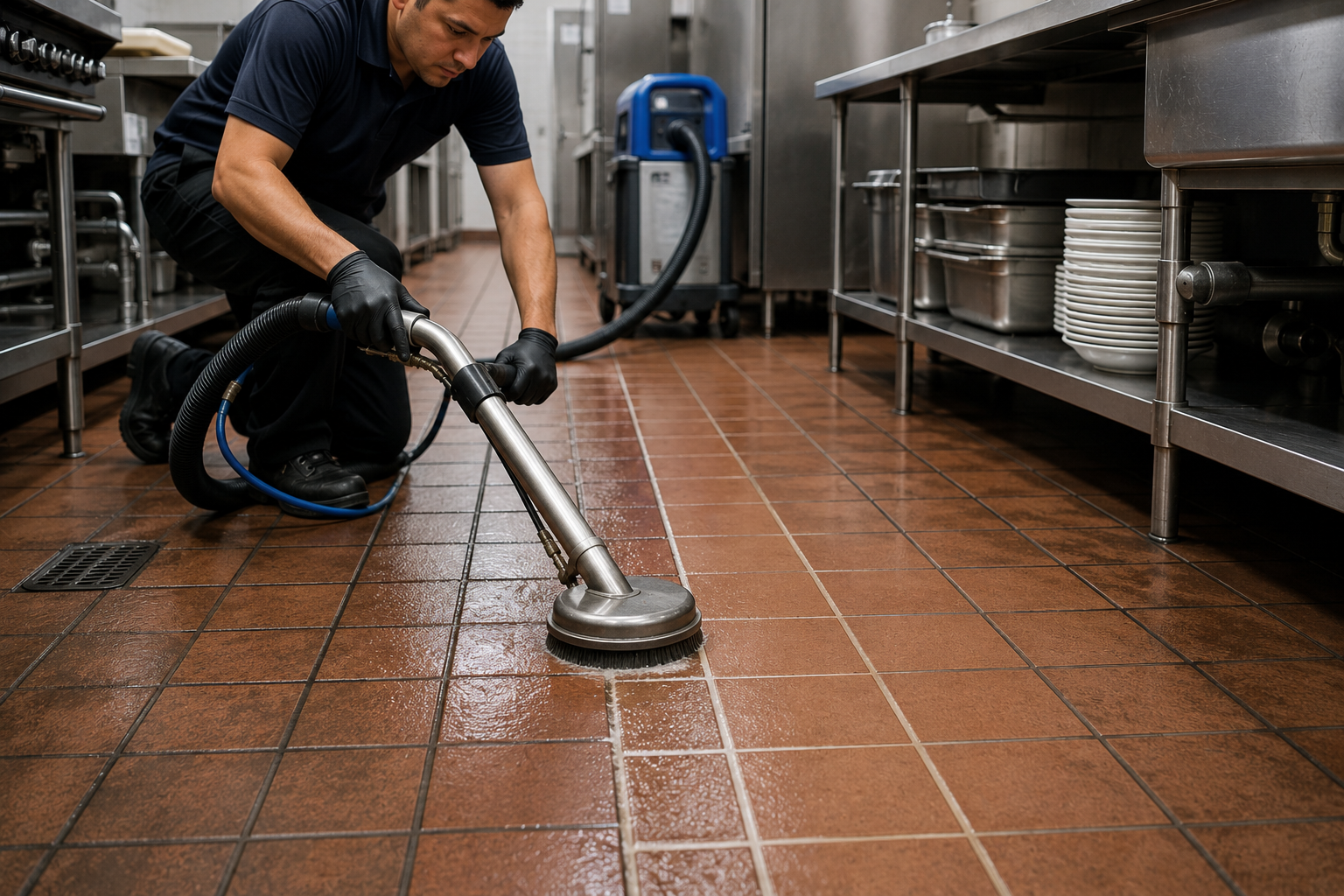
- Deep extraction cleaning. Using high-pressure, low-moisture equipment designed for tile and grout, we lift grease, dirt, and bacteria out of both the tile surface and grout joints.
- Grout line detailing. Grout lines receive focused attention, since this is where the majority of embedded grime accumulates. This step also helps restore the grout’s original color.
- Sanitizing pass. A sanitizing solution is applied to help address bacteria buildup common in food-service environments.
- Extraction and drying. All residue and moisture are extracted from the floor, and drying time is minimized to reduce kitchen downtime.
- Optional grout sealing. For kitchens that want added protection against future grease penetration, we can apply a sealant designed to slow re-absorption into grout — helping maintain results longer between service visits.
We schedule most commercial kitchen jobs during off-hours or slower service windows whenever possible, so your kitchen can return to normal operations quickly.
Why Choose San Diego Tile and Stone Cleaning
Kitchen tile cleaning isn’t a side service we tack onto residential work — it’s a specialized process that requires the right equipment, cleaning agents, and understanding of commercial food-service environments. Here’s what sets our approach apart:
- Specialized equipment for grease removal. Standard janitorial mopping and residential-grade tile cleaning tools aren’t built to handle the level of grease buildup found in active commercial kitchens.
- Experience with a wide range of tile types. From ceramic and porcelain tile common in newer builds to quarry tile found in older San Diego restaurant kitchens, we adjust our process to match the surface.
- Minimal operational disruption. We work with kitchen managers to schedule service around business hours, deliveries, and prep schedules.
- Local knowledge. As a San Diego-based company, we understand the flooring conditions typical of local commercial kitchens, from coastal humidity to the age and construction style of buildings across the county.
- Comprehensive tile and stone expertise. Beyond kitchen floors, we also service related surfaces such as ceramic and porcelain tile, natural stone, and general tile and grout cleaning for lobbies, restrooms, and other commercial areas.
Local Relevance: Commercial Kitchens Across San Diego
San Diego’s commercial kitchen landscape is diverse — from beachfront restaurants in Del Mar and La Jolla to hotel kitchens downtown, hospital cafeterias, and fast-casual chains throughout the county. Each type of facility presents its own flooring challenges.
Coastal properties near areas like Del Mar and Solana Beach often deal with higher humidity, which can affect how grease and moisture interact with grout over time. Older commercial buildings in neighborhoods throughout San Diego frequently still have original quarry tile flooring, which requires a different cleaning approach than the glazed porcelain tile found in newer builds or recent remodels.
We also regularly service tile flooring in other high-traffic commercial environments across the region, including dentist offices, medical offices, hospitals, and retail spaces, giving us a broad understanding of how commercial flooring performs under different types of daily use. For restaurants specifically, our restaurant tile and grout cleaning service addresses both dining-area and kitchen flooring needs.
Property managers overseeing multiple commercial kitchens — whether in a single shopping center or across several San Diego locations — often rely on our property management tile and grout cleaning service to keep cleaning schedules consistent across all their tenant spaces. For kitchens that need an added layer of sanitizing beyond standard cleaning, we also offer ULV fogger sanitizing treatment as an add-on service.
What Affects Cost, Timeline, and Results
Every commercial kitchen is different, so pricing and timelines depend on several factors:
- Kitchen size and layout. Larger kitchens with more equipment and prep stations naturally take longer to clean thoroughly.
- Tile type and condition. Unglazed quarry tile with years of embedded grease typically requires more intensive treatment than newer porcelain tile with light buildup.
- Grease buildup severity. Kitchens that haven’t had professional deep cleaning in a long time may need a more extensive first treatment before settling into a regular maintenance schedule.
- Access and scheduling needs. Cleaning during off-hours or around a tight service schedule can affect how a job is planned, though it generally doesn’t compromise the quality of results.
- Sealing add-ons. If grout sealing is added to extend results between cleanings, this affects both cost and total service time.
Because these variables differ from kitchen to kitchen, the most accurate way to understand pricing and scheduling for your specific space is through an on-site or photo-based assessment. We’re happy to walk through your kitchen’s specific needs and provide a clear, honest estimate before any work begins.
If you’re comparing options and want general background on why routine tile care matters, our articles on why you should always keep your kitchen countertops clean, the benefits of professional tile cleaning, and what to consider before hiring a tile and grout cleaning service can help you set expectations before your first appointment.
Get Your Commercial Kitchen Tile Professionally Cleaned Today
Grease-stained grout, slippery tile, and lingering kitchen odors don’t resolve themselves with everyday mopping. If your commercial kitchen floor hasn’t had a deep clean in a while — or you’re preparing for an upcoming health inspection — now is the time to act.
San Diego Tile and Stone Cleaning provides thorough, reliable commercial kitchen tile cleaning in San Diego, CA, backed by the right equipment and a process built specifically for food-service environments. Call us today at (858) 952-0777 or email info@sandiegotilegroutcleaning.com to schedule an assessment and get a clear, honest quote for your kitchen. Your staff, your customers, and your next health inspection will notice the difference.
Frequently Asked Questions
How often should a commercial kitchen have its tile professionally cleaned?
How often should a commercial kitchen have its tile professionally cleaned?
Most commercial kitchens benefit from professional deep cleaning every 3 to 6 months, though high-volume kitchens with heavy grease exposure may need it more frequently. Daily mopping helps with surface debris, but it doesn’t remove grease that settles into grout over time, which is why periodic professional cleaning is recommended alongside routine janitorial care.
Can commercial kitchen tile cleaning help pass a health inspection?
Can commercial kitchen tile cleaning help pass a health inspection?
Clean, grease-free tile and grout can support a stronger inspection outcome, since inspectors often look closely at floor condition in food-prep areas. While we can’t guarantee inspection results, thorough professional cleaning addresses one of the most common citation points: visible grease and grime buildup in grout lines.
What type of tile is most common in San Diego commercial kitchens?
What type of tile is most common in San Diego commercial kitchens?
We see a mix of ceramic tile, porcelain tile, and unglazed quarry tile across San Diego commercial kitchens, with quarry tile being especially common in older buildings. Each tile type requires a slightly different cleaning approach based on its porosity and surface finish.
Will cleaning disrupt our kitchen’s daily operations?
Will cleaning disrupt our kitchen’s daily operations?
We work with kitchen managers to schedule service during off-hours or slower periods whenever possible to minimize disruption. Drying time is also kept as short as possible using professional extraction equipment, so your kitchen can return to normal use quickly.
Do you offer sanitizing treatments in addition to tile cleaning?
Do you offer sanitizing treatments in addition to tile cleaning?
Yes. In addition to deep tile and grout cleaning, we offer a ULV fogger sanitizing treatment for kitchens that want an added layer of surface sanitizing beyond standard cleaning.
Is grout sealing included with commercial kitchen tile cleaning?
Is grout sealing included with commercial kitchen tile cleaning?
Grout sealing is available as an optional add-on rather than a standard part of every cleaning. Sealing can help slow future grease absorption into grout, which may extend the time between deep cleanings.
How much does commercial kitchen tile cleaning cost in San Diego?
How much does commercial kitchen tile cleaning cost in San Diego?
Cost depends on kitchen size, tile type, current grease buildup, and whether sealing is added. Because every kitchen is different, we recommend a quick on-site or photo-based assessment so we can provide an accurate, honest quote.
Do you service commercial kitchens outside of Del Mar?
Do you service commercial kitchens outside of Del Mar?
Yes. While we’re based in Del Mar, we provide commercial kitchen tile cleaning throughout San Diego County, including restaurants, hotels, and food-service facilities in surrounding areas near San Diego.


