
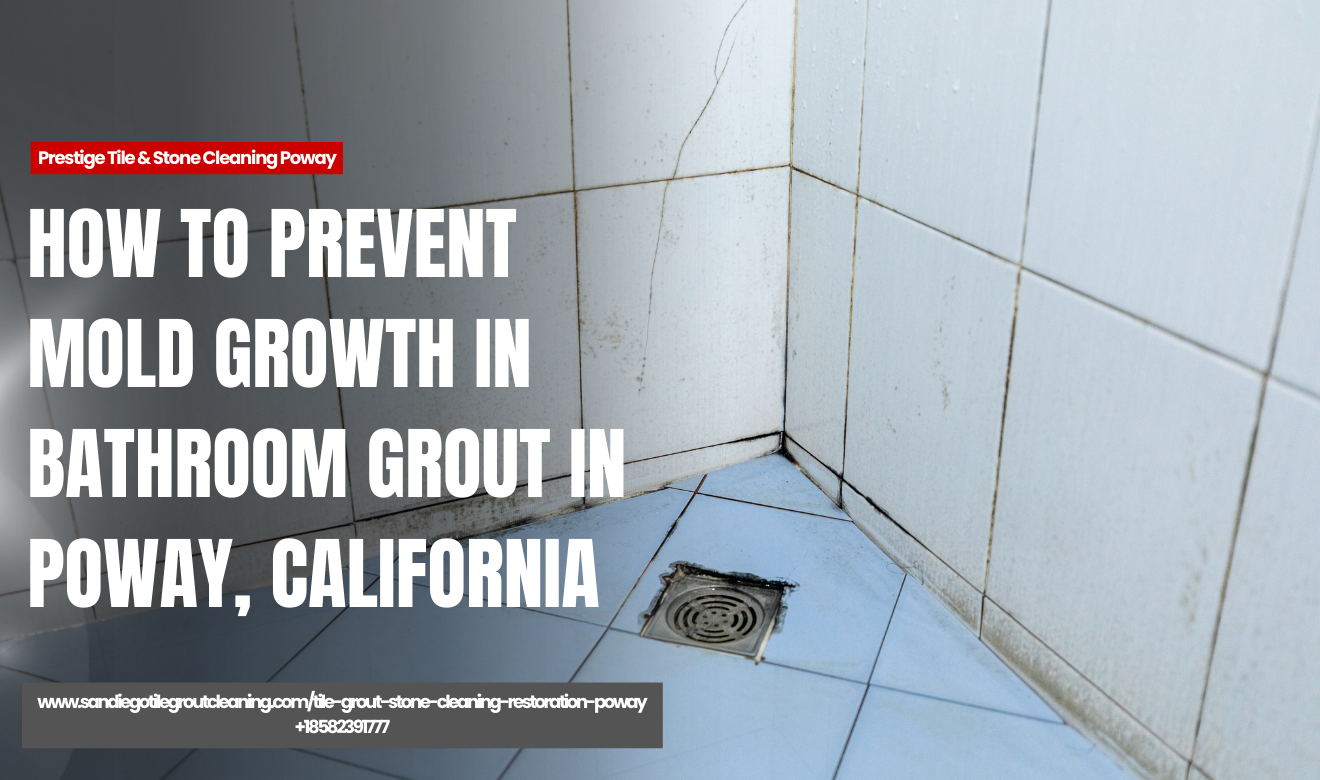
If you want to prevent mold in your bathroom grout in Poway, focus on one thing: keep grout dry, clean, and well-ventilated. Understanding how mold grows in bathroom grout Poway helps—mold feeds on moisture, soap scum, and warm, still air, then spreads into the tiny pores and cracks in grout.
For example, if you take hot showers and leave the fan off, steam settles into grout lines and stays there for hours. If shampoo and body wash residue builds up along the tub edge, it creates a film that holds water and gives mold something to cling to. Even a small leak at the shower door track or a dripping faucet can keep one section of grout damp all day, leading to those black or pink stains that keep coming back.
How Mold Actually Starts in Grout (and Why It Keeps Returning)
To stop recurring stains, it helps to understand how mold grows in bathroom grout Poway on a microscopic level. Mold spores are always around (indoors and outdoors). They become a problem when they find three things in your shower:
- Moisture: constant humidity, wet grout lines, or slow-drying corners
- Food: soap scum, shampoo residue, body oils, and mineral buildup
- Time + low airflow: damp grout that stays wet for hours (or every day)
Because grout is porous, it absorbs moisture and holds onto residues. That’s the key reason how mold grows in bathroom grout Poway is different from how mold grows on glossy tile—tile dries faster, grout doesn’t.
Why Bathroom Grout Is a Mold Magnet in Poway Homes
Poway’s climate is often mild, but bathrooms create their own “weather”: warm steam, condensation, and repeated wet/dry cycles. When daily routines repeat, so does how mold grows in bathroom grout Poway.
Common local triggers that speed up mold growth
- Older bathroom fans that move little air (or vents that terminate in the attic instead of outdoors)
- Hard water minerals that create a rough film, making it easier for grime to stick
- Builder-grade grout that was never sealed (or sealer that has worn off)
- Small plumbing issues like a slow drip behind the wall or a seeping shower valve
In practical terms, how mold grows in bathroom grout Poway often starts in the same “zones”: corners, curb edges, the first few inches above the tub line, and the bottom row of shower walls where water lingers.
Early Warning Signs: Catch Mold Before It Gets Embedded
One reason people feel stuck is that once mold penetrates grout pores, wiping the surface won’t fully remove it. Watch for these signs that how mold grows in bathroom grout Poway is already underway:
- Grout darkens when it’s “dry” (it may still be holding moisture internally)
- Pink/orange staining (often bacteria that thrives in damp residue—still a moisture problem)
- Musty odor that returns quickly after cleaning
- Caulk line discoloration where water sits at the tub or shower pan edge
- Powdery or crumbling grout (moisture damage can weaken it over time)
The Mold Triangle: The Fastest Way to Understand and Fix the Problem
If you want a simple mental model for how mold grows in bathroom grout Poway, use this triangle:
- Moisture (steam + wet grout)
- Residue (soap scum + oils + minerals)
- Low ventilation (slow drying)
Break any side of the triangle and mold struggles to return. Break two sides and you usually stop it entirely.
Daily and Weekly Habits That Prevent Mold (Without Heavy Scrubbing)
The best prevention plan is realistic. These steps directly target how mold grows in bathroom grout Poway—especially moisture and residue.
Daily “60-second” routine after showering
- Run the fan during the shower and for 20–30 minutes after.
- Squeegee walls and glass to reduce standing water.
- Quick towel-dry the grout-heavy zones (corners and bottom rows).
- Leave the door open (or cracked) to speed drying.
Weekly routine (10–15 minutes)
- Clean soap scum early so it doesn’t become a moisture-holding film.
- Use a pH-neutral cleaner when possible, especially on natural stone.
- Rinse thoroughly—leftover product can attract more grime.
- Dry the area after cleaning (this step is underrated).
Done consistently, these habits interrupt how mold grows in bathroom grout Poway before it becomes a recurring stain cycle.
What to Use (and What to Avoid) on Grout and Tile
Not all bathrooms are the same. The wrong product can damage grout, etch stone, or weaken sealers—making how mold grows in bathroom grout Poway worse over time.
Safer, effective options for many showers
- pH-neutral tile and grout cleaner for routine washing
- Hydrogen peroxide (spot use) for light discoloration on many grout types
- Oxygenated cleaners (often better-smelling and less harsh than chlorine bleach)
Use caution (or avoid) in many cases
- Chlorine bleach on grout: can lighten temporarily, but may not penetrate evenly and can degrade some materials with repeated use.
- Acidic cleaners (vinegar, some bathroom “descalers”): can damage cement-based grout and etch natural stone.
- Abrasive powders: can scratch finishes and create more places for residue to cling—supporting how mold grows in bathroom grout Poway.
Ventilation That Works: Simple Upgrades That Make a Big Difference
If you’re doing everything “right” and still seeing stains, the root cause is often drying time. Remember: how mold grows in bathroom grout Poway depends heavily on how long moisture sits in the grout.
Quick ventilation checklist
- Fan capacity: bathrooms typically need an appropriately sized exhaust fan for the room.
- Run time: 20–30 minutes after bathing is a practical baseline.
- Clean the fan grille (dust reduces airflow more than most people expect).
- Crack a window when weather allows, even for 10 minutes.
- Consider a small dehumidifier if the bathroom has no window and poor ventilation.
Sealing Grout: When It Helps and When It Doesn’t
Sealer can be a strong prevention tool, but it’s not magic. It won’t stop how mold grows in bathroom grout Poway if the area stays wet or dirty—it simply slows absorption and makes routine cleaning easier.
Sealing works best when:
- Grout is fully clean and dry first
- You’re dealing with cementitious grout that benefits from reduced water absorption
- You’re committed to basic maintenance (ventilation + weekly cleaning)
Sealing is less effective when:
- There’s an ongoing leak or chronic moisture behind tile
- Grout is already cracked, missing, or deteriorating
- Residue is constantly building up (which fuels how mold grows in bathroom grout Poway)
Typical Causes and Fixes (Fast Reference Table)
This chart connects the “why” to the “what to do,” based on how mold grows in bathroom grout Poway.
| What you notice | Most likely cause | What to do next |
|---|---|---|
| Black spots in corners or bottom row | Water sits + poor airflow (slow drying) | Improve ventilation, squeegee/towel dry corners, clean weekly |
| Pink/orange film near tub edge | Bacteria thriving in damp residue | Remove soap scum, rinse thoroughly, keep area dry between uses |
| Grout looks dirty again within days | Embedded soil + worn sealer + constant moisture | Deep clean, then consider resealing; fix ventilation and habits |
| One section stays dark/wet all day | Leak, failing caulk, or poor drainage slope | Inspect and repair leak/caulk; address drainage so it can dry |
When DIY Isn’t Enough: Signs You Need a Deeper Professional Clean
Sometimes the issue isn’t effort—it’s that mold and grime have penetrated deep into porous grout. That’s when understanding how mold grows in bathroom grout Poway helps you decide what’s realistic at home.
You may need professional help if:
- You’ve cleaned repeatedly but staining returns in the same spots
- Grout lines look shadowed or permanently dark even after scrubbing
- You’re dealing with textured tile that traps residue quickly
- You want to restore appearance without damaging tile or stone
In these cases, a targeted Bath & Shower Tile Cleaning service can remove embedded soil and buildup that normal household methods often leave behind—helping break the cycle of how mold grows in bathroom grout Poway.
A Real-World Example: The “Cleaned Yesterday” Shower That Still Looked Dirty
A common scenario in Poway is a shower that looks clean right after scrubbing, then shows dark grout again within a week. In many cases, what’s happening is:
- Soap scum remains in microscopic layers (even if the surface looks fine).
- Grout is holding moisture because the fan isn’t clearing humidity fast enough.
- The remaining residue acts like a sponge, reinforcing how mold grows in bathroom grout Poway.
Once the residue is fully removed and drying time is shortened (fan use + squeegee + open door), many homeowners see the “rapid return” slow down dramatically.
Helpful Cleaning Guidance If You Have Mixed Surfaces
If your bathroom includes specialty tile (mosaic, natural stone, or glass), product choice matters. For more detailed cleaning strategy ideas, see this guide on grout cleaning—it’s especially useful if you’re trying to balance effective cleaning with protecting finishes while addressing how mold grows in bathroom grout Poway.
Stop the Cycle: The 3-Part Plan That Works
If you want a straightforward plan that aligns with how mold grows in bathroom grout Poway, stick to these three priorities:
- Dry faster: run the fan longer, squeegee after showers, keep doors open.
- Remove residue routinely: don’t let soap scum build into a water-holding film.
- Protect and restore surfaces: keep grout in good condition, reseal when appropriate, and address cracks/leaks quickly.
These steps aren’t complicated—but they’re effective because they directly interrupt how mold grows in bathroom grout Poway instead of just bleaching the symptom.
From Stains to Shine: A Smarter Way to Keep Grout Mold-Free
Mold prevention is less about one “miracle cleaner” and more about consistency, moisture control, and correct surface care. Once you truly understand how mold grows in bathroom grout Poway, the solution becomes predictable: reduce damp time, remove buildup before it hardens, and maintain grout so it doesn’t trap water.
Industry best practice in tile and grout care centers on using material-safe cleaners, avoiding damage from harsh chemicals, and using high-effectiveness extraction methods when buildup becomes embedded. That combination—paired with good ventilation—creates long-term results you can actually maintain.
Frequently Asked Questions
Stop Grout Mold From Coming Back—Get a Pro-Grade Reset
If your shower grout keeps turning black or pink no matter how often you clean, it usually means moisture and residue are trapped deep in the pores—right where DIY wipes and sprays can’t reach. Prestige Tile & Stone Cleaning Poway can deep clean and restore tile and grout, then help you lock in longer-lasting results with the right maintenance and sealing approach—so your bathroom stays fresher, brighter, and easier to keep mold-free.


