
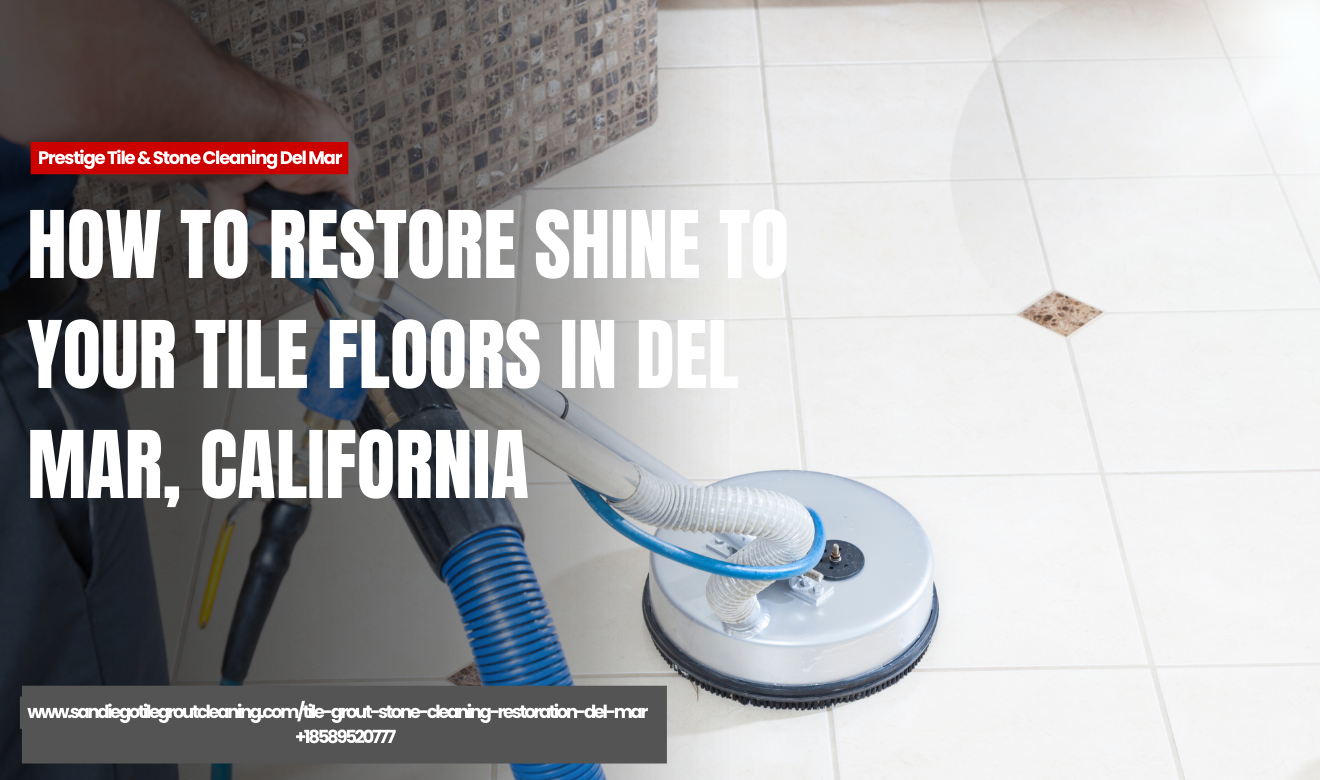
If you’re wondering why tile floors lose shine Del Mar, the direct answer is that residue, wear, and mineral buildup slowly dull the surface—especially in high-traffic coastal homes. Everyday grit acts like sandpaper, and repeated mopping can leave behind a thin film that makes the tile look cloudy. For example, a kitchen walkway can go from glossy to flat just from tracked-in sand and frequent foot traffic, while a bathroom floor may lose its sparkle because hard-water spots and soap residue settle into the tile and grout. Even “clean” floors can look dull if they’ve been cleaned with too much detergent, leaving a sticky layer that attracts more dirt.
What “Losing Shine” Really Means (And Why It Matters in Del Mar)
When homeowners search why tile floors lose shine Del Mar, they’re usually describing one of three things: a hazy film on the surface, a worn-looking “traffic lane,” or stains/mineral deposits that won’t come off with normal cleaning. In Del Mar’s coastal environment, the mix of fine sand, salt air, and frequent indoor-outdoor living speeds up the dulling process—especially near patios, entries, kitchens, and bathrooms.
Shine matters because it’s more than appearance. A dull tile surface often signals:
- Micro-scratches from grit (surface wear)
- Residue buildup from cleaners, soap, or hard water
- Grout contamination that makes the entire floor look “dirty” even after mopping
- Sealant breakdown (for porous tile and natural stone)
Quick Answer: The Most Common Reasons Tile Floors Lose Shine in Del Mar
If you want the most direct explanation for why tile floors lose shine Del Mar, it usually comes down to the combination of abrasion + residue + minerals.
- Abrasion: tracked-in sand and grit create tiny scratches that scatter light (shine drops).
- Residue/film: detergent, “shine enhancers,” and fabric softener-style cleaners leave a dulling layer.
- Mineral buildup: hard-water deposits and salt can create cloudy spots on tile and in grout lines.
- Wrong chemicals: acids or harsh alkaline cleaners can etch certain stones and damage finishes.
- Grout discoloration: darkened grout makes clean tile look flat and aged.
Del Mar-Specific Factors That Make Floors Dull Faster
1) Beach sand acts like sandpaper
One of the biggest answers to why tile floors lose shine Del Mar is simple: beach sand is extremely abrasive. Even small amounts on shoes or pet paws can create a steady stream of micro-scratches. Those scratches don’t always look like “damage”—they show up as a general loss of reflectivity.
2) Salt air + moisture = more deposits
Coastal humidity helps minerals and salts cling to surfaces. In bathrooms, that shows up as white haze. In kitchens, it can show as a sticky layer that keeps reappearing after cleaning.
3) Indoor-outdoor living increases soil load
Del Mar homes often have patios, pools, and backyards that connect directly to interior tile. That increases:
- Tracked-in grit
- Sunscreen and body-oil residue (near pools)
- Pet traffic and dander buildup
The #1 Mistake: Overusing Mop Soap (It’s Not “Just Clean”)
A top reason why tile floors lose shine Del Mar is repeated cleaning with too much product. Many floor detergents are designed to suspend soil—if you don’t rinse well, a thin film stays behind. That film:
- Attracts dirt faster
- Turns dark in high-traffic lanes
- Makes tile look cloudy, even when it’s sanitized
Tip: If your floor looks better immediately after mopping but gets dull again within 24–48 hours, residue is likely the culprit.
Tile Type Matters: Different Surfaces Lose Shine for Different Reasons
Another key point in understanding why tile floors lose shine Del Mar is the tile material. Ceramic, porcelain, and natural stone behave very differently under abrasion and chemical exposure.
| Tile surface | Common “dull” cause | What typically fixes it |
|---|---|---|
| Porcelain / ceramic (glazed) | Cleaner film, abrasion, hard-water haze | Residue removal + correct neutral cleaner routine |
| Porcelain (matte/textured) | Embedded soil in texture + grout haze | Deep extraction cleaning + grout detailing |
| Natural stone (marble, travertine, limestone) | Etching + wear + wrong chemicals | Honing/polishing + stone-safe maintenance |
| Cement tile / Saltillo / terracotta | Sealer wear + staining + alkaline residue | Strip/clean (as appropriate) + reseal |
Grout: The “Hidden” Reason Your Tile Looks Dull
Many people searching why tile floors lose shine Del Mar are actually seeing a grout problem. As grout absorbs soil and moisture, it darkens and changes the overall look of the floor. Grout is also slightly recessed, so it traps:
- Fine sand and grit
- Oils from cooking and bare feet
- Mildew and soap residue in bathrooms
Because grout is porous, “mopping only” often spreads dirty water over it rather than lifting embedded soil out.
Chemical Damage: When Shine Loss Is Actually Etching or Finish Breakdown
Not all dullness is removable with basic cleaning. Another big answer to why tile floors lose shine Del Mar is chemical damage—especially on natural stone and some specialty tiles.
Common culprits
- Acidic cleaners: vinegar, some bathroom descalers, “lime” removers (high risk for marble/limestone/travertine)
- Harsh degreasers: can leave residue or dull certain finishes if not rinsed thoroughly
- Abrasive powders and scrub pads: create micro-scratches, especially on polished surfaces
How to tell if it’s etching vs. residue
- Residue: looks cloudy and may improve when wiped with plain water and a microfiber towel.
- Etching (stone): looks like a “water spot” or dull patch that doesn’t change after rinsing; often feels slightly rough.
A Simple “Dull Tile” Diagnostic You Can Do at Home
Before assuming the tile is permanently worn, try this quick check. It helps pinpoint why tile floors lose shine Del Mar in your specific room.
Step-by-step test (5 minutes)
- Pick a small area (1–2 sq. ft.) in a traffic lane.
- Wash with warm water only and a clean microfiber mop or towel.
- Dry immediately with a second microfiber towel.
- Compare the look to the surrounding area under good lighting.
What results mean:
- If it looks noticeably better after drying, the issue is likely film/mineral residue.
- If it looks the same, the issue may be wear, scratching, etching, or embedded soil in texture/grout.
Real-World Example: The “Clean But Dull” Kitchen Walkway
A very common Del Mar scenario: the kitchen is mopped frequently, but the main path from the garage/entry to the sink looks flat. This often happens because:
- Foot traffic concentrates grit into a narrow lane (micro-scratches)
- Repeated cleaning lays down detergent film (cloudiness)
- Oils from cooking settle into grout joints (dark outline effect)
This is exactly why tile floors lose shine Del Mar searches spike for kitchens—because the dullness is concentrated where you look the most.
How to Prevent Shine Loss (Without Over-Cleaning)
If you’re trying to reduce why tile floors lose shine Del Mar issues long-term, prevention beats restoration. Focus on stopping abrasion and residue before they build.
Best practices for Del Mar homes
- Use entry mats outside and inside doors (two-mat system works best).
- Sweep or dry mop daily in high-traffic areas to remove sand before it scratches.
- Use a pH-neutral cleaner and measure it—more is not better.
- Rinse occasionally with clean water to prevent film buildup.
- Use felt pads under chairs to avoid micro-scratches.
When Professional Cleaning Makes the Biggest Difference
Sometimes the reason why tile floors lose shine Del Mar is that the soil is no longer on the surface—it’s embedded in grout lines or textured tile. That’s when professional equipment and technique can restore the look faster and more safely than aggressive DIY scrubbing.
For example, Tile & Grout Cleaning can remove impacted soil from grout joints and help eliminate the film that normal mopping leaves behind, improving clarity and uniformity across the floor.
Maintenance That Preserves Shine After Deep Cleaning
After you’ve corrected the underlying cause of why tile floors lose shine Del Mar, your maintenance routine determines how long the results last.
Weekly plan (simple and realistic)
- 2–4 times/week: dry microfiber mop or vacuum with a hard-floor head
- 1 time/week: damp mop with a diluted neutral cleaner
- 1 time/month: rinse-mop with clean water only (especially if you use any detergent)
Bathroom plan (to stop haze)
- Squeegee shower walls/floor after use (reduces minerals and soap film)
- Ventilate to reduce moisture and residue bonding
- Spot-clean hard-water areas before they turn into a cloudy layer
If you want more guidance on consistent upkeep, this resource pairs well with Del Mar’s coastal conditions: 5 essential tips for floor cleaning in San Diego.
Why “Shine Products” Often Backfire
It’s tempting to use polish-in-a-bottle products to fix why tile floors lose shine Del Mar quickly. The problem is that many topical shine products:
- Create a coating that attracts sand and dirt
- Yellow or haze over time
- Leave patchy “high gloss” areas and dull areas
- Require stripping later (which can be labor-intensive)
If the tile is natural stone, the wrong product can also interfere with breathability and trap moisture, making discoloration more likely.
Trustworthy Signs It’s Time for Restoration (Not Just Cleaning)
In some cases, why tile floors lose shine Del Mar isn’t just dirt—it’s wear or surface damage that needs honing/polishing rather than basic cleaning.
- Visible traffic patterns that match foot paths even after deep cleaning
- Persistent dull spots on marble/travertine (often etching)
- Scratches you can feel with a fingernail
- Uneven reflectivity across the same type of tile
These symptoms usually mean the surface is physically changed—not just covered with residue.
Bring Back the Glow—And Keep It There
Most of the time, why tile floors lose shine Del Mar comes down to preventable causes: sand abrasion, cleaner film, mineral deposits, and dirty grout that drags down the whole room’s appearance. The good news is that once you identify which factor is affecting your tile, you can match the fix—whether that’s changing your cleaning chemistry, improving dry soil removal, or scheduling a deep clean to reset the surface.
Professionals who work with tile and natural stone typically follow industry-accepted methods (like using pH-appropriate solutions, controlled agitation, and targeted restoration steps when needed) to protect the finish while improving clarity. That combination—correct diagnosis plus material-specific care—is what reliably solves why tile floors lose shine Del Mar for kitchens, bathrooms, entries, and coastal high-traffic areas.
Frequently Asked Questions
Get Your Shine Back (Without Guesswork)
If your floors look “clean but dull,” you don’t need another mop soap—you need the right fix for what’s actually causing the haze, traffic-lane wear, or mineral buildup. Prestige Tile & Stone Cleaning Del Mar helps homeowners pinpoint the real reason tile floors lose shine in Del Mar, then restores clarity by safely removing residue, deep-cleaning grout, and recommending a maintenance plan that keeps that coastal glow longer.


