Prestige Tile & Stone Cleaning
Serving San Diego County
Residential & Commercial
Mon–Fri 8am–5pm · Sat 10am–2pm
Home › FAQs
FAQs
Tile, Grout & Stone Cleaning FAQs
Answers to 59 common questions about cleaning, natural stone, restoration, repair, sealing, showers, pool tile, commercial work, pricing and your appointment.
The short answer
What Should I Know Before Booking Tile Cleaning?
Price depends on the surface, its size and condition, and whether sealing is added; a free estimate gives you the figure for your floor. Surfaces are inspected before work begins. A typical 300-square-foot area takes 60 to 90 minutes to clean, you can walk on it after about 30 minutes, and sealer needs 24 hours to cure. Natural stone should be sealed; grout sealing is optional.
Browse by topic
Find Your Question
Cleaning
Tile & Grout Cleaning Questions
How professional tile and grout cleaning works, what it can fix and how to look after tile afterward.
Why hire a professional tile and grout cleaning company?
Foot traffic and everyday use dull tile and grout over time, and soil settles into porous grout and small cracks. Daily mopping only removes the dirt on top, so professional cleaning is what brings tile and grout back to their original appearance.
Why does professional grout cleaning work better than household cleaners?
Grout is porous, so residue and soil work into it and harden, gradually hiding its color. Household cleaning can keep up with light soil on well-maintained tile, but it cannot reach grime that has hardened deep in grout pores; professional equipment and cleaning agents can.
How does your tile and grout cleaning process work?
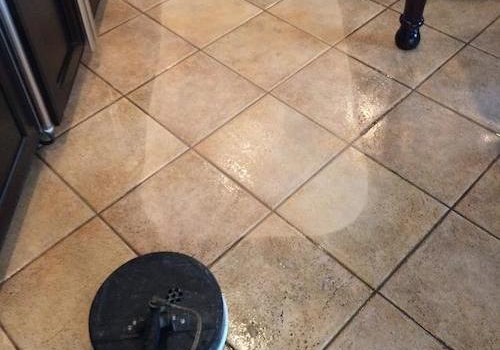
A citrus-based emulsifier is applied first. It penetrates grout or natural stone and breaks down built-up soil and oils. A machine designed for stone cleaning then applies high-pressure heated water while vacuuming up the soil loosened below the surface.
How is your tile cleaning equipment different?
The system was designed for stone cleaning and runs hotter and at higher pressure than most, releasing water at around 210°F; temperatures above 180°F kill bacteria. Instead of brushes it uses two enclosed jet heads spinning at 200 rpm. Tools made for carpet cleaning do not clean stone as efficiently.
Can professional cleaning damage my tile or grout?
Intact tile and grout are not harmed by the cleaning equipment, although the vacuum can pick up grout that is already broken or loose. Surfaces are inspected before any work begins, and you are told right away if damaged tile or grout is found.
Should grout be cleaned by machine or by hand?
It depends on the condition of the grout. Hand scrubbing can be enough for light soiling, but discolored grout with hardened deposits needs equipment designed for tile and grout, so the grout is assessed before deciding.
Can blackened grout be returned to its original color?
Often, yes. Grout that looks black from embedded grime can usually be cleaned back toward its original color by a professional. How far it comes back depends on how long it has been dirty, the products used on it and when, or whether, it was last sealed.
Can mold and mildew be removed from tile and grout?
Yes. Deep-cleaning methods remove mold and mildew even from old tile and grout that has not been cleaned properly in years, in bathrooms and kitchens, on walkways and mosaic floors, and in commercial tile installations.
How often should tile and grout be professionally cleaned?
About once a year for most homes. Heavier foot traffic, dusty conditions and the type of soil tracked in can mean cleaning more often, and it is worth booking as soon as grout starts to darken or stain.
Can I use household cleaning products on tile and grout?
Use a neutral, pH-balanced cleaner. Acidic products such as vinegar, and bleach, can etch natural stone and weaken grout over time. If a product label tells you to wear gloves and a mask, it is probably an acid and should not be used on stone.
How should I maintain tile floors between professional cleanings?
Use as little liquid as possible, because the more water you use, the more dirt is carried into grout and porous stone. A steam cleaner can help keep floors clean, and if you use a cleaner, choose a pH-neutral one.
Natural stone
Natural Stone Questions
Marble, travertine, limestone, granite, slate and other natural stone each react differently to cleaners and sealers.
What types of natural stone do you clean?
Flagstone, granite, limestone, marble, pavers, slate, terrazzo and travertine, along with onyx, quartzite, sandstone, soapstone and more, both indoors and outdoors.
Should natural stone be sealed?
Porous natural stone should be sealed. A sealer reduces moisture absorption, which makes the stone easier to clean and lowers the chance of staining. Non-toxic sealers are used, including color-enhancing options.
Which cleaners should I avoid on natural stone?
Avoid vinegar, bleach, tub and tile cleaners, abrasive powders and pads, acid or rust removers, caustic soda, wax finishes and anything strongly acidic or alkaline. Use only pH-neutral cleaners made for natural stone.
Can I remove stains from natural stone myself?
Some light marks can be handled at home, but the wrong product can damage stone permanently. Professional stain removal matches the material and method to the type of stain so the stone is not etched or discolored.
Is natural stone polishing messy?
No. Stone is polished with wet methods using diamond and nano abrasive compounds, so the process is dustless.
Restoration
Stone Restoration Questions
Honing, polishing and refinishing for stone that cleaning alone will not bring back.
Can every natural stone be restored?
No. Each stone has its own characteristics, and only some are good candidates for restoration. A professional inspection of the stone, its installation and its wear decides what is possible before any work is proposed.
What is the difference between honing and polishing stone?
Honing is a wet process using sanding or diamond disks, or honing powder, to reduce or remove etches and scratches. Polishing follows with wet abrasive powders to bring the stone to the sheen you want.
Can damaged stone be restored instead of replaced?
Often, yes. The stone is examined and a restoration or repair plan is prepared before you decide to replace it, and some chips and cracks can be repaired with near-invisible fixes.
What does a stone restoration proposal include?
A written proposal broken down by area that describes the work, with clear pricing and no hidden costs, any limits on the final appearance, and the maintenance the stone will need afterward.
Will the price of stone restoration change during the job?
No. The work follows the service agreement, and the price changes only if you ask for additional work.
How often should restored stone be resealed?
As a guide for regular use: marble two to three times a year, terrazzo a few times a year, granite and slate every two to three years, and travertine every three to five years.
Repair
Tile & Stone Repair Questions
Chips, cracks, etching, stains and failing grout in floors, showers and countertops.
What kinds of tile and stone damage can be repaired?
Chips, cracks, scratches, etching, stains, soap scum and discoloration, failing grout and caulk, and countertop seams and joints, in showers, kitchens, floors and countertops.
Can marble, travertine and granite really be repaired?
Nearly all natural stone, including granite, travertine, onyx and marble, can be cleaned and repaired. The damage is assessed first so the method is strong enough to work without harming the stone.
Do you replace grout and caulk?
Yes. Failing grout is removed and repaired, and worn caulk is removed and replaced, as part of tile and stone repair work.
Sealing
Sealing Questions
When sealing helps, when it is optional, and how long sealers take to dry and cure.
Should I seal my tile or grout?
Natural stone should be sealed. Glazed ceramic and porcelain tile is made non-porous by the manufacturer, so the tile itself does not need it. Grout is porous cement; sealing it is optional, but it gives you time to wipe up spills such as coffee or wine before they soak in, and you will get an honest recommendation for your floor.
Why is tile cleaned before it is sealed?
A sealer locks in whatever is on the surface, so soil is removed first with emulsifying cleaners and the surface is sanitized with an industrial pressure steamer before any sealer is applied.
How long does grout sealer take to dry?
Stay off the floor for about 30 to 40 minutes after sealing. The sealer needs a full 24 hours to cure, and the tile and grout should be kept dry during that time.
How do I keep grout clean after a professional cleaning?
Sealing is the final step of a professional grout cleaning. It helps grout resist stains so spilled liquids do not soak into the joints. Give the sealer 24 hours to cure before normal use.
Do you recommend color sealing grout?
Paint-like color sealing is not recommended. It makes grout look new at first, but as the coating wears and peels you end up with two colors, and removing it with floor stripper is costly and time-consuming.
Showers
Shower Tile Questions
Mold, grout and caulk in showers and bathrooms, and when cleaning is not enough.
Why does mold keep coming back in my shower?
Moisture gets into small cracks and holes in worn caulk and grout, where cleaning products cannot reach. Removing the mildewed material, regrouting, re-caulking and sealing those areas is what stops the cycle.
Do I need shower regrouting or just a deep cleaning?
If shower grout is cracked, crumbling, missing or soft, cleaning will not fix it; the material has failed and needs replacing. If it is intact but stained or dull, a professional cleaning may be enough.
What is the difference between regrouting and re-tiling a shower?
Regrouting replaces only the grout and is far less invasive and costly. Re-tiling removes and replaces the tile, and is reserved for tile that is cracked, loose beyond repair or outdated.
Can marble, travertine or slate showers be cleaned safely?
Yes. All types of stone showers and baths, including marble, granite, travertine and slate, are cleaned with products that are safe for each stone.
Are harsh chemicals used to clean showers?
No. Showers are cleaned with steam, which is simply heated water, and non-toxic cleansers, so there is no need for harsh chemical cleaners.
Pool tile
Pool Tile Questions
Calcium and scale at the waterline, stains, and the grout and decking around the pool.
Why does calcium keep building up on my pool tile?
Calcium carbonate in pool water bonds to tile at the waterline, where evaporation concentrates minerals. Sun exposure and the water’s mineral content speed this up, and persistent buildup can also signal high calcium hardness or a pH imbalance worth mentioning to your pool service.
Can pool tile cleaning damage glass or natural stone tile?
It can if the wrong method is used. Abrasive pads, pumice stones and harsh acid washes can permanently scratch glass tile or etch stone, so material-specific techniques are used to remove buildup while protecting the surface.
What causes brown or rust-colored stains on pool tile?
Usually metals such as iron, copper or manganese in the water reacting with pool chemicals. These stains resist standard pool brushes, which is where professional stain removal helps.
Is the grout between pool tiles cleaned too?
Yes. Pool tile grout lines are cleaned as part of the service, since they discolor and collect buildup differently than the tile, especially in shaded areas.
Can pool decking and coping be cleaned in the same visit?
Often, yes. Natural stone coping, travertine decking and paver surrounds can usually be cleaned in the same visit as the waterline tile.
Commercial
Commercial Tile & Stone Questions
Scheduling, disruption and the kinds of properties we work in.
Will professional tile cleaning disrupt my business?
The technicians work out a cleaning schedule with you and can clean in sections so each area has time to dry. They will tell you about any drying periods you need to plan around.
Can commercial tile cleaning be scheduled outside business hours?
Yes. Commercial work can be scheduled around your operating hours, and recurring maintenance is available for regular cleanings.
What kinds of businesses do you work with?
Offices, government buildings, hotels, casinos, hospitals, nursing facilities, medical and dental practices, restaurants, retail stores and managed properties, among others.
Can you clean the grout in a large showroom?
Yes. The equipment handles spaces of every size, from a single kitchen floor to a large showroom.
What commercial tile and stone services do you offer?
Cleaning, maintenance, restoration, sealing, stain removal, polishing, repair and anti-slip treatment for tile, grout and natural stone, indoors and outdoors.
Estimates
Estimates & Pricing Questions
What affects the price of tile and stone work, and how to get an estimate.
How much does tile and grout cleaning cost?
The price depends on the type of surface (manufactured tile such as ceramic or porcelain, or natural stone such as travertine or marble), the square footage, travel distance, whether the space is a single-story home or an upper-floor unit, and whether it is furnished or empty. A free estimate gives you the price for your floor.
Is professional tile cleaning cheaper than replacing tile?
Yes. Professional cleaning costs a fraction of what replacing tile costs, and different service packages are available to fit different budgets.
Is there a travel charge for tile cleaning?
No. Travel is included in the service price unless the property is outside the San Diego County service area.
How long does tile and grout cleaning take?
A 300-square-foot area usually takes 60 to 90 minutes. Time varies with the size of the tile, how much soil is in the grout and the layout of the space; sealing adds time and a 24-hour cure.
Why should I hire your tile and stone cleaning company?
Every surface is cleaned as if it were our own. We are a small, locally owned company, and we aim to be thorough, prompt and dependable on every job.
Scheduling
Before & After Your Appointment
What to do before the technician arrives, and how soon you can use the floor again.
What should I do before the tile cleaning technician arrives?
Pick up items on the floor, such as rugs, plants and trash cans, and give the area a quick sweep or vacuum. Nothing else needs to be prepared.
Do you call before you arrive for a tile cleaning appointment?
Yes. You receive a courtesy call the day before your appointment and another shortly before the technician arrives.
What time will the technician arrive?
Technicians usually arrive right on schedule. If they are running ahead or behind, it should be by no more than about 30 minutes, and the technician will call to let you know.
Will the technicians move furniture?
Technicians move light furniture such as couches and coffee tables. They cannot move stereo equipment, large TVs, china hutches or other large or fragile items.
Do I need to be home during the cleaning?
That is your choice. You do not need to be present while the tile and grout are cleaned.
How much notice do you need to cancel an appointment?
Please give as much notice as possible if you need to cancel or reschedule a tile cleaning appointment.
How long will my floors stay wet after cleaning?
Not long. The machine vacuums as it cleans and uses about as little water as a spray bottle, and floor-directed air movers dry the rest.
When can I walk on my floors after tile and grout cleaning?
Wait at least 30 minutes before walking on freshly cleaned tile. If sealer was applied, keep liquids off the floor for 24 hours while it cures, then return furniture, ideally with felt pads, and rugs.
Will there be an odor after tile cleaning?
You may notice a faint scent after cleaning. It usually fades in about an hour, depending on airflow, humidity and heat.
Get Started
Still Have a Question?
Call (858) 952-0777 or request a free estimate, and we will talk through your tile, grout or stone.
Free estimates
Surface-safe methods
Residential & commercial