
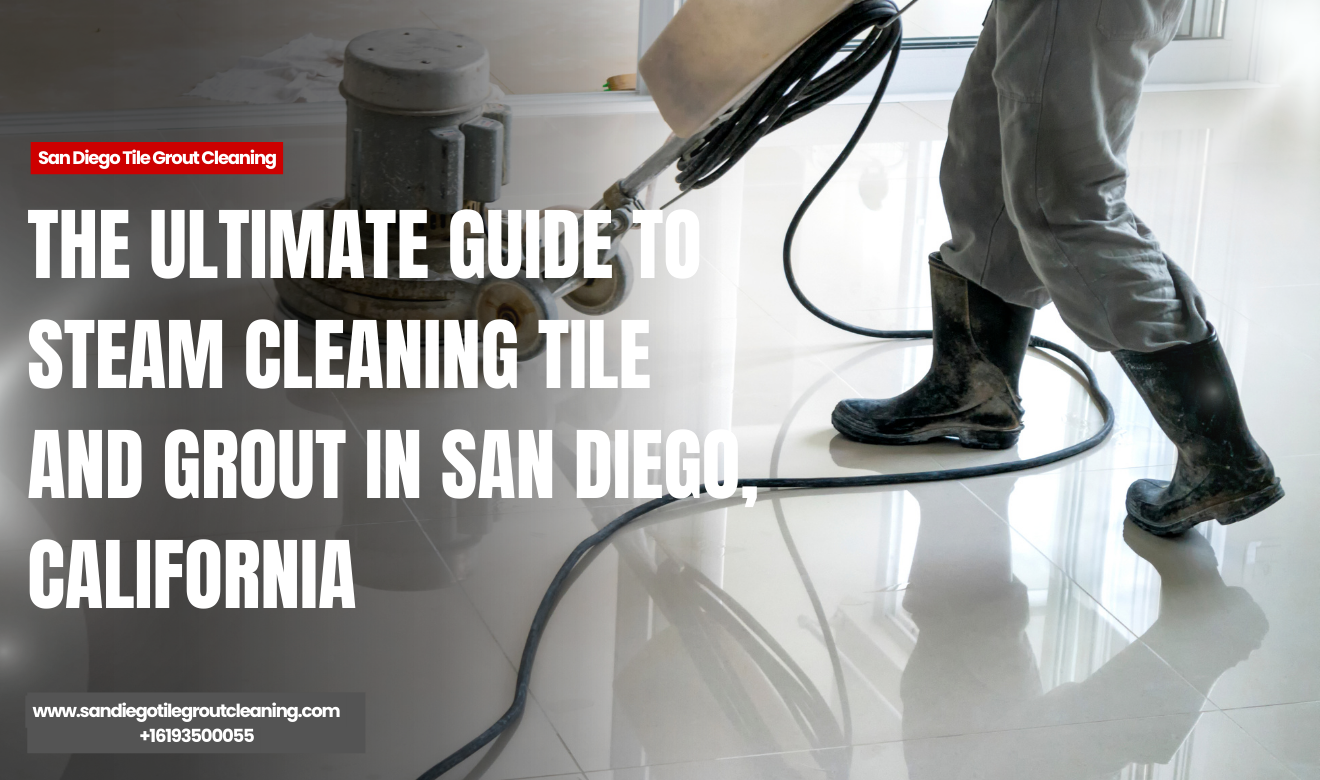
Steam cleaning tile and grout San Diego is one of the fastest ways to lift deep-set dirt, kill germs with high heat, and brighten grout lines without harsh chemicals. If your kitchen floor grout has turned gray near the stove, or your bathroom shower corners show dark buildup, steam can loosen that grime so it wipes away cleanly. It’s also a practical option after a busy summer at the beach when sand and salt get tracked onto tile, or when pet paws leave streaks across entryways. In short, steam targets what mops miss and helps your tile look noticeably fresher.
How Steam Cleaning Works on Tile and Grout
Steam cleaning tile and grout San Diego relies on high-temperature vapor to soften and break down the “bond” between grime and the surface. Because grout is porous (meaning it absorbs oils, soap residue, and dirt), it tends to darken faster than the tile itself—especially in kitchens, showers, and high-traffic hallways.
Here’s what steam is doing during a proper service:
- Heat loosens buildup: Steam softens oily films, tracked-in soil, and soap scum so it can be extracted or wiped away.
- Moisture lifts dirt from pores: Grout lines release embedded debris that standard mopping leaves behind.
- Sanitizing support: High heat helps reduce germs on contact, which is useful in bathrooms, pet areas, and entryways.
- Lower chemical dependence: Many jobs require fewer harsh cleaners (though specialty treatments may still be needed for stains).
Why Grout Gets Dark in San Diego Homes (Even When You Mop)
People often search for steam cleaning tile and grout San Diego after trying weekly mopping without results. That’s because mops can spread dirty water and cleaning solution across grout, leaving behind residue that attracts more soil.
Common San Diego-specific reasons grout discolors quickly include:
- Beach sand and fine dust: Tiny particles settle into grout pores and scratch/soil the surface over time.
- Hard water minerals: Mineral deposits can dull tile and create stubborn haze in showers.
- Kitchen oils: Airborne cooking grease sticks to grout and holds onto dirt.
- Humidity in bathrooms: Moisture + soap residue can create dark buildup in corners and along grout lines.
- Improper cleaners: Some “all-purpose” products leave a film that turns grout gray faster.
Best Places to Use Steam Cleaning (Floors, Showers, Entryways)
Steam cleaning tile and grout San Diego is especially effective in areas that collect either oils (kitchens), soap scum (bathrooms), or abrasive soil (entryways). If you’re deciding where to start, these are the highest-impact zones:
Kitchen Tile and Grout
- Grout near the stove, sink, and trash area
- Traffic lanes between the fridge and counters
- Sticky residue around baseboards and corners
Bath and Shower Areas
- Shower corners and lower wall grout lines
- Soap scum on tile faces
- Dark buildup around the tub line
If your main issue is shower buildup, a targeted service like Bath & Shower Tile Cleaning is often the most efficient way to restore a clean, bright look.
Entryways and Hallways
- Tracked-in dirt lines and “shadowing” in grout
- Pet paw prints and outdoor soil
- Salt/soil residue that gets ground into grout pores
What Steam Can (and Can’t) Remove
Setting expectations matters. Steam cleaning tile and grout San Diego is excellent for grime and many types of buildup, but not every discoloration is “dirt.” Some stains are chemical changes in the grout or damage to the surface.
Typically Removes Very Well
- Embedded soil and traffic grime
- Soap scum buildup on tile and grout
- Light-to-moderate greasy residue (especially on floors)
- Surface mildew film (when combined with proper drying and ventilation)
May Require Specialty Treatment
- Rust stains: Often need a stone-safe rust remover (not just heat).
- Dye stains: Hair dye, fabric dye, and some cosmetics can penetrate deep.
- Etching or damage: Dull spots on stone aren’t dirt—they’re surface wear.
- Old sealers: Worn or yellowed sealer can change grout color and may need stripping.
Steam Cleaning vs. Mopping vs. Scrubbing: What’s the Real Difference?
Homeowners usually compare their routine cleaning to professional steam cleaning tile and grout San Diego and wonder why results look so different. The difference is a combination of heat, agitation, and extraction.
Here’s a simple comparison:
| Method | Best For | Limitations |
|---|---|---|
| Mop + household cleaner | Light, routine surface cleaning | Can leave residue; doesn’t extract grime from grout pores |
| Hand scrubbing grout | Small spots and touch-ups | Labor-intensive; uneven results; may damage grout if too abrasive |
| Steam cleaning | Deep cleaning tile + loosening embedded grime | Some stains need additional products; must be done correctly on delicate stone |
| Professional heat + agitation + extraction | Large areas, heavy soil, consistent restoration-level results | Requires training/equipment; may include sealing recommendations after cleaning |
Is Steam Safe for Every Type of Tile?
Steam cleaning tile and grout San Diego is commonly used on ceramic and porcelain tile, but “safe” depends on the material, finish, and condition of both the tile and grout.
Usually Steam-Safe (When Done Correctly)
- Ceramic and porcelain: Durable surfaces that respond well to heat-based cleaning.
- Most sealed grout: Steam can clean effectively without soaking the grout when controlled properly.
Needs Extra Care
- Natural stone: Some stones can be sensitive to heat and moisture if they’re unsealed or already worn.
- Old or damaged grout: Cracked or missing grout can allow moisture intrusion below the tile.
- Waxed/treated surfaces: Steam may soften coatings and create uneven appearance.
If you have specialty materials, it helps to use a surface-specific approach. For example, stone surfaces often need dedicated methods beyond basic steam, and you can learn more fundamentals in San Diego grout cleaning.
A Practical Step-by-Step: What a Professional Steam Service Typically Includes
While every home is different, steam cleaning tile and grout San Diego generally follows a proven workflow designed to clean deeply without leaving sticky residue behind.
1) Inspection and Material Check
- Identify tile type (porcelain, ceramic, natural stone, etc.)
- Check grout condition (cracks, missing areas, prior sealing)
- Spot-test in an inconspicuous area if needed
2) Dry Soil Removal
- Sweep or vacuum to remove sand and grit (critical in coastal areas)
3) Targeted Pre-Treatment (When Needed)
- Degreaser for kitchens
- Soap-scum treatment for showers
- Spot treatment for staining
4) Steam Application + Agitation
- Steam is applied in controlled passes
- Detail tools focus on grout lines and corners
- Agitation helps release embedded soil
5) Rinse/Extraction and Drying
- Loosened soil is removed rather than spread around
- Area is dried as much as possible to prevent rapid re-soiling
How Often Should You Schedule Steam Cleaning in San Diego?
The right frequency depends on traffic, pets, and where the tile is located. Most homeowners searching steam cleaning tile and grout San Diego are dealing with either a visible color change in grout or a “sticky/dirty” feel that regular cleaning won’t fix.
General Guidelines
- High-traffic floors (entryways, kitchens): every 6–12 months
- Bathrooms and showers: every 6–12 months (more often with hard water buildup)
- Homes with pets/kids: every 6 months for best appearance
- Light-use areas: every 12–18 months
Featured Snippet-Style Tips: How to Keep Grout Lighter Between Deep Cleanings
If you want your steam cleaning tile and grout San Diego results to last longer, the goal is to reduce residue and prevent soil from embedding into grout again.
Quick Maintenance Checklist
- Vacuum first, then mop: removing sand/dust prevents muddy grout lines.
- Use a pH-neutral cleaner: helps reduce sticky buildup left behind by soaps.
- Change mop water frequently: dirty water = gray grout.
- Dry shower walls: a quick squeegee pass reduces soap scum significantly.
- Use mats at entryways: traps abrasive grit before it hits the grout.
Understanding Grout and Tile (So You Don’t Accidentally Damage Them)
It’s easier to choose the right method when you understand what you’re cleaning. Grout is commonly cement-based and porous, which is why it traps dirt and stains. Tile surfaces—especially porcelain—are typically less porous and clean up faster, while the grout stays discolored.
This is also why steam cleaning tile and grout San Diego focuses so heavily on grout lines: that’s where most of the visible “dirty floor” look comes from.
When Steam Isn’t Enough: Signs You May Need Restoration Instead of Cleaning
Steam cleaning tile and grout San Diego is powerful, but if you’re seeing any of the issues below, cleaning alone might not deliver the “like-new” finish you’re expecting:
- Permanent grout discoloration: staining that remains after deep cleaning
- Cracked/missing grout: moisture can get below the tile
- Lippage or uneven tile edges: creates dirt traps and makes cleaning harder
- Etching/scratches on stone: requires honing/polishing rather than steam
In those cases, a deeper restoration approach (repair, honing, polishing, or targeted stain removal) may be the better long-term fix.
What Results Should You Expect After Steam Cleaning?
Most people choose steam cleaning tile and grout San Diego for one main reason: visible improvement. While every surface varies, typical “after” results include:
- Brighter grout lines: the gray film is removed, revealing the original color more clearly
- More uniform appearance: reduced blotchiness in traffic lanes
- Cleaner corners and edges: where mops and casual scrubbing often miss
- Less odor in bathrooms: buildup and residue that hold smells are reduced
Keep in mind: grout that was never sealed (or has worn sealer) may re-soil faster—so sealing recommendations after steam cleaning tile and grout San Diego are common for long-lasting results.
Clean Lines, Healthier Spaces, Better-Looking Tile
Steam cleaning tile and grout San Diego is one of the most practical ways to refresh your floors and showers because it tackles what causes that “permanently dirty” look: embedded grime in porous grout lines. When performed with the right temperature control, tools, and surface-specific technique, steam can lift buildup quickly, reduce reliance on harsh chemicals, and noticeably brighten the overall room.
For best outcomes, look for a process that includes inspection, controlled steam application, thorough soil removal, and guidance on maintenance afterward—especially in high-traffic San Diego homes where sand, dust, and hard water buildup are everyday realities. The most reliable results come from experienced technicians who understand different tile materials, grout behavior, and how to avoid residue, over-wetting, or surface damage during steam cleaning tile and grout San Diego.
Frequently Asked Questions
Ready for Brighter Grout Without the Guesswork?
If your tile still looks “meh” after mopping, it’s probably not your effort—it’s the grime trapped deep in the grout. San Diego Tile Grout Cleaning delivers professional steam cleaning that lifts embedded buildup, tackles high-traffic soil, and helps your floors and showers look noticeably cleaner (without relying on harsh chemicals). Book a quick quote today and get your grout lines back to a lighter, fresher look.


