
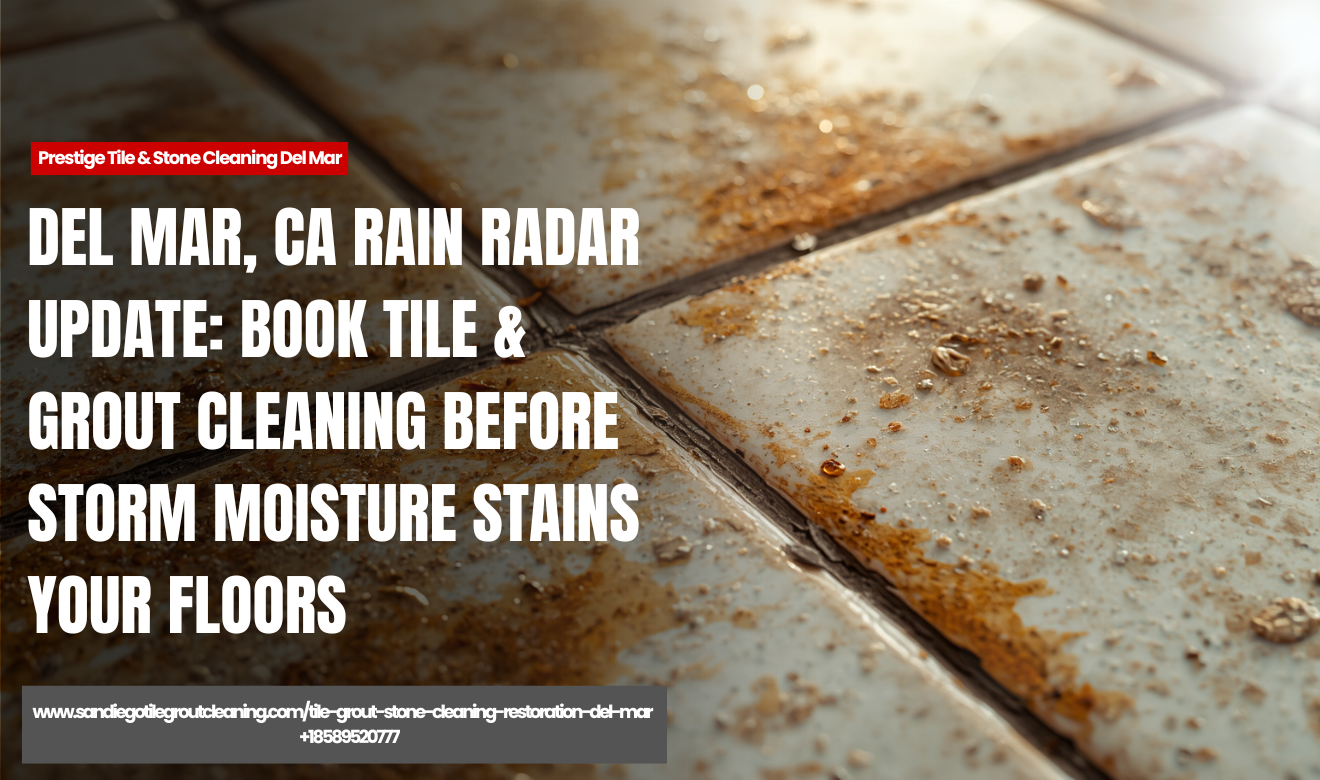
As live radar continues to show shifting bands of rain and pockets of heavier storms moving through Southern California, many homeowners are bracing for what often follows: wet entryways, muddy footprints, and moisture that gets tracked deep into tile floors and grout lines. Even when a storm system looks “light” on the map, the day-to-day impact inside homes and businesses can be significant—especially in coastal communities.
In Del Mar, where sand, salt air, and damp weather can collide in the same week, stormy conditions can quickly turn clean tile into slippery film, stained grout, and lingering odors. That’s why it’s worth understanding what the radar patterns mean beyond the forecast—and what to do right away to protect your floors.
Radar activity and fast-changing conditions can mean more moisture indoors
Who is affected most
Households, rental properties, and businesses in Del Mar and nearby coastal neighborhoods tend to feel the impact first. Visitors coming in from the beach, kids and pets running between indoors and outdoors, and higher humidity near the ocean can all accelerate how quickly tile and grout start to look dull or dirty after rain.
What’s happening
Interactive radar indicates areas of precipitation developing and moving across the region. When rainfall coincides with gusty conditions and fluctuating humidity, it commonly leads to water being tracked into buildings, increased condensation near windows and sliders, and more frequent mopping—often with soaps that leave residue behind.
Where the problems show up first
The most common “storm fallout” zones are entryways, kitchens, hallways, bathrooms, laundry rooms, and any space with exterior access. In Del Mar, tile near patios and ocean-facing doors is especially prone to a mix of moisture plus fine sand—an abrasive combination that can wear finishes and lodge into grout.
When you should take action
Usually within 24–72 hours after a rainy period or a high-traffic wet day. The longer moisture and grit sit on tile and grout, the more likely grout discoloration, slippery film buildup, and staining become—particularly on light-colored grout and textured tile.
Why tile and grout suffer after wet weather
Grout is porous, meaning it can absorb dirty water, soil, and organic material brought in from outside. Many routine cleaners also leave behind surfactants that attract new dirt, causing floors to re-soil quickly. Add coastal humidity in Del Mar, and dampness can linger longer than expected—especially in shaded areas and bathrooms with limited ventilation.
The hidden floor risks after rainy days: safety, staining, and long-term wear
From a tile-cleaning professional’s perspective, the biggest post-storm issues aren’t always obvious at first glance. A floor can look “fine” while still developing problems beneath the surface:
First, slip hazards increase when rainwater mixes with household cleaners, oils, or residue on tile. Second, grout can darken unevenly when moisture pulls soil into the pores, leading to permanent-looking discoloration. Third, natural stone surfaces may become etched or dulled if people respond with harsh chemicals or acidic cleaners to “fight the grime.”
In Del Mar, salt air can also contribute to a filmy layer on hard surfaces, and when that film blends with tracked-in moisture, it creates a stubborn dullness that normal mopping won’t fix.
How professional tile cleaning helps after storms and heavy moisture days
When radar shows repeated waves of rain—or you’ve had several days of wet foot traffic—professional tile and grout cleaning becomes less of a cosmetic upgrade and more of a preventative step. Deep cleaning targets what mops leave behind: embedded soil in grout lines, residue buildup, and moisture-driven staining.
Prestige Tile & Stone Cleaning Del Mar helps homeowners and property managers in Del Mar with tile cleaning services designed to restore appearance while addressing the real cause of post-rain grime: contaminants packed into grout pores and textured surfaces. This is especially useful for:
• Entryway tile that turns dark or “dirty” after each rain
• Grout lines that look stained even after scrubbing
• Bathroom and shower tile that holds humidity and develops mildew odors
• Natural stone that needs careful cleaning to avoid etching or haze
Why this matters specifically in Del Mar, CA
Del Mar’s coastal environment makes tile and grout maintenance different than many inland areas. Between beach sand, marine layer humidity, and seasonal rain events, floors can cycle through wet/dry conditions that drive soil deeper into grout and leave behind mineral or soap haze.
For Del Mar homeowners, keeping tile looking clean often isn’t about cleaning “more,” but cleaning “smarter” after weather shifts. If you’re in Del Mar, CA and your floors look dull right after a storm, that’s often a signal of residue and embedded soil—not just surface dirt.
Practical steps to protect tile and grout during rainy weather
- Place absorbent mats at every exterior door and wash them frequently to prevent re-tracking grime.
- Avoid overusing soap-based mops; residue can attract dirt and make tile look dingy faster.
- Dry wet zones quickly (especially grout lines) with towels or airflow to reduce staining and musty odors.
- Don’t use acidic cleaners on natural stone; they can etch and permanently dull the surface.
- If grout darkening persists after drying, schedule a deep professional cleaning before it becomes a long-term stain.
Frequently Asked Questions
Schedule tile cleaning in Del Mar before moisture damage becomes permanent
If recent rain and wet foot traffic have left your floors looking dull, stained, or slippery, it may be time for a deeper reset than household mopping can deliver. Prestige Tile & Stone Cleaning Del Mar provides professional tile, grout, and stone cleaning in Del Mar, CA to help restore your surfaces after stormy weather and prevent long-term discoloration.
Credits: This article is a commentary-based rewrite for informational purposes, based on this source.


