
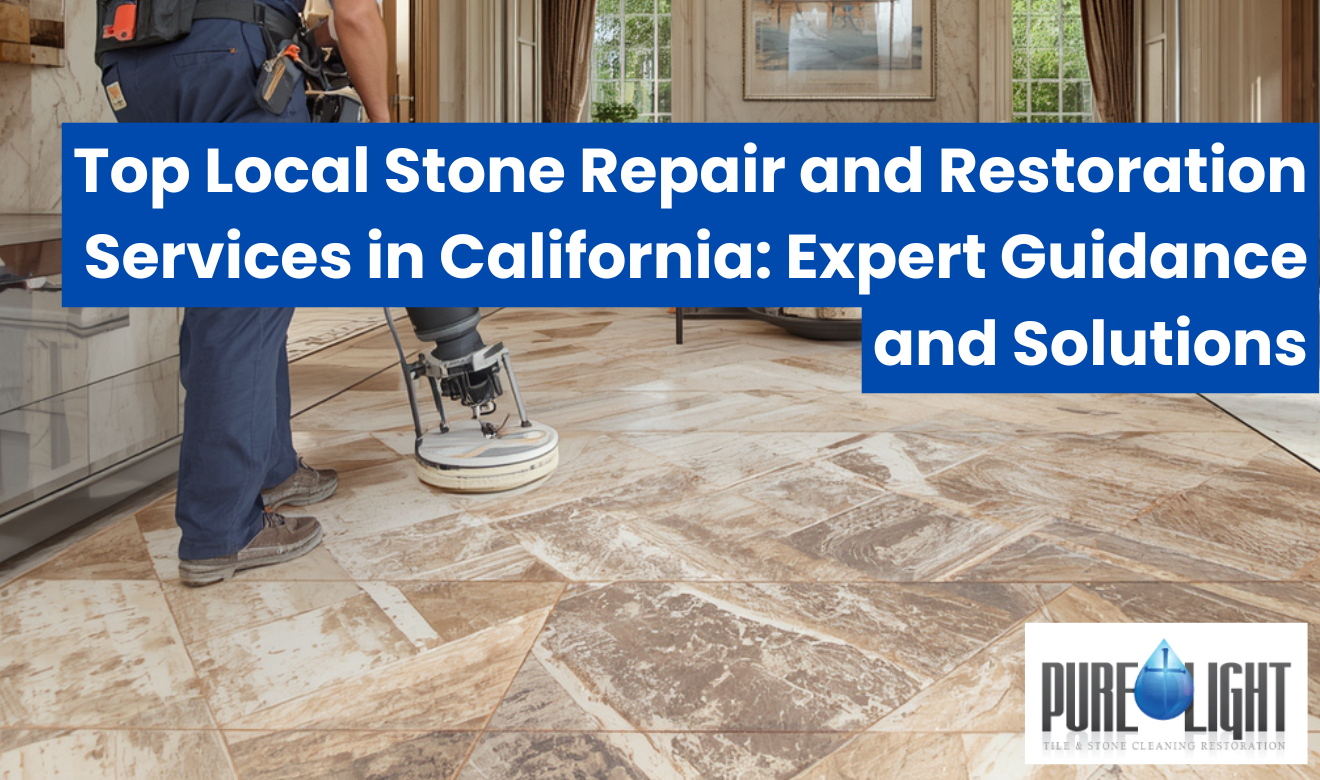
Executive Summary
Top local stone repair and restoration services in California deliver durable, consistent results by correctly identifying the stone and damage type, then using controlled mechanical refinement (honing/polishing/flattening) and compatible chemical processes (cleaning/poultices) before applying protection that won’t haze or fail. The definitive “fix” is a full-system restoration approach—stone, grout, and movement joints—so problems like etching, lippage, stains, and recurring cracks don’t quickly return.
3 Core Insights
- Correct Diagnosis Drives Everything: The best outcomes come from distinguishing etching vs. staining and calcite vs. silicate stone so technicians choose abrasion-based correction for surface loss and chemical draw methods for in-pore discoloration.
- Process Consistency Beats Spot Fixes: High-quality crews restore the entire affected field (including edges/corners) with a documented grit progression and flattening where needed to prevent patchy shine, visible repair bands, and persistent trip hazards.
- Protection Must Match Exposure and Material: Sealers, joint repairs, and traction decisions should be selected based on porosity, wet use, and California conditions (salt air, hard water, irrigation minerals) to reduce haze, re-staining, and repeat joint or crack failures.
Top local stone repair and restoration services in California are specialized trades that clean, repair, refinish, and protect natural and engineered stone surfaces in homes and commercial properties. Local stone repair and restoration services typically cover marble, granite, limestone, travertine, slate, terrazzo, and concrete polish systems. In Los Angeles and Orange County, technicians often correct marble etching from citrus, wine, and bathroom acids using diamond honing, then restore gloss with progressive polishing grits. In the Bay Area, crews frequently remove lippage on uneven tile edges in older foyers by grinding high corners, then re-honing to a flat, safe walking plane. In San Diego coastal zones, salt air and hard water spotting require deep cleaning, poultice stain draws, and penetrating sealer re-application with slip testing for wet entries. In Sacramento and the Central Valley, mineral-heavy irrigation overspray on pool decks is commonly treated with controlled chemical descaling, followed by surface densification to reduce future absorption. Common structural fixes include epoxy or polyester fills for chipped countertop edges, color-matched grout repair on stone showers, crack stitching on fractured slabs, and silicone or urethane joint replacement at movement points to prevent re-cracking. A qualified provider documents stone type, finish level, and porosity, then selects methods that protect soft calcite stones from harsh acids and protect polished granite from haze during abrasive work.
What Top Stone Repair & Restoration Providers Do (and Why It Matters in California)
Stone restoration is a controlled trade process that returns a surface to a safe, uniform, and protectable condition without changing the material’s intended finish. In California properties, the best results come from matching the method to the stone chemistry (calcite vs. silicate), the environment (coastal salt, hard water), and the existing wear pattern.
High-performing crews typically follow a predictable workflow rather than “spot fixing” a single symptom:
- Identify stone type and finish: polished, honed, brushed, textured, flamed, or sealed matte.
- Diagnose the damage mechanism: etch vs. stain, abrasion vs. spall, grout failure vs. slab movement.
- Select mechanical vs. chemical correction: diamonds for flattening/honing; poultices and neutral cleaners for staining; controlled descaling for mineral deposits.
- Restore continuity: consistent sheen, flatness across tile edges, clean grout lines, and uniform traction at entries.
- Protect: sealer selection based on porosity, traffic, and exposure (showers, pool decks, foyers).
This approach is especially important in California because many surfaces combine multiple systems (stone + cement grout + movement joints), and failures often recur when only the visible area is treated.
Material-Specific Restoration: Matching Tools to Stone Chemistry
Professional restoration depends on whether the surface is acid-sensitive (calcite-based) or acid-resistant (silicate-based). Using the wrong chemistry—especially acids on marble/limestone—creates permanent dull etching that must be honed out.
Use this functional separation when evaluating a provider’s plan:
- Acid-sensitive stones: marble, limestone, travertine, onyx, many terrazzo matrices
- Common damage: etching, dull traffic lanes, soap scum film, light scratching.
- Typical correction: diamond honing (progressive grits), polishing powders/compounds designed for calcite stones, then sealing where appropriate.
- Acid-resistant stones: granite, quartzite, slate, many sandstones
- Common damage: scratching, topical sealer haze, hard-water spotting (especially near sinks), wear on textured clefts.
- Typical correction: targeted abrasion control, non-acidic descaling as required, careful residue removal to prevent haze.
- Engineered surfaces: quartz and engineered stone
- Common damage: resin burn from heat, dulling from aggressive abrasives, chemical discoloration.
- Typical correction: manufacturer-aligned abrasion limits; avoid stone polishing methods meant for calcite.
Core Restoration Methods Used by Local Stone Technicians
Most stone repair outcomes come from a small set of repeatable methods applied in the right sequence. The highest-quality work is measured by flatness, gloss consistency, clean transitions, and reduced recurrence of stains or etching.
Deep Cleaning (Neutral, Alkaline, or Specialty Degreasers)
Deep cleaning removes embedded soils that block polishing and sealing performance. In showers, it also strips biofilm and soap residue so joints and stone pores can be evaluated accurately.
- What it targets: tracked-in dirt, oils, body products, soap scum, airborne grime, and mild mineral films.
- Key control point: pH selection based on stone sensitivity; calcite stones require non-acidic processes to avoid etching.
- Verification: rinse water clarity, towel transfer test (re-soiling), and visual pore inspection under task lighting.
Honing & Polishing (Diamond Abrasion + Finishing Compounds)
Honing and polishing correct etching, scratches, and uneven sheen by removing a controlled micro-layer of stone. The goal is to return the entire field to a consistent finish level—not to “spot polish” shiny circles into a dull floor.
- Mask and protect adjacent finishes (wood, carpet transitions, baseboards).
- Cut to the lowest common defect depth using appropriate diamond grit progression.
- Refine the surface to match the intended finish (honed satin vs. high polish).
- Detail edges and corners so sheen and clarity match open areas.
For floors that feel uneven, lippage correction often precedes honing so the final surface is flatter and safer underfoot.
Grinding & Lippage Removal (Flattening Uneven Tile Edges)
Lippage removal reduces trip hazards and improves cleanability by leveling tile edges to a uniform plane. In older California foyers and large-format installs, this is often the only durable way to fix high corners and shadowing at grout lines.
- Typical triggers: subfloor movement, poor setting bed coverage, older installations with uneven tiles.
- What’s required: progressive grinding, re-honing, then finish matching so the floor does not show “repair bands.”
- Best practice: control dust and slurry, protect adjacent areas, and re-establish movement joints after flattening if needed.
Stain Removal (Poultice, Targeted Draw, and Residue Neutralization)
Stain removal is a chemical migration process—pulling discoloration out of pores—rather than simply cleaning the top. Done correctly, it includes dwell time, proper draw medium, and complete residue removal so the stain does not “ghost back.”
- Common stains: oils, rust, organic tannins, hard-water minerals, irrigational overspray scaling.
- Non-negotiable step: identify whether the mark is a stain (in-pore) or etch (surface loss); etches require honing, not poultice.
If you’re dealing with frequent shower staining and haze, consider pairing restoration with Bath & Shower Tile Cleaning so stone, tile faces, and joints are treated as one system.
Structural Repairs That Prevent Repeat Damage
Repairs fail when the underlying movement or joint design is ignored. Top technicians treat cracks, chips, and failing joints as mechanical problems first, then address cosmetic blending.
Chip, Crack, and Edge Repair (Epoxy/Polyester + Color Matching)
Professional chip and crack repairs rebuild missing stone and restore edge profile, then blend color and sheen so the repair reads naturally at normal standing distance. The repair must also be stable under heat cycles and cleaning.
- Countertop edge chips: rebuild with color-tinted resin, shape to original radius, then hone/polish to match.
- Cracks through tile or slab: evaluate movement; stabilize where feasible before filling and refinishing.
- Terrazzo divots: aggregate-matched fills, then field honing for a uniform matrix appearance.
Grout and Movement Joints (Serviceability and Water Control)
Joint work is essential because water and movement cause repeated cracking, staining, and edge spalling. In wet areas, joint condition often determines whether the stone stays clean after restoration.
- Cement grout repair: color match and density matching to reduce visual patching and future soil loading.
- Movement joints: replace failed joint material at transitions and perimeters with an appropriate elastomeric sealant to reduce stress transfer.
- Why this matters: rigid patching at movement points often re-cracks and can damage adjacent tile edges.
For a clearer understanding of how joints function and why they discolor, it helps to know what grout is and how it behaves as a cementitious material in wet and high-traffic zones.
Protection Phase: Sealers, Densifiers, and Slip Considerations
Protection isn’t a single product—it’s a decision based on porosity, exposure, and required traction. In California, sealer performance is strongly influenced by UV exposure (exteriors), salt air (coastal), and mineral-heavy water (many inland areas).
Penetrating Sealers (Impregnators) for Stone
Penetrating sealers reduce absorption without forming a topical film, helping resist staining while preserving the stone’s feel. Correct application includes adequate dwell, complete buff-off, and curing time before water exposure.
- Best for: porous stones (travertine, limestone, some sandstones), grout lines, and natural stone showers where breathability matters.
- Common failure mode: haze from incomplete removal; a competent provider prevents this with timed buffing and post-clean verification.
Densification for Concrete and Some Cementitious Systems
Densifiers react within cement paste to improve surface hardness and reduce dusting, which can help pool decks and commercial floors resist wear. This is not a substitute for fixing drainage, irrigation overspray, or ongoing mineral deposition.
- Best for: polished concrete and some cement tile/concrete overlay systems.
- Not a fit for: most natural stone floors (densifiers are a concrete-centric approach).
Traction and Wet Entries
Slip risk must be addressed at entries, pool surrounds, and showers where polished finishes can be hazardous when wet. Providers should discuss finish selection (honed vs. polished) and maintenance controls instead of relying on “one-step” anti-slip claims.
- Practical options: adjust finish to honed/satin, improve drainage and matting, maintain sealers correctly, and remove residue films that create slickness.
Quality Standards You Can Verify Before Approving Work
Restoration quality is verifiable through documentation, process controls, and post-work inspection under proper lighting. Reputable teams can explain why each step is used and what measurable change it produces.
- Surface ID checklist: stone type, finish level, location exposure (wet/dry), and prior coatings.
- Method disclosure: grit range for honing, whether lippage grinding is included, and whether edges/corners are finished to match.
- Containment plan: dust/slurry control, protection of adjacent floors and baseboards, and safe access routing.
- Post-restoration acceptance: uniform reflection (polished), consistent sheen (honed), flat transitions at grout lines, and no sealer haze.
If your main problem is recurring soil in joints after routine mopping, reference local best practices in San Diego grout cleaning to align cleaning frequency, product choice, and professional deep-clean intervals.
Service Selection Matrix (California Homes vs. Commercial)
Choosing the correct service is easier when you map the symptom to the mechanical or chemical correction. The table below converts common field problems into service specifications and practical local guidelines.
| Feature / Metric | Specifications | Local Guidelines |
|---|---|---|
| Etching on marble/limestone | Remove damaged micro-layer via diamond honing; restore finish with polishing steps matched to desired sheen | Avoid acidic cleaners in bathrooms and kitchens; require finish blending across the full affected field (not spot shine) |
| Uneven tile edges (lippage) | Grind high edges; re-hone and refinish to uniform plane and appearance | Common in older CA foyers and large-format installs; confirm containment plan for slurry and edge detail work |
| Hard-water deposits / coastal spotting | Controlled mineral removal; rinse-neutralize; evaluate for poultice draw if staining penetrated | Coastal zones: prioritize residue-free cleaning before sealing; do not use acids on calcite stones |
| Chips and cracks on edges or tiles | Epoxy/polyester fill, color match, reshape profile, then hone/polish to blend | Verify repair addresses movement or impact cause; require gloss/texture match under direct light |
| Sealer haze / dull film | Strip residue with appropriate remover; reapply impregnator correctly (dwell + full buff-off) | Frequent after DIY sealing; insist on test area approval to confirm no streaking in sunlight |
How to Maintain Results After Restoration (Without Damaging the Finish)
Maintenance determines whether restored stone stays consistent for years or re-develops dull lanes and stains within months. A correct plan uses residue-free cleaners and avoids chemistry that attacks calcite or leaves sticky surfactants.
- Daily/weekly: dry dust mop or microfiber; damp mop with a residue-free, stone-safe cleaner.
- Showers: squeegee to reduce mineral spotting; ventilate to limit soap film buildup.
- Spill response: blot oils and pigmented liquids immediately; avoid wiping outward and enlarging the affected area.
- Avoid: vinegar or acidic descalers on marble/limestone/travertine; abrasive powders on polished finishes; waxes unless the system is specifically designed for them.
- Periodic: professional deep clean and inspection of joints, especially at perimeters and transitions where movement is concentrated.
Built to Last: What “Top Local” Really Means for Stone Restoration
The best stone repair and restoration services in California deliver repeatable results by diagnosing stone type, matching chemistry to the material, and restoring the surface as a complete system—stone, grout, and movement joints. When the work includes proper flattening where needed, full-field honing/polishing, residue-free stain treatment, and correctly applied protection, the finish looks consistent and performs better under real-world traffic and water exposure.
When you evaluate providers, prioritize crews that can explain their grit progression, show how they distinguish etching from staining, and document how they will prevent re-cracking at joints and transitions. That combination—correct diagnosis, controlled abrasion, and system-level protection—is what separates a temporary cosmetic fix from a durable restoration.
Frequently Asked Questions
Stop Guessing—Get Your Stone Restored Correctly the First Time
Stone problems don’t “clean up later.” Etching, lippage, sealer haze, and hard-water deposits are the kind of issues that get more expensive the longer they’re handled with trial-and-error products, rental machines, or a one-step “miracle” approach.
Here’s what can go wrong when this is tackled without an experienced local restoration pro:
- Permanent dulling from the wrong chemistry: Acid-based cleaners on marble, limestone, or travertine don’t remove damage—they create it. That etched, chalky look usually requires full honing to fix.
- Uneven shine and “spot repair circles”: DIY polishing often leaves shiny patches in the middle of a dull floor, because the finish wasn’t blended across the entire field.
- Worse trip hazards from incorrect grinding: Lippage removal isn’t a quick grind-and-go. Done wrong, it creates low spots, edge overcuts, and a floor that looks striped under sunlight.
- Stains that ghost back: If the stain source isn’t identified (etch vs. stain, mineral vs. oil), the discoloration can reappear after it dries—especially in showers and coastal environments.
- Sealer haze that locks in the problem: Over-application or poor buff-off can leave a cloudy film that attracts soil and makes the surface look dirty even after you clean it.
- Cracks and joint failures that return: Cosmetic patching without addressing movement points and joint design often leads to repeat cracking—and sometimes edge spalling around the repair.
If you want your stone to look consistent, feel safer underfoot, and stay protected in real California conditions (salt air, hard water, traffic lanes, wet entries), you need a team that can diagnose the material, correct it with controlled abrasion, and finish it with protection that won’t haze or fail.


