
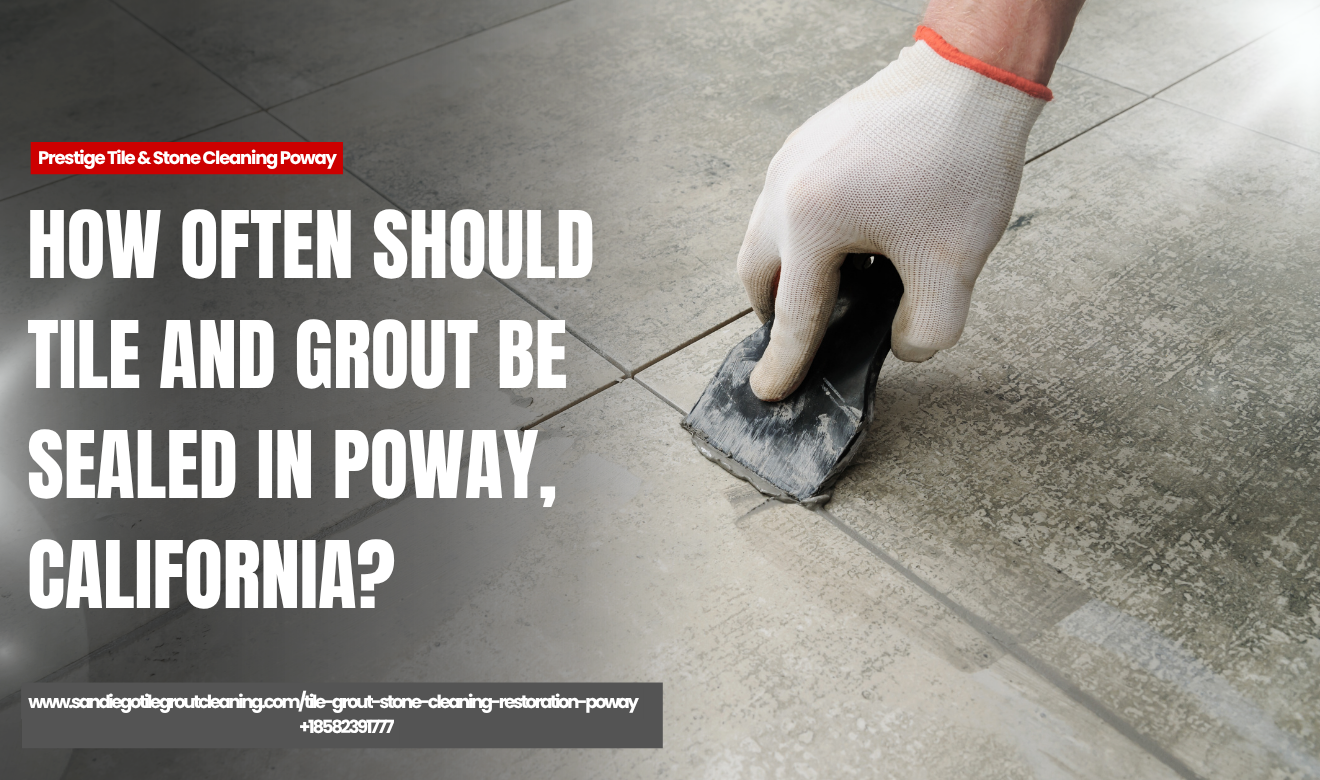
In Poway, California, most tile and grout should be sealed every 1–3 years, depending on where it is and how much wear it gets. A busy kitchen floor or entryway that sees constant foot traffic may need resealing closer to every 12 months. A guest bathroom shower might hold up 18–24 months, while a low-traffic laundry room floor can often go 2–3 years. If water stops beading on the surface, grout darkens quickly when wet, or stains are harder to remove, it’s time to reseal—and tile and grout sealing services Poway can help you get it done before moisture and grime soak in.
Why sealing matters in Poway’s everyday conditions
Even though Poway has a relatively mild climate, your tile and grout still deal with daily stressors: tracked-in dust, sunscreen and oils, hard-water minerals, cooking grease, pet accidents, and frequent mopping. Over time, these contaminants can work their way into porous grout lines (and some types of stone or unglazed tile), leading to discoloration, odors, and premature wear.
That’s why homeowners often book tile and grout sealing services Poway soon after a deep clean—sealing doesn’t “make tile maintenance-free,” but it does make routine cleaning easier and helps reduce staining.
Quick answer: What does grout sealer actually do?
Grout sealer is a protective treatment that reduces how quickly grout absorbs water, oils, and soils. It works by filling microscopic pores and slowing penetration—especially important because grout is typically more porous than the surrounding tile.
What sealing helps with
- Stain resistance: slows absorption of spills (coffee, wine, oils, soaps).
- Mold/mildew prevention support: reduces moisture retention (still requires ventilation and cleaning).
- Easier maintenance: grime sits closer to the surface instead of soaking in.
- Longer-lasting grout color: helps reduce blotchy darkening and dingy traffic patterns.
When you hire tile and grout sealing services Poway, the goal is to pair the right sealer with the surface and the room’s use—then apply it correctly after thorough cleaning and drying.
How to tell if your tile and grout needs resealing (simple tests)
If you’re not sure whether it’s time, these quick checks usually provide a clear answer.
1) The water-drop test (best at-home indicator)
- Choose a clean, dry area of grout.
- Place a few drops of water on the grout line.
- Wait 3–5 minutes.
- If the water beads and remains on top, the sealer may still be working.
- If the grout darkens quickly or absorbs the water, it’s time to reseal.
This is one of the main reasons people schedule tile and grout sealing services Poway on a predictable cycle instead of waiting until stains set in.
2) “Permanent” stains that weren’t permanent before
When sealing wears down, spills soak in faster. If you notice:
- dark grout around sinks, stoves, and showers
- yellowing near toilets or in corners
- gray traffic lanes through kitchens or hallways
…your surface likely needs cleaning and then resealing with professional-grade products—exactly what tile and grout sealing services Poway are designed for.
3) Chalky grout, hairline cracking, or gritty texture
Sealer won’t fix structural grout issues, but these symptoms often show up once grout has been repeatedly saturated and dried. If grout is cracking or missing, consider minor repair before resealing so you’re not “locking in” damage.
Sealing timelines by room (Poway-friendly reseal schedule)
There isn’t one perfect timeline, but this breakdown matches what most homes experience in real life.
| Area | Typical reseal interval | Why it varies |
|---|---|---|
| Kitchen floors | 12–18 months | Grease, spills, frequent mopping, heavy traffic |
| Entryways / hallways | 12–18 months | Abrasive grit from shoes, constant wear |
| Showers / tub surrounds | 12–24 months | Moisture + soap film; ventilation impacts lifespan |
| Low-traffic laundry / guest bath floors | 24–36 months | Less abrasion; fewer spills; lighter cleaning routines |
For many households, scheduling tile and grout sealing services Poway right after a professional deep clean helps you hit these intervals more consistently and avoid surprise discoloration.
Tile type matters: what should (and shouldn’t) be sealed?
Not all tile surfaces absorb sealer the same way. Some need sealing for protection; others mainly need grout sealing.
Usually seal the grout (and sometimes the tile)
- Ceramic and porcelain: tile face is typically non-porous, but grout benefits from sealing.
- Natural stone: many stones are porous and often need sealing (tile + grout), depending on finish.
- Saltillo, terracotta, cement tile: typically very porous and often require specialized sealing approaches.
Often grout-only (tile sealing may be unnecessary)
- Glazed tile: glaze resists absorption; grout still needs protection.
- Some polished stones: may be less absorbent on the face, but edges and grout still matter.
If you’re unsure, tile and grout sealing services Poway usually start with a quick porosity check to confirm what actually needs sealing—so you don’t pay for unnecessary steps or use the wrong product.
Penetrating vs topical sealers: which is best for grout?
Most residential grout jobs use a penetrating (impregnating) sealer because it soaks in and protects without leaving a visible film. Topical sealers can add sheen and a surface layer but may wear unevenly in traffic areas.
In plain terms
- Penetrating sealer: natural look, breathable, great for grout lines and many stones.
- Topical sealer: surface coating, can enhance color/sheen, may require more maintenance.
Choosing the correct sealer is a major reason homeowners rely on tile and grout sealing services Poway—especially for showers, textured tile, and natural stone where product choice and cure time really matter.
What “professional sealing” includes (and why DIY often disappoints)
Many DIY sealing kits fail for one simple reason: they’re applied over residue, moisture, or leftover cleaner—so the sealer can’t bond properly or cure evenly.
A thorough professional process typically looks like this
- Inspection: identify tile type, grout condition, stains, and moisture risk points.
- Deep cleaning: remove embedded soil, oils, soap film, and mineral deposits.
- Rinse and neutralize: ensure no detergent film remains (a common DIY mistake).
- Drying time: grout must be dry enough for sealer to penetrate.
- Precision application: apply sealer evenly and wipe excess from tile faces.
- Cure period: follow correct cure time before getting the area wet.
If your floors or shower need the “clean first, seal second” approach, booking Tile & Grout Cleaning is often the best starting point before tile and grout sealing services Poway are applied—because sealing over contamination can lock in discoloration.
Realistic expectations: what sealing can’t fix
Sealing is preventive care. It’s extremely valuable—but it doesn’t reverse every issue.
Sealing does NOT:
- repair missing or crumbling grout
- remove deep etching on stone surfaces
- stop leaks behind walls or shower pans
- eliminate mold caused by ongoing moisture problems (it can help reduce absorption, but ventilation and cleaning still matter)
If the grout is already failing, tile and grout sealing services Poway work best after repairs and restoration steps are completed.
Maintenance tips to make your sealer last longer
After you invest in tile and grout sealing services Poway, a few habits can noticeably extend performance.
Best practices
- Use pH-neutral cleaners: harsh acids/alkalis can degrade sealers and damage certain tiles.
- Reduce abrasive grit: use entry mats; vacuum/sweep before mopping.
- Don’t overwet floors: damp-mop instead of flooding the surface.
- In showers: run exhaust fans and squeegee walls to reduce mineral buildup.
For more day-to-day cleaning strategies that pair well with tile and grout sealing services Poway, this guide is helpful: 5 essential tips for floor cleaning.
Common problem areas in Poway homes (and what to do about them)
Kitchen grout that keeps turning dark
This often comes from oil-based cooking residue that slowly bonds to grout. A quick mop won’t remove it. The typical fix is a deep clean, thorough rinse, and then tile and grout sealing services Poway to slow future absorption.
Shower grout that looks clean—until it gets wet
When grout “flash darkens” with water, it’s a classic sign the sealer is worn. Resealing after proper drying usually restores better water resistance and makes weekly cleaning easier.
Entryway grout that stays gray
Poway dust and outdoor grit can act like sandpaper under shoes. That abrasion wears sealers down faster. Consider shorter reseal intervals (often 12–18 months) and consistent mat use to protect your investment in tile and grout sealing services Poway.
How to choose the right sealing schedule (simple decision guide)
If you want a practical rule of thumb, base your schedule on three factors: traffic, water exposure, and cleaning frequency.
Reseal closer to 12 months if:
- it’s a high-traffic floor (kitchen, entry)
- you mop frequently
- you have pets/kids and frequent spills
Reseal closer to 18–24 months if:
- it’s a shower with decent ventilation
- it’s a guest bath used occasionally
Reseal closer to 24–36 months if:
- it’s a low-traffic room
- it rarely gets wet
- your water-drop test still beads
When in doubt, a quick inspection from tile and grout sealing services Poway can confirm whether you need full resealing now or just a targeted touch-up in the highest-wear zones.
Seal it right, keep it clean, and protect your investment
Tile is durable, but the weak point is often the grout lines and the tiny pores that trap moisture and grime. Staying ahead of resealing helps prevent stubborn stains, makes routine cleaning faster, and extends the life of both tile and grout—especially in kitchens, entryways, and showers.
If you want results that last, tile and grout sealing services Poway are most effective when paired with deep cleaning, proper drying, and the right sealer for your tile type. Professionals use commercial-grade sealers, proven application methods, and surface-specific techniques that align with established stone and tile care standards—so the finish looks better and holds up longer under real household use.
For homeowners who prefer a predictable maintenance plan, scheduling tile and grout sealing services Poway on a 12–36 month cycle (based on room use) is a simple way to keep surfaces looking sharp without waiting for visible damage.
Frequently Asked Questions
Stop Stains Before They Start—Get Your Grout Resealed on Schedule
If your grout darkens fast when it gets wet, stains seem to “stick” more than they used to, or you’re not sure when it was last sealed, it’s probably time for a professional refresh. Prestige Tile & Stone Cleaning Poway can deep clean first, then apply the right sealer for your tile type and how the room is actually used—so your floors and showers stay easier to clean, better protected, and looking newer for longer.


